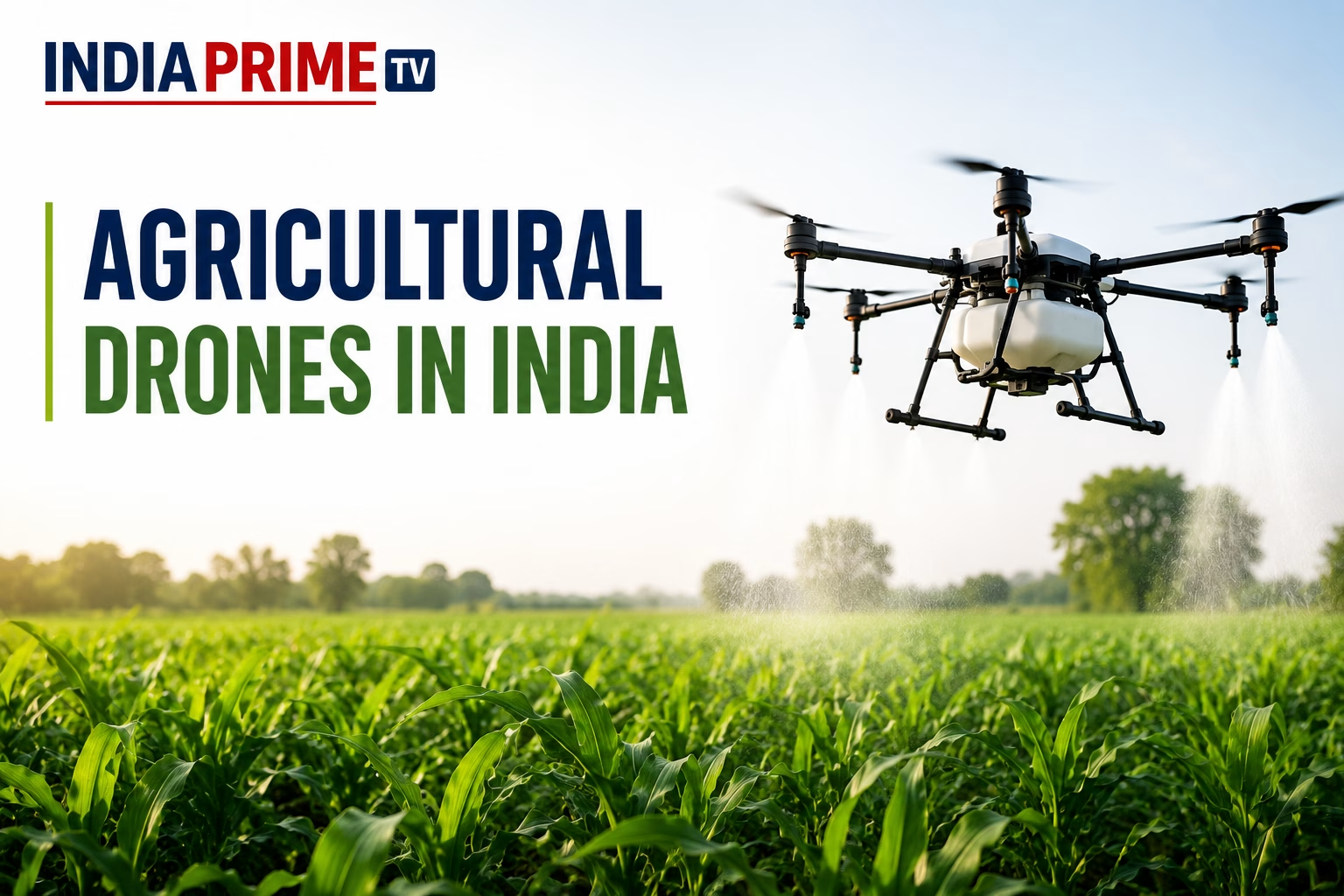
Anita Chauhan By India Prime Research Desk Agricultural Drones in India The Government of India has identified agricultural drones as one of the most important technologies for modernizing Indian agriculture. Since 2022, the Centre has accelerated the adoption of drone technology through flagship initiatives such as the Sub-Mission on Agricultural Mechanization (SMAM), Namo Drone Didi Scheme, Rashtriya Krishi Vikas Yojana (RKVY), and various state-level farm mechanization programs.
These initiatives aim to support farmers, Farmer Producer Organizations (FPOs), Self-Help Groups (SHGs), agricultural universities, Krishi Vigyan Kendras (KVKs), and Custom Hiring Centres (CHCs) by providing financial assistance, technical training, and easier access to agricultural drones.
Union Government Budget for Agricultural Drones
Namo Drone Didi Scheme
The Union Government has significantly increased funding for the Namo Drone Didi Scheme to promote drone-based agricultural services through Women’s Self-Help Groups.
| Financial Year | Budget Allocation |
|---|---|
| 2025–26 (Revised Estimate) | ₹100 Crore |
| 2026–27 (Budget Estimate) | ₹677 Crore |
The substantial increase reflects the government’s commitment to expanding drone-assisted farming services across rural India.
SMAM (Sub-Mission on Agricultural Mechanization)
Under SMAM, the Government has undertaken several initiatives to accelerate drone adoption, including:
- Drone demonstrations at more than 100 Krishi Vigyan Kendras (KVKs)
- Supply of drones to ICAR institutions and State Agricultural Universities
- Financial support for Custom Hiring Centres
- Large-scale field demonstrations for farmers
- Assistance to state governments for agricultural drone procurement
These efforts are designed to make precision agriculture accessible to both large and small farmers.
Agricultural Drone Subsidy Comparison
| Category | Financial Assistance |
|---|---|
| ICAR, KVKs, State Agricultural Universities | 100% of drone cost (up to ₹10 lakh) |
| Farmer Producer Organizations (FPOs) | 75% subsidy |
| SC/ST, Women, Small & Marginal Farmers | 50% subsidy (up to ₹5 lakh) |
| Other Farmers | 40% subsidy (up to ₹4 lakh) |
| Custom Hiring Centres (CHCs) | 40% subsidy |
| Agriculture Graduates establishing CHCs | 50% subsidy (up to ₹5 lakh) |
Which States Are Leading in Agricultural Drone Adoption?
Maharashtra
Maharashtra has emerged as India’s leading state in commercial agricultural drone deployment.
Key highlights include:
- Extensive use in cotton, sugarcane, vineyards, and horticulture
- Rapid expansion of FPO-operated drone service centres
- Strong adoption of Drone-as-a-Service (DaaS) models
Gujarat
Gujarat has promoted drone-based spraying of Nano Urea and liquid fertilizers through state-supported initiatives and the iKhedut digital platform.
Uttar Pradesh
The state has focused on:
- Large-scale farmer training
- KVK-based drone demonstrations
- Integration of drones into farm mechanization programs
Rajasthan
Rajasthan is encouraging agricultural drones through RKVY and state mechanization schemes, with special emphasis on crop protection and precision spraying.
Bihar
Bihar has launched farmer training initiatives and is gradually expanding financial support for agricultural drone adoption.
Practical Applications of Agricultural Drones
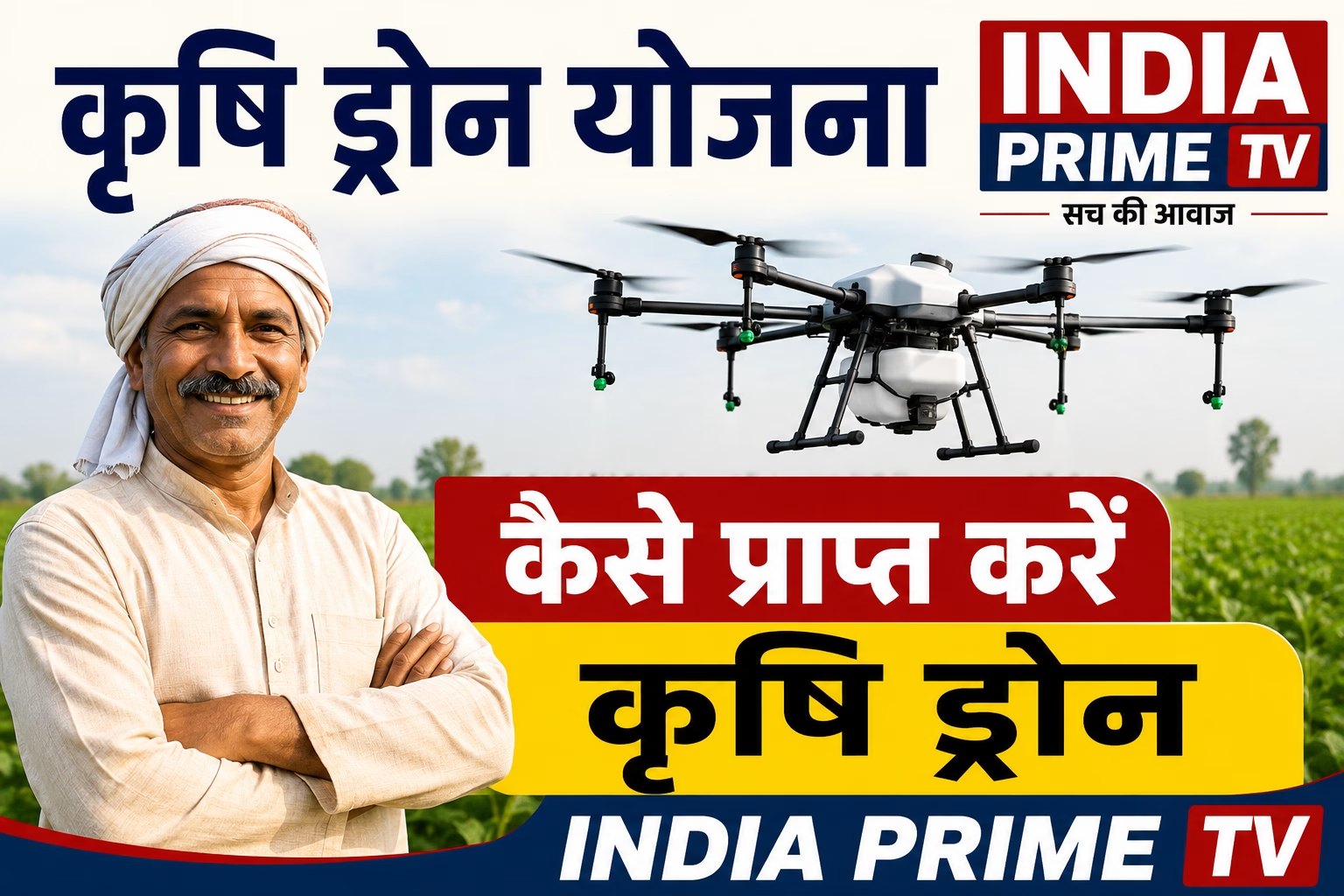
Today, agricultural drones are being used across India for multiple farming operations, including:
- Nano Urea spraying
- Nano DAP application
- Pesticide spraying
- Fungicide application
- Herbicide spraying
- Bio-fertilizer distribution
- Crop health monitoring
- NDVI crop mapping
- Plant population analysis
- Detection of waterlogging and disease-affected areas
- Precision seed and nutrient distribution
These applications improve productivity while reducing manual labour and chemical wastage.
Expert Analysis
Major Benefits
Agricultural experts believe drones are transforming Indian farming by offering:
- Rapid spraying of multiple acres within 15–20 minutes
- Reduced pesticide and fertilizer consumption
- Lower water usage
- Significant savings in labour costs
- Reduced exposure of farmers to hazardous chemicals
- Improved precision farming practices
- New employment opportunities for rural youth as certified drone pilots and service providers
Key Challenges
Despite rapid growth, several challenges remain:
- High initial purchase cost
- Limited battery endurance
- Shortage of trained drone pilots
- High ownership cost for small landholders
- Expensive maintenance and spare parts
- Limited charging and internet infrastructure in rural areas
The Road Ahead
Experts suggest that Drone-as-a-Service (DaaS) is likely to become the most sustainable model for Indian agriculture.
Instead of every farmer purchasing an expensive drone, Farmer Producer Organizations, Custom Hiring Centres, and Women’s Self-Help Groups can provide affordable drone services to small and marginal farmers on a pay-per-use basis.
This shared-service approach is expected to accelerate nationwide adoption while reducing financial barriers.
Conclusion
Agricultural drones are rapidly becoming one of the most important tools for precision farming in India.Through financial assistance, subsidy programs, training initiatives, and institutional support, the Government of India is creating an ecosystem that encourages wider adoption of drone technology.
States such as Maharashtra, Gujarat, Uttar Pradesh, Rajasthan, and Bihar are leading this transformation by integrating drones into modern farming practices.
As technology becomes more affordable and accessible, agricultural drones are expected to play a vital role in improving productivity, reducing farming costs, promoting sustainable agriculture, and creating new employment opportunities in rural India.