India Prime Tv Jaipur, August 22, 2026: Rajasthan’s Food Safety and Drug Control Department intensified inspections under the “Shuddh Aahar–Milawat Par Waar” (Pure Food–Action Against Adulteration) campaign, carrying out inspections across several districts. The operation focused on identifying suspected adulterated, contaminated and sub-standard food products before they reached consumers.
During the latest drive, food safety teams inspected 60 establishments and collected 101 food samples for testing. The action included 54 enforcement samples and 47 surveillance samples.
Rajasthan Food Safety Drive
6,900 Litres of Suspected Peanut Oil Seized in Jaipur
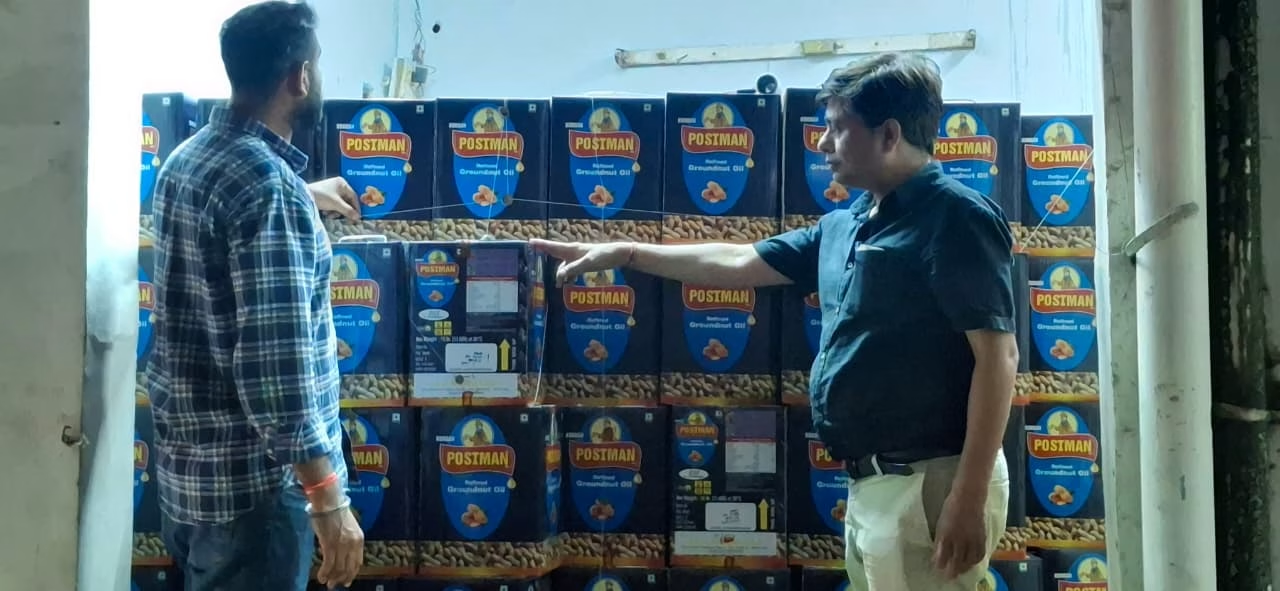
A central food safety team conducted a surprise inspection at M/s Shri Shyam Vegetable, located in Govind Nagar, Jaipur.
During the inspection, officials collected samples of Kundan Postman-brand refined and filtered peanut oil. The product was reportedly being sold at a price considerably lower than the prevailing market rate, which raised concerns about its quality and possible adulteration.
Following the inspection, officials seized approximately 6,900 litres of the suspected peanut oil. Samples have been sent to the State Central Food Laboratory for detailed testing.
The final action against the business will depend on the laboratory findings.
1,150 Kg/Litres of Suspected Food Products Destroyed
Food safety teams also took action against various food products found to be suspected, contaminated, stale or otherwise unsuitable for consumption across different districts.
Udaipur: 600 Litres of Suspected Milk Destroyed
In Udaipur, officials destroyed approximately 600 litres of suspected and contaminated milk during the inspection drive.
265 Kg of Stale and Contaminated Sweets Destroyed
Food safety teams in Jaipur-II, Sirohi, Sikar, Karauli, Pali, Ajmer, Hanumangarh and Alwar destroyed a combined 265 kg of contaminated and stale sweets.
The action was aimed at preventing potentially unsafe sweets from being sold to consumers.
148 Kg of Mawa and Dairy Products Destroyed
In Pali, Khairthal-Tijara, Bhilwara and Ajmer, teams destroyed approximately 148 kg of suspected mawa and other dairy products.
Bikaner: Suspected Ghee and Edible Oil Destroyed
Officials in Bikaner destroyed around 65 kg of suspected ghee and edible oil during the inspection.
Other Food Products Destroyed in Four Districts
In Ajmer, Barmer, Hanumangarh and Jodhpur, food safety teams destroyed approximately 72 kg of other suspected food products found during inspections.
60 Food Establishments Inspected Across Rajasthan
The latest operation covered 60 food establishments, with officials collecting 101 samples for laboratory examination.
The samples included:
- 54 enforcement samples
- 47 surveillance samples
- Peanut oil samples from Jaipur
- Milk and dairy products
- Mawa
- Ghee and edible oils
- Sweets
- Other food products
The inspections are intended to identify violations and prevent unsafe food from entering the consumer market.
Officers Leading the Food Safety Operation
The campaign is being implemented through the Food Safety and Drug Control Department, with senior officers overseeing inspections and enforcement.
Gayatri Rathore — Principal Secretary, Medical and Health
Gayatri Rathore, Principal Secretary, Medical and Health, has stressed that public health cannot be compromised and that violations of food safety standards must face strict action.
Dr. T. Shubhamangala — Commissioner
Dr. T. Shubhamangala, Commissioner, Food Safety and Drug Control, is directing the statewide enforcement programme. Laboratory reports will be used to determine further action against businesses found violating food safety requirements.
Bhagwat Singh — Additional Commissioner
Bhagwat Singh, Additional Commissioner, is supervising the enforcement activities being conducted by teams across Rajasthan.
Dr. Vijay Prakash Sharma — Joint Commissioner
Dr. Vijay Prakash Sharma, Joint Commissioner, is also overseeing the field-level inspection and enforcement operations.
Company and Brand Involved in the Jaipur Action
Business inspected:
M/s Shri Shyam Vegetable, Govind Nagar, Jaipur
Brand mentioned in the inspection:
Kundan Postman
Product:
Refined and filtered peanut oil
Action taken:
Approximately 6,900 litres seized
Next step:
Samples sent to the State Central Food Laboratory for testing.
What Happens After the Laboratory Report?
The seizure itself does not establish that the product was adulterated. The laboratory examination will determine whether the sampled oil meets prescribed food safety and quality standards.
If the laboratory report establishes a violation, the department can initiate statutory proceedings against the responsible business under the Food Safety and Standards Act, 2006 and applicable regulations.
This distinction is important because suspected adulteration and legally established adulteration are not the same thing. The laboratory report will provide the technical basis for further enforcement.
Why the Action Matters
The Jaipur seizure is significant because 6,900 litres is a substantial quantity of edible oil. If a food product is found to be unsafe or non-compliant, removing it from the supply chain before it reaches consumers can prevent a potentially wider public-health problem.
The wider inspections also show that food safety enforcement is not limited to a single product. Milk, mawa, ghee, edible oils and sweets were among the products examined across Rajasthan.
The effectiveness of the campaign, however, will ultimately depend on what happens after the inspections: laboratory testing, identification of violations and timely legal action against businesses found responsible.
Rajasthan Food Safety Action: Key Numbers
- 60 food establishments inspected
- 101 samples collected
- 6,900 litres suspected peanut oil seized in Jaipur
- 600 litres suspected milk destroyed in Udaipur
- 265 kg stale/contaminated sweets destroyed
- 148 kg suspected dairy products and mawa destroyed
- 65 kg suspected ghee and edible oil destroyed in Bikaner
- 72 kg other food products destroyed in four districts
India Prime TV: The statewide operation highlights the role of food safety officers in monitoring the market, removing suspected unsafe products and using laboratory testing to determine whether further legal action is warranted.