
Thank you for visiting nature.com. You are using a browser version with limited support for CSS. To obtain the best experience, we recommend you use a more up to date browser (or turn off compatibility mode in Internet Explorer). In the meantime, to ensure continued support, we are displaying the site without styles and JavaScript.
Advertisement
Scientific Reports volume 16, Article number: 18348 (2026)
Accurate timing prediction of surgery is essential for efficient operating room scheduling and ensuring patient care. This study proposes a two-layered Accurate Surgical Time Prediction (ASTP) framework. The first layer combines feature importance and advanced machine learning models to estimate surgical time. After preprocessing, two complementary interpretable AI methods were used: Long Short Term Memory with SHapley Additive exPlanations (SHAP) values and Random Forest permutation importance, to determine the importance of features. In the second layer, subsets of features (TOP-K) were progressively evaluated using HGBR and compared with multiple models: artificial neural networks (ANNs) and recurrent models (Long Short Term Memory, Gated Recurrent Unit, and hybrid Long Short-Term Memory + Gated Recurrent Unit). The proposed framework was evaluated on two datasets: a real-world dataset from an operating room at Nile Hospital and a public dataset from the Medical Informatics Operating Room Vitals and Events Repository (MOVER). In the Nile Hospital dataset, the results show that the Histogram Gradient Boosting Regression (HGBR) approach achieves the best balance, with a Mean Absolute Error of 8.89 min, Root Mean Square Error of 19.5 min, and R-squared of 0.26 using only four features, outperforming other methods. On the MOVER dataset, HGBR also demonstrated the strongest overall predictive behavior, achieving its best numerical result at TOP-12 and best subset at TOP-7, which preserved near-optimal performance with reduced input complexity. The proposed ASTP framework provides an interpretable and resource-efficient solution for surgical time prediction, supporting more intelligent operating room scheduling and facilitating future integration into hospital decision-making.
Healthcare systems are one of the most important service sectors in every country. Hospitals play an important role in health systems, and operating rooms (ORs) are the most expensive services, requiring multiple precious resources such as surgeons, personnel, and equipment. Optimizing operating room utilization is a pivotal aspect of hospital management strategy. It is essential to strategically organize surgical schedules, taking into account the availability of hospital beds and medical staff, while prioritizing patient safety. A fundamental and critical step in organizing an operating room is assessing and predicting the duration of the surgical procedure1,2. However, predicting the duration of surgery is difficult due to many uncertain factors, such as patient condition, changes in the surgical plan, problems with surgical instruments, and unexpected bleeding3,4. In several hospitals, operating rooms are managed depend on common methods for predicting surgical duration, such as applying average durations for specific procedures or based on the anesthesiologist’s subjective opinion5.
Inaccurate estimates of surgical duration increase hospital operating expenses, lengthen healthcare staff working hours, and lead to dissatisfaction, burnout, and an increased risk of medical errors6. Human error is often caused by individual surgeon factors, as well as work system factors, meaning that human error is the major contributing factor to “non-repeat events”. Human error includes surgeon distraction, lack of awareness of the surgical team about the status of potential errors, and poor communication between team members. In addition, institutional factors and working conditions, including increased workload and physician stress, can create a work climate that is unfavorable for achieving the standards required to maintain patient safety and teamwork effectiveness7. Addition, it leads to longer patient waiting times, fasting, and increased patient and family dissatisfaction. This highlights the importance of developing a more accurate and reliable method for predicting surgical duration. The use of machine learning algorithms in operating room management has been proposed to significantly enhance case duration prediction by varying input factors or feature8.
The AI and machine learning approach to operating room management began with the discovery that healthcare data, from patient demographics to surgical records, anesthesia regimens, and recovery room dynamics, holds untapped potential. In 2015, machine learning research in medicine expanded significantly, moving from theory to practical applications. The healthcare sector is benefiting from a deeper understanding of machine learning and greater processing power to tackle complex problems9. In the era of data-driven healthcare, machine learning (ML) has become a cornerstone of operating room tasks, predicting surgical duration, improving scheduling, and maximizing resource utilization10,11. Several studies have used machine learning algorithms to predict the times of different surgical procedures.
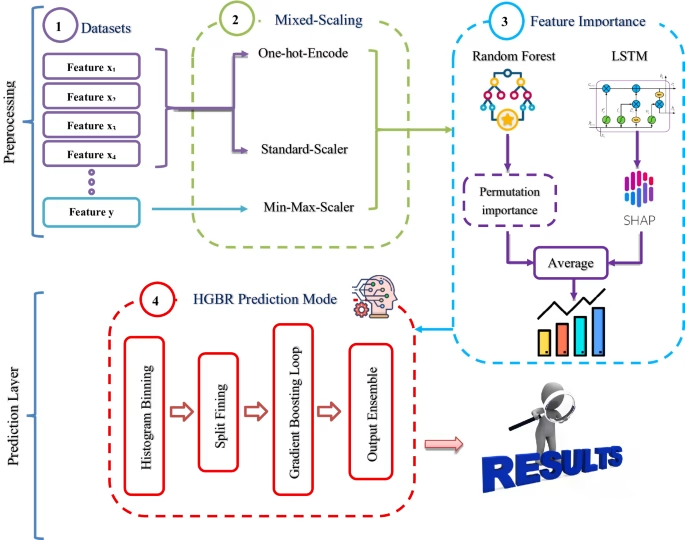
This paper presents a new, efficient framework for operating-room decision support called Accurate Surgery Time Prediction (ASTP), which consists of two layers. In first layer, preprocessing comprises two stages: (i) mixed scaling consisting of one-hot encoding for categorical features, standardization StandardScaler for continuous features, and min–max scaling where appropriate; and (ii) feature ranking, where we determine the feature order using permutation ΔMAE from a tuned Random Forest and LSTM-based SHAP. In second layer, prediction uses a Histogram Gradient Boosting Regression (HGBR) as the final model. Important considerations include rapid re-prediction for last-minute changes, robustness to outliers (winsorization + log1p on train only), and providing transparent drivers of predictions to avoid surgeon/nurse over-allocation and support timely patient care. So unlike existing methods that focus only on deep or tree-based models, the proposed ASTP strategy uniquely integrates interpretable feature-ranking (SHAP + ΔMAE) with resource-efficient regression (HGBR) to generate explainable surgical duration estimates using minimal data.
In addition to improving prediction accuracy, the proposed ASTP framework is designed to address several objectives. Specifically, it aims to: (1) provide accurate prediction of surgical time, (2) identify and interpret the most influential predictors, (3) minimize the input space by selecting the best K feature, and (4) enhance practicality through computationally efficient prediction.
The contributions of this paper are summarized as follows:
A unified two-layer framework for Accurate Surgical Time Prediction (ASTP) is proposed for estimating surgical duration. This framework consists of a preprocessing and feature ranking layer and a final prediction layer based on the HGBR algorithm.
A dual feature ranking strategy based on interpretability is developed. This strategy combines LSTM-based SHAP analysis with the permutation importance in a random forest algorithm, enabling precise identification of the most useful features during the perioperative.
A progressive TOP-K evaluation scheme is presented to assess combined feature subsets and identify efficient predictive configurations with reduced input dimensions.
Validating the proposed framework on two datasets: the Nile Hospital dataset and the MOVER public dataset.
This paper is organized as follows: Sect. 2 presents the previous efforts in operating room time prediction. Section 3 focuses on the proposed Accurate Surgery Time Prediction strategy. Section 4 the experimental results. The conclusions are discussed in Sect. 5.
Surgical and healthcare technologies are constantly evolving rapidly. However, this evolution poses new challenges, such as long surgical waiting lists and overcrowded operating rooms, which lead to a mismatch between patient needs and available resources. In this section, we discuss surgical duration prediction strategies, along with modern machine learning methods for surgical duration prediction and operating room planning. These methods aim to reduce waiting times, optimize resource allocation, manage surgical delays, enhance efficiency, balance staff workloads, reduce operational costs, and accommodate each patient’s individual priorities. In12 suggested develop, implement, and test a semi-automated machine learning technique that uses the present phase and tools to forecast the Remain Surgery Duration (RSD) in laparoscopic cholecystectomy procedures. We use the annotated instrument and stage information from Cholec80, a freely available dataset. This approach is based on a random forest regression model that takes into account two data sources: the surgical stage and the type of instruments used at each time point throughout the procedure. Kwong, Michel, et al.13 used electronic health record (EHR) data from three academic centers of higher learning to train models to predict “case duration,” defined as the time between a patient’s entry into the operating room and their exit from the operating room. Model performance was evaluated based on its predictive accuracy and residual analysis, and then compared to the “scheduled duration,” defined as the case duration estimated preoperatively by primary surgeons. Predictive models included simple linear regression, ridge regression, Lasso regression, support vector regression (SVR), random forest, gradient boosting machine, XGBoost, and artificial neural network (ANN).
Riahi, Vahid, et al. proposed developing efficient machine learning (ML) methods to provide more accurate predictions of surgical duration, especially in the absence of surgeon estimation. Individual patient characteristics and prior surgery information from medical records were used to train predictive models. A wide range of algorithms, such as extreme gradient boosting (XGBoost) and random forests (RF), were tested to predict surgical duration14.Gabriel, Rodney Allanigue, et al.15 compared machine learning models that utilized surgical and patient characteristics in our institutional approach, which utilized historical averages and surgeon-specific adjustments as needed. Multivariate linear regression, random forest, bagging, and XGBoost (extreme gradient boosting) were applied, and the mean R2, root mean square error (RMSE), explained variance, and mean absolute error (MAE) were calculated using k-fold cross-validation. We then used the Shapley’s Additional Explanations (SHAP) model to determine the significance of the features.
Jiao, York, et al.16 proposed an artificial neural network and compared with a Bayesian approach and the duration of scheduled surgery. The continuous ordered likelihood score (CRPS) was used as a measure of temporal error to assess the accuracy of the model. To evaluate clinical performance, the accuracy of each approach in identifying cases that exceeded 3:00 p.m. (typically the end of the scheduled shift) was evaluated, identifying opportunities to avoid overtime costs. In17 Linear regression, categorical boosting, and feedforward neural networks were trained with embedding created from bidirectional encoder representations from transformers or a transformer model pre-trained on clinical literature. Langenberger, Benedikt, et al.18 proposed extreme gradient boosting (XGBoost) and multivariate linear regression were used for prediction. To determine whether machine learning can predict hospital length of stay (DOS) in HA/KA patients using available preoperative retrospective data with reasonable performance, to compare whether machine learning can outperform multivariate regression in predictive performance, and to identify the most important predictors of DOS in both a multi-hospital and single-hospital context. In19, the authors proposed improving prediction accuracy beyond traditional estimation methods by developing random forest models specifically designed for specific surgical departments. Using a comprehensive dataset, several machine learning algorithms were applied, including RandomForest, XGBoost, Linear Regression, LightGBM, and CatBoost.
Levin et al.26 proposed a gradient-boosted decision-tree machine learning model for the duration of a total shoulder replacement procedure using surgeon, patient, and shoulder-specific variables, highlighting the utility of machine learning in operating room prediction tasks. Ramamurthi et al.27 applied large language models to predict the length of surgical cases and reported that finely tuned large language models can achieve similar or better performance than institutional scheduling methods when rich unstructured textual data are available Table 1.
Our strategy consists of two layers as illustrated in Fig. 1. The preprocessing layer performs Mixed-Scaling, computes feature importance using LSTM and Random Forest, and Feature ranking, which orders the features and selects the most informative subset. The prediction layer applies HGBR to the ranked features, yielding the final time-to-surgery prediction.
In this layer, the data is processed using One Hot encoding, Mixed-Scaling, and determining the importance and ranking of features.
In tabular data modeling, each categorical value in Eq. 1 is represented by a one-hot vector of length K (i.e., a (:times:) K), where K is the number of possible classes for that categories20. The vector contains zeros in all cells except one with the value 1, which specifies the actual class.
(:c={:{c}_{1},dots:dots:.,{c}_{k}}) Is the category set (with size K), x (:epsilon) c is observed category, (:{left[{varnothing}:right(xleft)right]}_{k}:)denotes the K-th coordinate of the one-hot vector, 1{⋅} is the indicator function (1 if the condition holds, 0 otherwise), n is the number of samples, the one hot block is O (:epsilon) (:{left{text{0,1}right}}^{ntimes:k}) in Eq. 2.
This formulation ensures that the learning model does not assume that “larger numbers are more important,” because simple numerical notations (e.g., “stable = 1, more stable = 2, unstable = 3”) might imply an unreal rank relationship or distance between classes. For example, the value “emerging” is not “more important” than “scheduled” because we write it as 2 instead of 1; they are simply different labels for two classes that should be separated without an imaginary order. In practice, we keep the columns of one-hot values as binary (0/1) without resizing scaling.
roposed two-layer accurate surgery time prediction (ASTP) framework.
To ensure numerical stability during model training while preserving the semantic meaning of categorical indicators, a mixed-scaling preprocessing strategy is adopted. In this approach, different types of variables are treated according to their statistical characteristics, as illustrated in Fig. 2. The mixed-scaling strategy applies standardization to continuous input features and min–max normalization to the regression target, while leaving the binary/one-hot indicators unchanged. For continuous input features, Z-score standardization is applied. For each continuous feature(:{:X}_{j}), the mean (:{mu:}_{j}) and stander deviation (:{sigma:}_{j}:)on the training split only, and transform every sample (:i) as in Eq. 3.
Mixed-Scaling preprocessing strategy used in the proposed ASTP framework
This centers on features (mean(:cong:0)) and scales their variance ((:cong:1)), improving numerical stability for gradient-based optimization. Binary and one-hot features remain in {0, 1} without scaling to preserve their presence/absence semantics. Min–Max normalization is applied to the target variable (surgery runtime in minutes). During LSTM training, the target (:y)(runtime in minutes) is mapped to the range [0, 1] using the minimum (:{y}_{min}) and maximum (:{y}_{max}:)values computed from the training data in Eq. 4:
This scaling stabilizes the optimization process and ensures that the loss function operates within a consistent range. After inference, the predicted values are inverse-transformed to minutes for reporting and interpretation. In the Random Forest pipeline, the target is left in minutes, tree-based ensemble models do not require scaling of the target variable.
At this stage, we employ two models—a single-layer long short-term memory (LSTM) network and a random forest to balance expressive power with robustness on tabular data. The LSTM acts as a gated feature mixer, even with a single time step, capturing subtle nonlinear interactions while maintaining stable gradients through its cell and hidden states with a tanh nonlinearity. A compact dense head maps the LSTM representation to the scalar target. In contrast, the random forest provides a strong, noise-tolerant baseline that requires minimal preprocessing, naturally handles mixed numeric/one-hot inputs, and affords straightforward interpretation via permutation importance. We use both learners as a combined robustness check: their complementary inductive biases probe the same signal from different angles. Agreement between their attributions SHAP for the LSTM and permutation importance (MAE) for the random forest strengthens confidence in the learned relationships, whereas discrepancies highlight features or regimes that merit closer inspection. Where appropriate, a simple averaging ensemble can further reduce variance and improve MAE. In Algorithm 1, the steps of the feature importance (RF permutation and LSTM–SHAP) used to quantify surgical-time drivers are provided.
Recurrent neural networks (RNNs) designed to learn long-term temporal dependencies in sequential data. Traditional RNNs struggle to retain information over long time periods because gradients either disappear or explode during backpropagation21. LSTM networks address this problem by adding an explicit memory cell and a set of gates that regulate the flow of information, allowing for a stable distribution of values over longer time periods. An LSTM processes a sequence step by step while maintaining two internal states: a cell state (:{c}_{t})that carries long-term information, and a hidden state (:{h}_{t}) that provides the current output. Three gates (input, forget, and output) control writing, erasing, and reading from the cell. The gates are parameterized by sigmoid (values in [0, 1]) so the model can learn how much new information to admit, how much past information to keep, and how much of the updated memory to expose. A hyperbolic tangent (tanh) nonlinearity proposes new content for the cell and squashes the exposed state, keeping activations bounded and gradients more stable.
LSTM model Architecture in ASTP
In Fig. 3. Show LSTM component used in our model. The LSTM operates on tabular inputs reshaped to a single time step (N, 1, d) maintaining a cell state (:{c}_{t}:)and a hidden state (:{h}_{t}) while three sigmoid gates (input, forget, output) regulate writing, retention, and exposure of information. The tanh nonlinearity proposes new content and bounds activations, stabilizing gradients; with sequence length one, the forget gate plays a minor role, whereas the input and output gates act as a sample-specific soft mask over the feature-driven proposal. We use a single-layer LSTM (u(::in:left{text{96,128}right},tanh)) followed by dropout (p ∈ {0.10, 0.20}) and a compact dense head (m (::in:){32, 64}, ReLU), ending with a linear output (Dense (1)) that produces a scalar estimate of time. The target is min–max scaled on the training split and predictions are inverted back to minutes for reporting. After training the LSTM model, SHAP is applied on the validation set to explain how each input feature contributes to the predicted surgical duration. For each validation sample, SHAP assigns an additional contribution value to every feature. These SHAP values are then rescaled by the target range so that the contribution of each feature is expressed directly in minutes. Finally, the overall significance of each feature is calculated as the average of the absolute SHAP value across all validation samples22.
Random forests are ensembles of decision trees trained on resampled data, with attribute subsamples taken at each split to separate the trees and reduce variance23. For an input x, the forest expectation is the mean of the T trees in Eq. 5.
Where (:{f}_{t}) is the prediction of tree(::t), In Random forests the output is reported directly in minutes (no target scaling) such as lstm.
Algorithm 1: Feature Importance for Surgical Time Prediction (RF Permutation + LSTM SHAP)
Therefore, in parallel, a random forest model is trained on the same input variables, and the importance of its features is estimated using the permutation importance. In this method, the values of one feature are randomly rearranged while keeping the other features unchanged, and the resulting rise in the mean absolute error is recorded as ΔMAE. A larger positive value for ΔMAE indicates that the feature is more influential. Two techniques methods are used together to verify the robustness of the results. If both methods produce a similar ranking, confidence in the feature ranking is strengthened. If differences emerge, this indicates that some variables may behave differently under linear and nonlinear interactions, thus requiring further investigation. The final ranked feature list is used in the next stage, where the HGBR model is evaluated using the TOP-K strategy. Therefore, only the LSTM+SHAP model is used for feature ranking.
In the prediction layer, the features are listed in the order they were taken in the previous Feature Importance and Feature Ranking stage, and we use Histogram Gradient Boosting Regression for prediction. Histogram Gradient Boosting Regression (HGBR) is a gradient-boosted decision tree model that speeds up partition searches by quantizing continuous features across a fixed number of bins and evaluating partitions at bin boundaries rather than all unique values24.
This histogram approximation significantly reduces memory consumption and computational costs while preserving the expressiveness of boosted trees. On structured (tabular) data, HGBR typically achieves high accuracy by capturing nonlinear and feature interactions with minimal feature engineering and without strict input scaling forecasting. The HGBR follows a four-stage mechanism. (1) Histogram binning: continuous features are quantized into a fixed number of bins learned during training. This turns split evaluation from sample-level scans into bin-level scans, improving cache locality and runtime while retaining the expressiveness of boosted trees. (2) Split finding: for each node, prefix-sum scans over the per-bin (and per-feature) aggregated gradients identify the threshold that maximizes loss reduction (gain). (3) Gradient boosting loop: shallow regression trees are fitted to the negative gradients (pseudo-residuals) and added with shrinkage; we use L1 loss with leaf-value smoothing (L2) and early stopping for regularization. (4) Output ensemble: multiple seed models are averaged in log space at inference time (equivalent to a geometric mean on the original scale), yielding a stable predictor. In our pipeline, this module generates log-space predictions that are inverted to minutes for reporting.
In our strategy, we use the Histogram Gradient Boosting Regression (HGBR) model as the main tabular updater to predict the surgical duration (in minutes). The target variable is expressed in minutes and, on the training split only, we apply target preprocessing Winsorization using an IQR rule constrained by the 1st/99th percentiles, followed by log1p transform with an optional non-negative shift s (:ge:0). At inference, predictions are mapped back to minutes via Eq. 6.
And all metrics are reported in minutes. We use a priority-ordered feature set from feature ranking stage. The HGBR configuration is tuned for the tabular performance, specifying the loss learning rate, maximum product, maximum leaf nodes, minimum leaf samples, l2 normalization, and maximum bins, with an early internal stop (validation rate = 0.20). Mechanistically, HGBR speeds up boosting by quantizing each feature into up to B bins (we use B (:le:) 162) and evaluating split candidates at bin boundaries using bin-level prefix-sum statistics; at each round a shallow tree is fitted to the pseudo-residuals and added with shrinkage. For stability, we train three seed models and average predictions in log space (geometric mean on the original scale). This design yields a fast, robust, and accurate baseline for structured surgical-time forecasting. All steps of Algorithm 2 are explained. Figure 4 illustrate the complete flowchart of the proposed strategy.
Flowchart of the proposed Accurate Surgery Time Prediction (ASTP) Steps.
Algorithm 2: HGBR for surgical-time prediction
This section presents the experimental evaluation of the proposed ASTP framework, including the results obtained in each layer and their application to the surgical dataset. The experiments were performed on Windows 11 using the Python programming language. The main libraries used were NumPy, Pandas, SHAP, keras, and Scikit-Learn. The computing environment consisted of an Intel Core i7 processor with 16 GB RAM. Figure 5 illustrates the overall workflow of the proposed Accurate Surgery Time Prediction (ASTP) with all comparisons, which is divided into two layers: Layer 1 for feature ranking and TOP-K extraction, and Layer 2 for model training, evaluation, and reporting.
Overall workflow for the proposed Accurate Surgical Time Prediction (ASTP) with all comparison methods.
The experiments were applied on two datasets. The first was the Operating room dataset from Nile Hospital25, while the second was The Medical Informatics Operating Room Vitals and Events Repository (MOVER) dataset28.
Dataset that contains all surgical operations for the period between December 1, 2023, and December 31, 2023. It consists of seven columns that provide daily information as follows: (1) day, (2) priority, (3) time, (4) patient case, (5) number of staff, (6) dr_age, and (7) family number. The Staff column represents the number of medical staff in the operating room, excluding surgeons, and the Patient Condition column indicates the stability of the patient’s condition and ensures readiness to enter the operating room. The priority column expresses emergency cases and their priority in performing surgery. The dataset contains 471 samples and seven columns. Samples from the modified dataset are shown in Table 2.
The raw data cannot be used directly for prediction because the input variables are represented in heterogeneous formats, including categorical labels, textual time expressions, and numerical values. Therefore, a preprocessing step is required to convert the raw data into a suitable numerical representation for model development. This step converts the date column to a number representing a day during the workweek or weekend, where 0 represents a weekend day and 1 represents a day during the workweek. The patient status column is converted to a number representing steady state with 1 and unstable state with 0. The time column is converted to minutes and scaled using Min-Max, while the feature columns, family number, number of staff and priority are scaled using StandardScaler. Table 3 provides a transformed representation of the dataset after preprocessing. However, in the final ASTP framework, preprocessing is applied in a model-specific manner. Target scaling is used only in the LSTM branch, whereas HGBR and Random Forest operate directly on the target in minutes after their respective preprocessing steps.
The Medical Informatics Operating Room Vitals and Events Repository (MOVER) is a perioperative dataset containing structured electronic health records and operating room information for surgical cases. In this study, the dataset used contained 39,381 samples. After preprocessing and feature engineering, the dataset was represented using 14 columns, including 13 input features and one target output, which was surgery_duration_min. Input variables included: sex, primary_anes_type_nm, asa_rating, patient_class_nm, height_cm, weight_kg, bmi, surgery_weekday, surgery_month, scheduled_hour, admit_to_or_hours, procedure_grp, and dx_grp. Several variables were extracted from the original dataset, such as height_cm, weight_kg, bmi, surgery_weekday, surgery_month, scheduled_hour, and admit_to_or_hours, while high-cardinality variables were grouped into procedure_grp and dx_grp. Thus, the final modified dataset used in this work contained 39,381 samples with 13 predictive features and one target variable.
The principal experimental settings and model parameters adopted in our strategy are consolidated in Table 4. The table summarizes the data partitioning strategy, preprocessing procedures, model-specific hyperparameters, training configuration, and evaluation metrics used throughout the ASTP framework.
The ASTP framework was evaluated using a fixed training-testing split for each dataset, where 70% of the cases were used for training and 30% were reserved for final testing. Therefore, all final performance results reported in the following subsections correspond to unseen real cases that were not used during model development.
The performance metrics used are (1) mean absolute error (MAE), (2) root mean square error (RMSE), and (3) coefficient of determination (R²), which are calculated to evaluate the prediction accuracy of the dataset for surgical time estimation.
MAE is a widely used assessment metric that assesses the average magnitude of errors between predicted values.(::{widehat{y}}_{i}) And the actual observed values (:{y}_{i}) without contemplating their destination. It gives an understandable measure of the average distance between forecasts and true values, given in the same unit as the target variable.
Where n total number of observed,(::{y}_{i}) is actual value, (:widehat{y}::)Is predicted value, and (:left|{y}_{i}-right.left.{widehat{y}}_{i}right|) is absolute error for observation (:i).
RMSE calculates the square root of the average squared difference between the expected values.(:widehat{y}:)And the actual observed values (:{y}_{i}). Unlike MAE, RMSE penalizes greater error more severely owing to squaring, making it susceptible to outliers.
Where n total number of observed,(::{y}_{i}) is actual value, and (:widehat{y}::)Is predicted value.
R² calculates the fraction of variation in real values (:{y}_{i}.) this is explained by the projected values. (:{widehat{y}}_{i}) It indicates the model’s quality of fit.
.
Where (::{y}_{i})is actual value, (:widehat{y}::)Is predicted value, and (:{stackrel{-}{y}}_{i})mean of actual values.
The current subsection presents the feature-importance analysis obtained using the two proposed method, LSTM+SHAP and Random Forest permutation importance on the dataset.
In this section, we describe the implementation of LSTM with Explainable AI (XAI) using SHAP to calculate feature importance in the dataset. The goal is to determine the impact of each feature on the output (time of surgical operations) and assess their relative importance. Figure 6 illustrates the significance of SHAP-based features for the LSTM model. The distribution of SHAP values indicates that priority is the most influential feature, followed by family_number and dr_age. Number of staff and patient_case have less influence, while day shows the weakest overall effect. This ranking confirms that the predicted surgical time is depends primarily on information related to priority and procedure.
SHAP values for each feature based on the mean absolute SHAP value for the LSTM surgical-time predictor.
Table 5 shows the ranking of feature importance based on SHAP values using the mean absolute SHAP value. Higher values indicate the feature’s importance in the model’s decision-making process. Thus, in the mean absolute SHAP value, the priority feature has the highest value, with the features ranked as follows: (priority, Family number, dr_age, number of staff, patient case, and day).
In the Random Forest branch, feature importance is measured using permutation importance. Each feature is randomly while the remaining features are kept unchanged, and the corresponding increase in MAE is recorded as ΔMAE=MAEpermuted −MAEbaseline. Larger positive ΔMAE values indicate greater feature importance, while values close to zero indicate limited predictive contribution.
The importance of the permutations was calculated using a cross-validation split of a modified random forest. The mean baseline error (MAE) was 7.35 min. For each feature, we calculated the mean ΔMAE across repeated shuffling. Table 6 illustrate the Permutation importance results in terms of ΔMAE.
Figure 7 confirms the same ranking trend obtained from SHAP. Priority and family_number cause the largest increase in error after permutation, followed by dr_age and number of staff, while patient_case and day contribute only marginally. This suggests that the day variable adds little predictive information to the current dataset.
importance of permutations (ΔMAE, in minutes).
The LSTM with SHAP Implementation and Random Forest with Permutation Importance provided the same results in terms of the importance ranking of the features, but if the results differed, the prediction system would not be able to know the order of features to input into the model. Therefore, the metrics from the two methods were averaged to produce a single metric that was fed into the temporal prediction system. Table 7 displays the results for the average values.
In the Fig. 8, the average results for mean_abs_shap and ΔMAE are shown. Were the results show that priority (approximately 3.45, or about 37%) has the most impact; changing/disabling it makes the biggest difference in predicted operation time. family_number (approximately 2.78, or about 30%) is the second most important variable. dr_age (approximately 1.81, or about 19%) and number of staff (approximately 0.95, or about 10%) has a medium impact. Patient (approximately 0.22, or about 2%) has a weak impact. day (approximately 0.06, or less than 1%) has negligible impact.
Average feature importance from SHAP and ΔMAE.
To further emphasize the importance of the feature selection phase in the proposed ASTP framework, an analytical study was conducted using the HGBR model in two cases: (i) input of all six available features, (ii) input of the top five ranked features, and (iii) input of the top four ranked features, derived from the combined LSTM+SHAP and Random Forest permutation-importance analysis. The ranking results from both methods were highly consistent, with priority, family_number, dr_age, and number of staff identified as the most influential features. The ablation results show that the reduced model with four features achieved a lower mean absolute error (MAE) (8.8857 min) than the complete model with six features (9.0512 min), indicating improved feature efficiency and more accurate predictive representation. On the other hand, the five- and six-feature configurations maintained slightly better root mean square error (RMSE) and R² values than the four-feature configuration, indicating a trade-off between minimizing input dimensions and preserving overall variance fit. Overall, these results confirm the effectiveness of the feature-ranking and TOP- K stages in the ASTP algorithm are effective for minimizing input space while maintaining competitive predictive performance. Table 8 summarizes the effect of feature reduction on the final prediction phase of HGBR.
From the previous layer, we obtained the following attribute order (priority, family_number, dr_ age, number of staff, patient_case, and day). We apply the model to a set of TOP K, where each K feature is added in the order we obtained from the previous layer. For example, TOP K 1 represents the set consisting of only the priority feature, while TOP K 2 represents the set consisting of priority and family_number. This continues with the remaining sets until TOP K 6, which contains all the features. Table 9 summarizes the prediction performance of the HGBR, ANN, LSTM, GRU, and LSTM + GRU hybrid models across increasing subsets of the TOP-K features. Overall, the HGBR model achieved the lowest mean absolute error (MAE) using the top four ranked features, while the ANN model performed best using all six features. The iterative models (LSTM, GRU, and the hybrid) consistently produced higher errors than the HGBR model across the evaluated subsets. These results suggest that the prediction layer based on the HGBR model is better suited to the current scheduled surgery time dataset.
Table 9 presents the best values achieved by HGBR, ANN, LSTM, GRU, and hybrid(LSTM + GRU). HGBR performed the best, reaching its lowest error with only four features. LSTM, GRU, and hybrid (LSTM + GRU) achieved their lowest values with two features; however, these values were still higher than those of HGBR. As the number of features increased, the values continued to rise, while ANN performed better than LSTM, GRU, and hybrid (LSTM + GRU), but with six features, as illustrated in Fig. 9.
MAE performance of different models (HGBR, ANN, GRU, LSTM, and LSTM + GRU) across incremental feature subsets (TOP K) on Nile Hospital dataset.
The ASTP framework was evaluated as an integrated pipeline on a 30% reserved test subset. The best overall performance was achieved by the HGBR-based ASTP configuration using the top four ranked features, resulting in a mean absolute error (MAE) of 8.89 min, a root mean square error (RMSE) of 19.5 min, and a coefficient of determination (R²) of 0.26. This indicates that on average, final expectancy of ASTP differs from the actual surgery duration by approximately 8.89 min in real, non-visualized test cases. Figures 10 and 11, and 12 show a comparison of the best performance of each model across different metrics, demonstrating that HGBR outperforms the other systems.
Best MAE per model with the corresponding number of features (K).
Best RMSE per model with the corresponding number of features (K).
Best R² per model with the corresponding number of features (K).
To assess whether the observed differences between the comparative models were statistically significant, a non-parametric statistical analysis of the absolute prediction errors was performed on the same reserved test set. Specifically, a pair-permutation test was applied, and a 95% Bootstrap confidence interval was calculated for the mean absolute error difference (MAE). The MAE difference was defined as:
ΔMAE = MAE HGBR – MAE compared model.
where a negative value indicates that HGBR achieved a lower prediction error than the comparative model.
In Table 11 statistical significance analysis confirmed that the HGBR-based ASTP model significantly outperformed all comparable models. Compared to the Artificial Neural Network (ANN), the mean absolute error (MAE) difference was − 1.1049 min, with a p-value of 0.0084 and a 95% confidence interval (CI) of −1.9152 to −0.2889. Compared to the LSTM, the MAE difference was − 2.8140 min, with a p-value of 0.0001 and a 95% CI of −3.6093 to −2.0243. Compared to the GRU, the MAE difference was − 2.8516 min, with a p-value of 0.0001 and a 95% CI of −3.7002 to −2.0308. In comparison with the LSTM + GRU hybrid model, the mean absolute error (MAE) difference was − 3.1327 min, with a p-value of 0.0001 and a 95% confidence interval ranging from − 3.9444 to −2.3302. Since all p-values were less than 0.05 and none of the confidence intervals include zero, the superiority of the HGBR model is statistically significant. These results provide formal statistical evidence that the reduction in prediction error achieved by HGBR is not due to random variance in the test subset, but reflects a consistent predictive advantage of the current structured surgical time dataset.
From the results shown in Table 10 and the statistical significance analysis in Table 11, HGBR provided the best results in the previous comparison, so it was compared with other research works.
Table 12 presents the prediction performance of the HGBR, ANN, LSTM, GRU, and LSTM + GRU models across increasing TOP-K ranked feature subsets on the MOVER dataset. The results show that the HGBR model consistently achieved the strongest performance in most TOP-K settings. As the number of ranked features increased from TOP-1 to TOP-7, the HGBR model exhibited a steady decrease in prediction error, with the mean absolute error (MAE) decreasing from 88.64 min at TOP-1 to 77.70 min at TOP-7, accompanied by corresponding improvements in the root mean squared error (RMSE) and the coefficient of determination (R²). This trend indicates that the proposed ranking strategy was effective in ranking the most informative features, and that the incremental addition of higher-ranking variables improved the predictive performance of the models.
Among the neural network-based models, the Artificial Neural Network (ANN) model achieved the best overall performance, with its lowest error at TOP-4, a mean absolute error (MAE) of 81.20, a root mean square error (RMSE) of 120.65, and a coefficient of determination (R²) of 0.2287. However, its performance did not stabilize when additional ranked features were added, indicating that the ANN model benefited from a limited subset of informative inputs but was less robust than the HGBR model in handling the full ranked feature progression. Similarly, the GRU model performed best at TOP-6, while the LSTM + GRU hybrid model performed best at TOP-7. Despite these improvements, both models remained inferior to the HGBR model in terms of overall prediction accuracy. The LSTM model showed the weakest overall performance among the models, recording relatively high prediction errors and low or even negative R² values in many TOP-K settings. In contrast, the superior performance of the HGBR model confirms that tree-based boosting methods are more suitable for this type of structured perioperative data, where nonlinear interactions can be effectively observed without the need for sequential time modeling.
The results show that the HGBR model is best suited for predicting surgical duration on the MOVER dataset within the evaluated TOP-K subsets. Although the best numerical performance of the HGBR algorithm was achieved at TOP-12, the improvement beyond TOP-7 was minimal. Therefore, TOP-7 was selected as the preferred compact predictive subset, as it provides a good balance between prediction accuracy and input complexity. These results support the effectiveness of the proposed feature ranking mechanism and the suitability of the HGBR model as the final prediction model within the ASTP framework.
Figure 13 illustrates the mean absolute error (MAE) performance of the HGBR, ANN, LSTM, GRU, and LSTM + GRU models across increasing TOP-K ranked feature subsets on the MOVER dataset. The results show that the HGBR model achieved the most stable behavior and the lowest overall prediction error, while the other models exhibited greater variability as additional features were included.
MAE performance of different models (HGBR, ANN, GRU, LSTM, and LSTM + GRU) across incremental feature subsets (TOP K) on MOVER dataset.
To achieve a balanced comparison between predictive performance and feature utilization efficiency, Table 13 presents the best numerical result and best subset for each evaluated model on the MOVER dataset, in terms of mean absolute error (MAE), root mean square error (RMSE), and coefficient of determination (R²). This presentation highlights not only the absolute best performance achieved by each model but also the most practically efficient operating point in terms of reducing input dimensions. In particular, this allows for a more accurate interpretation of the HGBR-based ASTP framework by distinguishing between its best numerical configuration and its best subset, where only minor differences in accuracy are observed despite the reduced number of selected features.
Table 14compares the proposed HGBR-based ASTP model with other methods published in previous articles.The proposed HGBR model achieves a mean absolute error (MAE) of 8.89 min, a root mean square error (RMSE) of 19.5 min, and a coefficient of determination (R²) of 0.26 using only four features, demonstrating good predictive performance with reduced input dimensions. Although XGBoost and the basic gradient boosted-tree method achieve better numerical results, they rely on six features and do not provide the same efficiency as ASTP in reducing the number of features. Similarly, RandomForest (General) and RandomForest (Dept-spec) both use six features and offer competitive results, although their predictive errors remain slightly higher than those of XGBoost. These results indicate that the proposed HGBR model provides a competitive and practically efficient solution for predicting surgical time on structured tabular data. In addition to direct model comparisons, a methodological comparison was conducted with similar recent studies published in 2025. Kwong et al13. reported strong performance based on artificial neural networks in predicting the duration of common elective general surgical procedures at three academic centers, while Ramamurthy et al17. demonstrated the importance of integrating machine learning with clinical text representations and later extended this approach using large-scale linguistic models to predict surgical duration. Levin et al26. also confirmed the usefulness of boosted tree models in predicting the duration of surgical procedures in each specialty.
Compared to these recent studies, the proposed ASTP framework is distinguished by its integration of interpretable feature ranking, feature reduction using TOP-K, and efficient HGBR-based prediction using structured and compressed tabular inputs. Therefore, the current framework not only offers competitive predictive performance but also improved feature economy and practical interpretability. Figures 14 and 15, and 16 show a comparison between each metric.
Best MAE per model with the corresponding number of features (K) of HGBR vs. other implemented techniques.
Best RMSE per model with the corresponding number of features (K) of HGBR vs. other implemented techniques.
Best R² per model with the corresponding number of features (K) of HGBR vs. other implemented techniques.
Table 15 illustrates an in-depth comparison of the evaluated models. The HGBR system demonstrates strong overall performance with a mean absolute error (MAE) of 8.89 min, a root mean squared error (RMSE) of 19.5 min, and R² of 0.26, using only four features, making it efficient and low-cost for clinical use. Artificial neural networks (ANNs) achieve the highest R² (0.32) with six features, indicating improved correlation, but at the expense of hyperparameter tuning sensitivity. Both the LSTM-GRU, as well as hybrid LSTM + GRU system, show lower efficiency on surgical data (mean absolute error ≈ 11.7–12.0 min) and require long training times (20–85 s), limiting real-time predictability. With a mean absolute error (MAE) of 8.70 min and a root mean square error (RMSE) of 18.4 min, XGBoost provides somewhat higher accuracy than HGBR; nevertheless, it necessitates the use of all six characteristics and meticulous parameter adjustment. While RandomForest (Dept-spec) offers personalized predictions but necessitates big datasets, RandomForest (General) produces competitive results (MAE = 9.0 min, RMSE ≈ 18.7 min) with extremely quick prediction times, making it appropriate for real-world applications.
This study presented an accurate surgical time prediction (ASTP) strategy for accurate estimation of surgical duration. The proposed framework was designed to address prediction accuracy, feature interpretability, learning using reduced features, and computational efficiency in estimating surgical time. Using a real operating room (OR) dataset from Nile Hospital, The Medical Informatics Operating Room Vitals and Events Repository (MOVER), our method consists of two stages. The first stage involves preprocessing using artificial intelligence techniques (SHAP-based LSTM interpretability and Random Forest importance switching) to identify the most important features. The second stage involves evaluating the incremental TOP-K using multiple methods (ANN, LSTM, GRU, hybrid LSTM + GRU, and HGBR). On the Nile Hospital dataset, HGBR achieved the best balance between accuracy and efficiency, achieving an MAE = 8.89 min, RMSE = 19.5 min, and R² = 0.26 with only four features. Statistical significance analysis confirmed that its improvement compared to other models was not due to random variation. Furthermore, experiments on the MOVER dataset demonstrated the generalizability of the proposed framework, with HGBR also achieving the best numerical the top 12 subsets and the best subset among the top 7 subsets. The results highlight the importance of interpretability and feature availability in predictive healthcare systems. The proposed ASTP method improves prediction accuracy, which improves operating room scheduling, reduces resource waste, and ensures better patient care. Future work will focus on validating the ASTP framework, incorporating more comprehensive preoperative and intraoperative variables, and enhancing integration with future operating room scheduling and decision-support systems. Additional features, such as procedure type, anesthesia duration, intraoperative events, and textual clinical notes, may contribute to improve surgical duration modeling. Further evaluation in other hospitals and specialties, along with advanced models such as modular learning, transfer learning, and reinforcement learning-based scheduling, will be explored to improve adaptability to heterogeneous environments.
Link to the dataset: h t t p s : / / w w w . k a g g l e . c o m / d a t a s e t s / r a n a e l b a l k a / o p e r a t i n g – r o o m – s u r g e r y – d a t a s e t / d a t a.
Hinterwimmer, F. et al. Prediction of complications and surgery duration in primary TKA with high accuracy using machine learning with arthroplasty-specific data. Knee Surg. Sports Traumatol. Arthrosc. 31 (4), 1323–1333 (2023).
Article PubMed Google Scholar
Yeo, I. et al. Predicting surgical operative time in primary total knee arthroplasty utilizing machine learning models. Arch. Orthop. Trauma Surg. 143 (6), 3299–3307 (2023).
Article PubMed Google Scholar
Tully, J. L. et al. Machine learning prediction models to reduce length of stay at ambulatory surgery centers through case resequencing. J. Med. Syst. 47 (1), 71 (2023).
Article PubMed PubMed Central Google Scholar
Toma, M. Ong Chi Wei Predictive Model. Med. Encyclopedia 3.2 : 590–601. (2023).
Google Scholar
Pasquer, A. et al. Operating room organization and surgical performance: a systematic review. Patient Saf. Surg. 18 (1), 5 (2024).
Article PubMed PubMed Central Google Scholar
Li, C. J. et al. Physician burnout and medical errors: exploring the relationship, cost, and solutions. Am. J. Med. Qual. 38 (4), 196–202 (2023).
Article PubMed Google Scholar
Adegbesan, A. et al. From scalpels to algorithms: the risk of dependence on artificial intelligence in surgery. J. Med. Surg. Public. Health. 3, 100140 (2024).
Article Google Scholar
Ala, A. & Goli, A. Incorporating machine learning and optimization techniques for assigning patients to operating rooms by considering fairness policies. Eng. Appl. Artif. Intell. 136, 108980 (2024).
Article Google Scholar
Eshghali, M. et al. Machine learning based integrated scheduling and rescheduling for elective and emergency patients in the operating theatre. Ann. Oper. Res. 332 (1), 989–1012 (2024).
Article MathSciNet Google Scholar
Mathis, M. et al. Overview and clinical applications of artificial intelligence and machine learning in cardiac anesthesiology. J. Cardiothorac. Vasc. Anesth. 38 (5), 1211–1220 (2024).
Article PubMed PubMed Central Google Scholar
El-Balka, R. et al. A dynamic operation room scheduling DORS strategy based on explainable AI and fuzzy interface engine. Artif. Intell. Rev. 58, 365 (2025).
Article Google Scholar
Kostopoulos, S. et al. Prediction of remaining surgery duration based on machine learning methods and laparoscopic annotation data. Biomedical Engineering/Biomedizinische Technik. 70 (3), 229–239 (2025).
Article MathSciNet PubMed Google Scholar
Kwong, M., Noorchenarboo, M., Grolinger, K., Hawel, J., Schlachta, C. M., & Elnahas, A. Optimizing surgical effi ciency:predicting case duration of common general surgery procedures using machine learning. Surgical Endoscopy, 39,5227–5234 (2025).
Riahi, V. et al. Improving preoperative prediction of surgery duration. BMC Health Serv. Res. 23 (1), 1343 (2023).
Article PubMed PubMed Central Google Scholar
Gabriel, R. et al. An ensemble learning approach to improving prediction of case duration for spine surgery: algorithm development and validation. JMIR Perioperative Med. 6, e39650 (2023).
Article Google Scholar
Jiao, Y. et al. Continuous real-time prediction of surgical case duration using a modular artificial neural network. Br. J. Anaesth. 128, 829–837 (2022).
Article PubMed PubMed Central Google Scholar
Ramamurthi, A. et al. Development and validation of an artificial intelligence system for surgical case length prediction. Surgery 179 : 108942. (2025).
Langenberger, B. et al. Leveraging machine learning for duration of surgery prediction in knee and hip arthroplasty–a development and validation study. BMC Med. Inf. Decis. Mak. 25 (1), 106 (2025).
Article Google Scholar
Park, J. B. et al. Development of Predictive Model of Surgical Case Durations Using Machine Learning Approach. J. Med. Syst. 49 (1), 8 (2025).
Article PubMed PubMed Central Google Scholar
Seger, C. An investigation of categorical variable encoding techniques in machine learning:binary versus one-hot and feature hashing. Master’s thesis, KTH Royal Institute of Technology (2018).
Al-Selwi, S. et al. RNN-LSTM: From applications to modeling techniques and beyond—Systematic review. J. King Saud University-Computer Inform. Sci. 36, 102068 (2024).
Article Google Scholar
Makumbura, R. K. et al. Advancing water quality assessment and prediction using machine learning models, coupled with explainable artificial intelligence (XAI) techniques like shapley additive explanations (SHAP) for interpreting the black-box nature. Results Eng. 23, 102831 (2024).
Article CAS Google Scholar
Iranzad, R., & Liu, X. A review of random forest-based feature selection methods for data science education andapplications. International Journal of Data Science and Analytics, 20, 197–211 (2025).
Theerthagiri, P. Liver disease classification using histogram-based gradient boosting classification tree with feature selection algorithm. Biomed. Signal Process. Control. 100, 107102 (2025).
Article Google Scholar
Link to the dataset. https://www.kaggle.com/datasets/ranaelbalka/operating-room-surgery-dataset/data
Levin, J. M. et al. A machine learning prediction model for total shoulder arthroplasty procedure duration: an evaluation of surgeon, patient, and shoulder-specific factors. J. Shoulder Elbow Surg. 34, 1792–1800 (2025).
Article PubMed Google Scholar
Ramamurthi, A. et al. Applying large language models for surgical case length prediction. JAMA Surg. 160 (8), 894–902 (2025).
Article PubMed PubMed Central Google Scholar
Medical Informatics Operating Room. Vitals and Events Repository (MOVER), dataset access DOI: 10.24432/C5VS5G.
Download references
Open access funding provided by The Science, Technology & Innovation Funding Authority (STDF) in cooperation with The Egyptian Knowledge Bank (EKB).
Computer and Control Systems Engineering Department, Faculty of Engineering, Mansoura University, Mansoura, Egypt
Rana Mohamed El-Balka, Asmaa H. Rabie, Ahmed I. Saleh & Noha Sakr
Computer Science Department, Arab East Colleges, Arab, Saudi Arabia
Asmaa H. Rabie
PubMed Google Scholar
PubMed Google Scholar
PubMed Google Scholar
PubMed Google Scholar
All authors contributed equally to the conception, analysis, writing, and revision of the manuscript.
Correspondence to Rana Mohamed El-Balka.
The authors declare no competing interests.
Springer Nature remains neutral with regard to jurisdictional claims in published maps and institutional affiliations.
Open Access This article is licensed under a Creative Commons Attribution 4.0 International License, which permits use, sharing, adaptation, distribution and reproduction in any medium or format, as long as you give appropriate credit to the original author(s) and the source, provide a link to the Creative Commons licence, and indicate if changes were made. The images or other third party material in this article are included in the article’s Creative Commons licence, unless indicated otherwise in a credit line to the material. If material is not included in the article’s Creative Commons licence and your intended use is not permitted by statutory regulation or exceeds the permitted use, you will need to obtain permission directly from the copyright holder. To view a copy of this licence, visit http://creativecommons.org/licenses/by/4.0/.
Reprints and permissions
El-Balka, R.M., Rabie, A.H., Saleh, A.I. et al. Accurate surgery time prediction (ASTP) strategy based on artificial intelligence techniques. Sci Rep 16, 18348 (2026). https://doi.org/10.1038/s41598-026-55198-1
Download citation
Received:
Accepted:
Published:
Version of record:
DOI: https://doi.org/10.1038/s41598-026-55198-1
Anyone you share the following link with will be able to read this content:
Sorry, a shareable link is not currently available for this article.
Provided by the Springer Nature SharedIt content-sharing initiative
Advertisement
Scientific Reports (Sci Rep)
ISSN 2045-2322 (online)
© 2026 Springer Nature Limited
Sign up for the Nature Briefing: AI and Robotics newsletter — what matters in AI and robotics research, free to your inbox weekly.