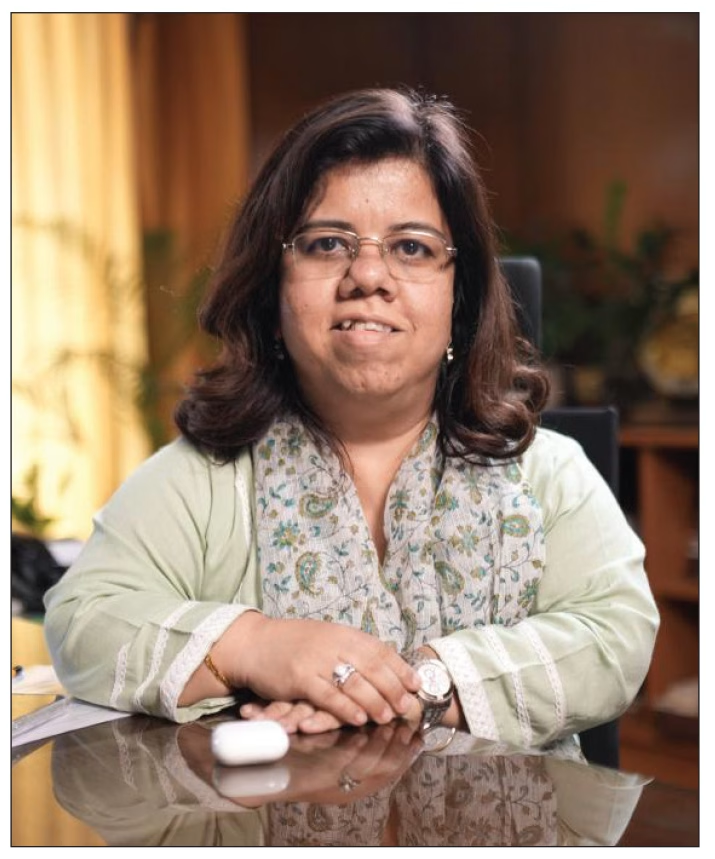
Devender Singh IndiaPrime Research Desk IAS Aarti Dogra Biography a 2006-batch Indian Administrative Service (IAS) officer of the Rajasthan Cadre, has emerged as one of the most talked-about administrators in Rajasthan’s power sector. Her leadership at Jaipur Vidyut Vitran Nigam Limited (JVVNL) has attracted widespread attention for integrating data-driven governance, technology, and accountability into the state’s electricity distribution system.
Over the past several months, Rajasthan’s energy sector has witnessed remarkable administrative reforms. Data-based monitoring of electricity theft, initiatives to eliminate defective electricity meters, a record-breaking 102% revenue collection, digital monitoring systems, GIS mapping, drone surveillance, and technology-driven consumer services have positioned Jaipur DISCOM among India’s most progressive electricity distribution companies.
At the center of these reforms is IAS Aarti Dogra, an officer who has successfully transformed administrative innovation from policy discussions into measurable improvements on the ground. Her focus on transparency, accountability, and technology has significantly improved electricity distribution and consumer services across the state.
However, Aarti Dogra’s reputation extends far beyond the energy department. During her tenure as District Collector in several Rajasthan districts, she earned national recognition for innovations in sanitation, women empowerment, good governance, and election management. Whether it was the award-winning “Banko Bikano” sanitation campaign or creating an accessible election model for persons with disabilities, her initiatives have consistently received appreciation at the national level.
With nearly two decades of administrative experience, Aarti Dogra has demonstrated that effective governance is not merely about formulating policies—it is about implementing them efficiently at the grassroots level. Today, she is widely regarded as one of Rajasthan’s most influential and result-oriented civil servants.
Early Life
Aarti Dogra’s journey to success is an inspiring story of determination, resilience, and excellence.
She was born in Dehradun, Uttarakhand. During childhood, doctors diagnosed her with Achondroplasia, a rare genetic condition that affects physical growth and results in short stature.
Despite social prejudices and challenges, her parents never allowed her to feel limited by her condition. Instead, they encouraged her to pursue education with confidence and determination.
Education
Aarti Dogra completed her early education in Dehradun before pursuing higher studies and preparing for the Civil Services Examination.
In 2006, she cleared the UPSC Civil Services Examination in her very first attempt and was allotted the Rajasthan Cadre.
Beginning of Her Administrative Career
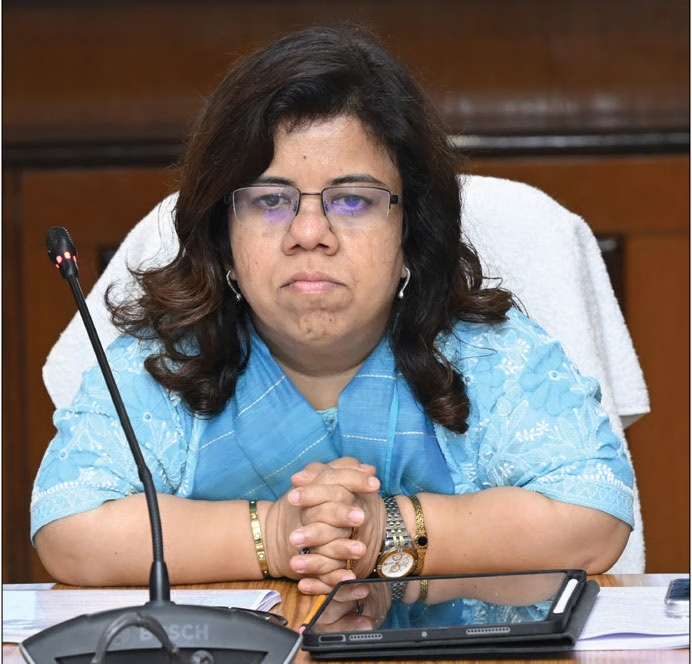
Serving in various administrative positions across Rajasthan, Aarti Dogra built a reputation for excellence in:
- Rural Development
- Social Justice
- Election Management
- Women’s Empowerment
- Sanitation Campaigns
Her administrative style has consistently been defined by five core principles:
- Extensive field visits
- Data-driven decision-making
- Technology-led governance
- Administrative accountability
- Time-bound problem resolution
The Award-Winning ‘Banko Bikano’ Campaign
One of the most defining achievements of Aarti Dogra’s career was the ‘Banko Bikano’ sanitation campaign.
As District Collector of Bikaner, she transformed the Open Defecation Free (ODF) mission from a government programme into a people’s movement.
The campaign focused on:
- Active participation of Gram Panchayats
- Women-led community leadership
- Social monitoring
- Local innovations
- Community participation
As a result, hundreds of villages achieved Open Defecation Free status. The campaign later became a model studied by several Indian states.
Prime Minister’s Award for Excellence
For the outstanding success of the Banko Bikano Campaign, Aarti Dogra received the Prime Minister’s Award for Excellence in Public Administration.
The prestigious honour is presented by the Government of India to officers whose administrative innovations create measurable improvements in citizens’ lives.
Inclusive Elections for Persons with Disabilities
While serving as District Collector of Ajmer, Aarti Dogra introduced several reforms to make elections fully accessible for persons with disabilities.
Her initiatives included:
- Wheelchair assistance
- Barrier-free ramps
- Dedicated transport vehicles
- Volunteers at polling stations
- Medical assistance
These measures significantly increased voter participation among persons with disabilities and earned her the National Election Award for inclusive election management.
Role in the Chief Minister’s Office (CMO)
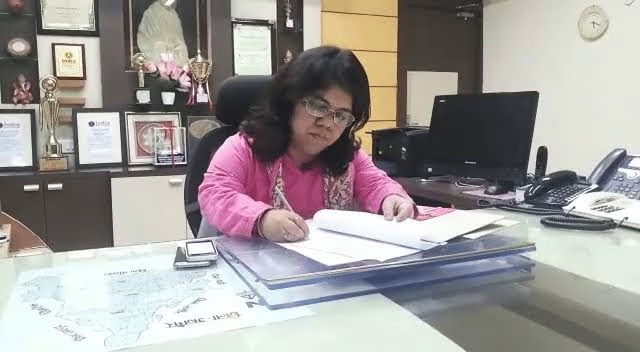
Aarti Dogra has also served in the Chief Minister’s Office (CMO), Rajasthan, where she handled several key administrative responsibilities. Her role involved coordinating between government departments, monitoring the implementation of policy decisions, and overseeing major development projects.
Her experience in the CMO further strengthened her expertise in governance, policy execution, and inter-departmental coordination, making her one of Rajasthan’s most trusted senior bureaucrats.
A New Identity in Rajasthan’s Power Sector
Following her appointment to the Energy Department in 2024, Aarti Dogra took charge of several crucial responsibilities in Rajasthan’s power sector, including leadership roles in Jaipur DISCOM (JVVNL), Jodhpur DISCOM, and the state’s Energy Department.
Her administration introduced a series of structural reforms aimed at improving efficiency, transparency, consumer satisfaction, and financial sustainability.
Historic Reforms at Jaipur DISCOM (JVVNL)
Under Aarti Dogra’s leadership, Jaipur DISCOM implemented several landmark reforms that significantly improved operational performance.
1. Record Revenue Collection
One of the most remarkable achievements under her leadership was the record 102% revenue collection during the financial year 2025–26.
This achievement is regarded as one of the most significant financial improvements in Jaipur DISCOM over the past two decades. Improved billing efficiency, enhanced recovery mechanisms, and stronger field accountability played a key role in achieving this milestone
2. Live Monitoring of Consumer Complaints
Aarti Dogra introduced technology-driven reforms to strengthen consumer grievance redressal.
The upgraded complaint management system integrated:
- Centralized Call Centre
- Fault Rectification Teams (FRT)
- GPS Tracking
- Mobile Applications
- Utility Billing System
The integration significantly reduced instances of fake complaint closures, ensuring that complaints were resolved before being marked as closed.
3. Accountability-Based Administration
She introduced a rigorous performance review mechanism for every operational circle.
Officers were evaluated on measurable performance indicators such as:
- Distribution Losses (Line Loss)
- Complaint Resolution Time
- Revenue Collection
- Consumer Satisfaction
The objective was to establish a transparent, performance-oriented administrative culture.
Smart Energy Management
Aarti Dogra has prioritized digital transformation across Rajasthan’s electricity distribution network.
Major initiatives include:
- Smart Metering
- Digital Billing Systems
- Data Analytics
- E-Governance Platforms
- Rooftop Solar Integration
- GIS-Based Network Mapping
- Drone-Assisted Infrastructure Monitoring
These initiatives are aimed at modernizing power distribution while enhancing operational efficiency and improving consumer experience.
 An Inspiration for Women and UPSC Aspirants
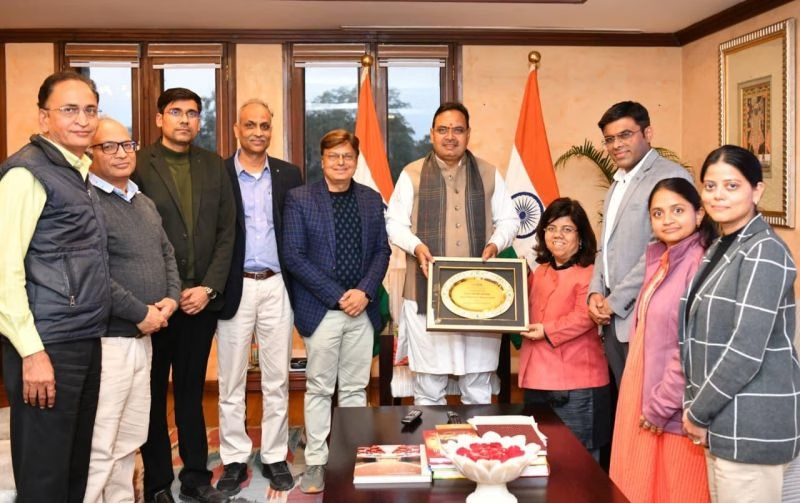
Today, Aarti Dogra serves as a role model for thousands of students, civil service aspirants, and women professionals across India.
Her journey demonstrates that determination, competence, and integrity matter far more than physical limitations.
One of the principles often associated with her inspiring journey is:
“Limitations exist not in the body, but in the mind.”
Leadership Style
Aarti Dogra’s administrative philosophy is built on five key pillars:
- Transparency
- Technological Innovation
- Teamwork
- Accountability
- Public-Centric Governance
Her governance model emphasizes measurable outcomes, field-level implementation, and citizen-focused public services.
Major Awards and Recognitions
Throughout her distinguished administrative career, Aarti Dogra has received several prestigious honours, including:
- Prime Minister’s Award for Excellence in Public Administration
- National Accessible Election Award
- Various Administrative Excellence Awards from the Government of Rajasthan
- Women’s Leadership and Administrative Innovation Awards
- Institutional Recognition for Leadership in Rajasthan’s Power Sector
Lessons for Young Civil Servants
Aarti Dogra’s career offers valuable lessons for future administrators:
- Challenges should never become barriers to success.
- Technology and human sensitivity can complement each other.
- Good governance is about earning public trust, not merely issuing orders.
- Small administrative improvements can lead to transformational change.
- Innovation and accountability are essential for sustainable public service.
Conclusion
IAS Aarti Dogra’s journey is an inspiring example of courage, public service, and visionary leadership.
From leading award-winning sanitation campaigns to transforming Rajasthan’s power sector through digital governance, she has consistently demonstrated that determined leadership can deliver extraordinary results even within limited resources.
Her contributions to governance, transparency, and administrative innovation continue to influence Rajasthan’s public administration and energy sector. As the state advances toward smarter infrastructure and citizen-centric governance, her leadership is expected to play a significant role in shaping its future.
 Frequently Asked Questions (FAQs)

1. Who is IAS Aarti Dogra?
Aarti Dogra is a senior Indian Administrative Service (IAS) officer of the 2006 Rajasthan Cadre. She is widely recognized for her contributions to public administration, sanitation, election management, and energy sector reforms.
2. Which cadre does Aarti Dogra belong to?
She belongs to the Rajasthan Cadre of the Indian Administrative Service. Originally from Dehradun, Uttarakhand, she joined the IAS in 2006 after clearing the UPSC Civil Services Examination in her first attempt.
3. What is IAS Aarti Dogra’s current position?
She currently serves as Secretary, Energy Department, Government of Rajasthan. She also holds leadership responsibilities as Chairperson of Rajasthan DISCOMs and Chairperson & Managing Director of Jaipur Vidyut Vitran Nigam Limited (JVVNL).
4. What are Aarti Dogra’s major achievements?
Her notable achievements include:
- Leading the award-winning Banko Bikano sanitation campaign.
- Receiving the Prime Minister’s Award for Excellence in Public Administration.
- Developing an accessible election model for persons with disabilities in Ajmer.
- Introducing technology-driven reforms at Jaipur DISCOM.
- Strengthening revenue collection, digital monitoring, and consumer grievance systems.
5. What is the Banko Bikano campaign?
Banko Bikano was a community-driven sanitation campaign launched in Bikaner to eliminate open defecation through public participation, women’s leadership, and local innovation. The initiative later became a national model for sanitation programmes.
6. What is Aarti Dogra’s role in Rajasthan’s Energy Department?
She is leading several initiatives aimed at modernizing Rajasthan’s electricity distribution system through digital governance, smart metering, improved revenue collection, consumer-centric services, and operational transparency.
7. What awards has IAS Aarti Dogra received?
Her honours include:
- Prime Minister’s Award for Excellence in Public Administration
- National Accessible Election Award
- Multiple Government of Rajasthan Administrative Excellence Awards
- Women’s Leadership Awards
- Institutional recognitions for innovation in public administration and the energy sector
8. What leadership style is Aarti Dogra known for?
She is known for a leadership approach based on data-driven decision-making, technology adoption, transparency, accountability, field monitoring, and citizen participation, making her one of Rajasthan’s most respected administrators.