
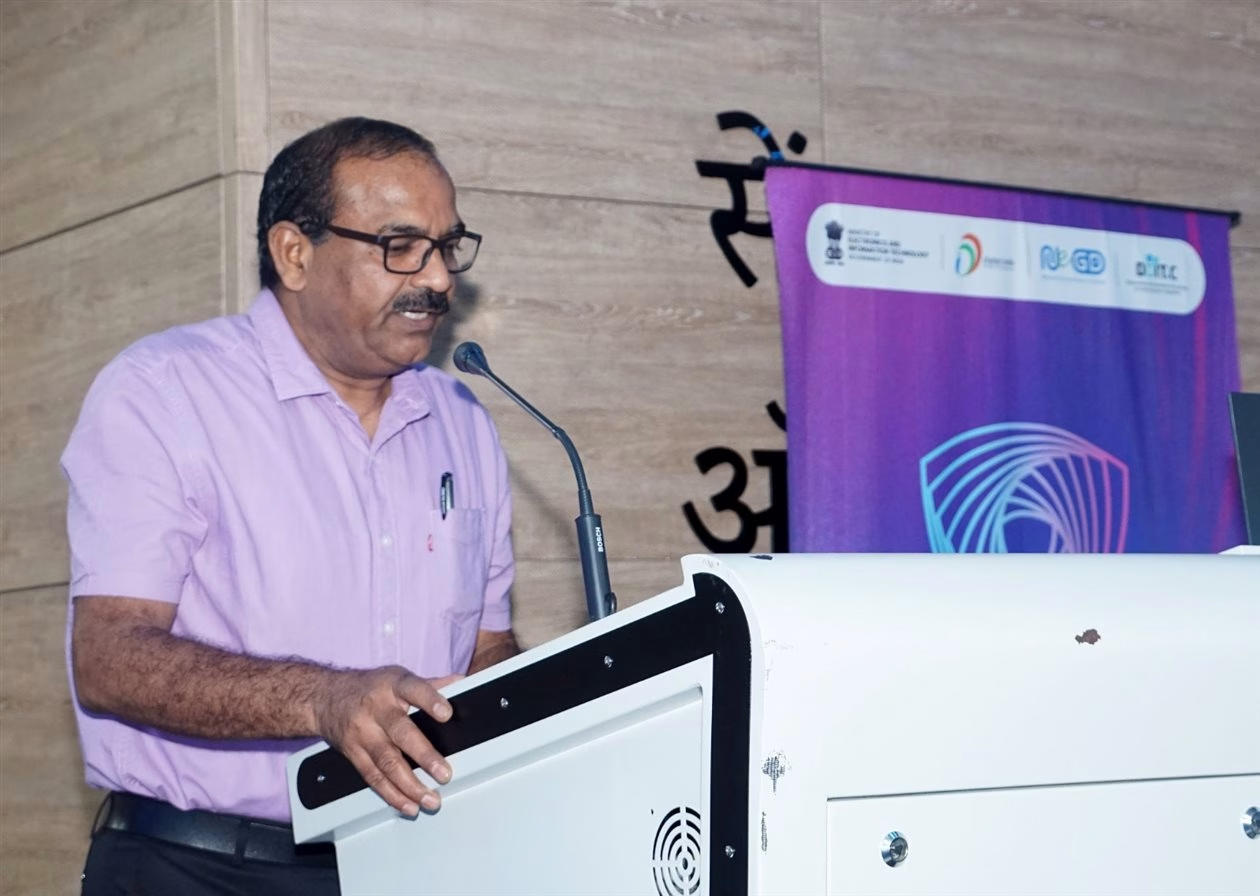
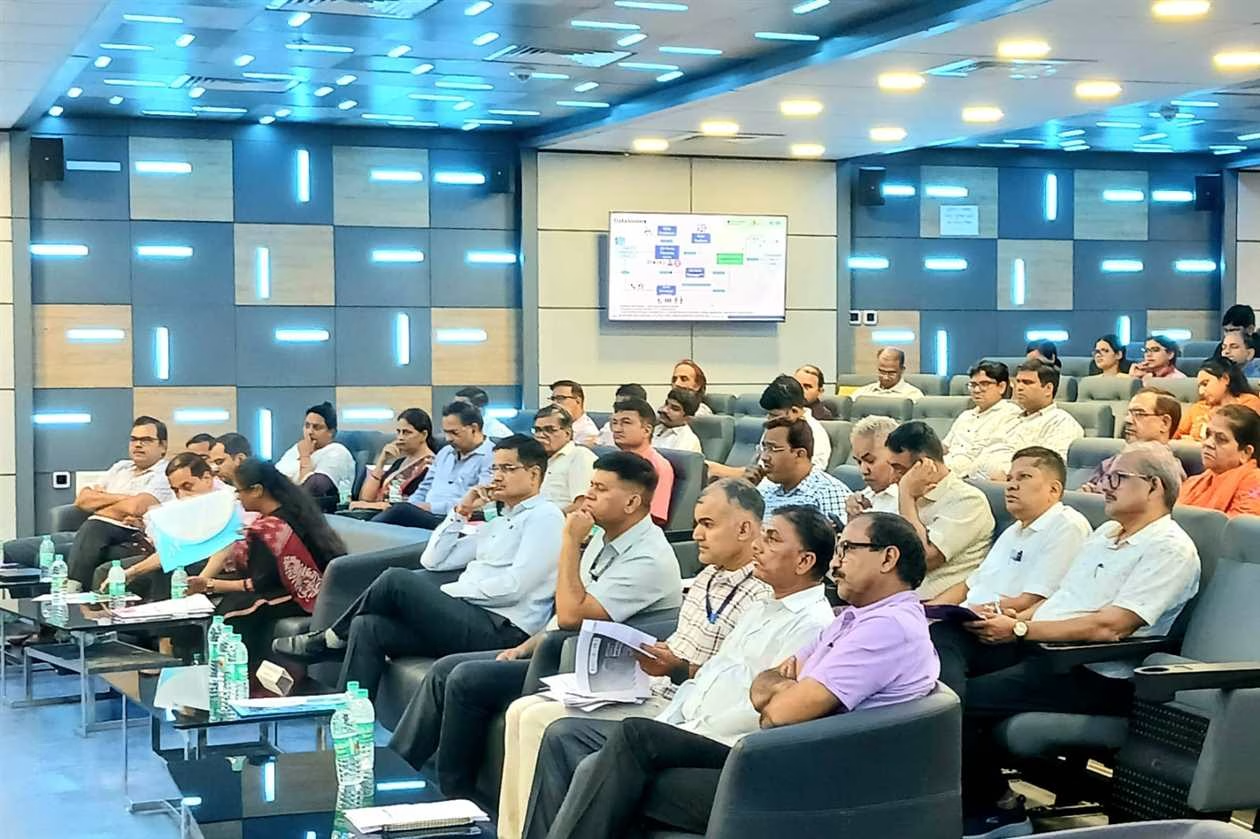
India Prime Technology Desk | Jaipur ,Rajasthan’s Digital Security Blueprint: As Rajasthan accelerates digital governance, the state is shifting its focus from expanding e-governance services to protecting critical government data and digital infrastructure. In a significant move, the Department of Information Technology & Communication (DoIT&C), Government of Rajasthan, organized a state-level consultation workshop on “Strengthening Cybersecurity Frameworks for State Data” at the Centre of Excellence for Revenue Research and Analysis (COERRA), Jaipur.
The workshop was conducted in collaboration with the Ministry of Electronics and Information Technology (MeitY) and the National e-Governance Division (NeGD) as part of the third phase of India’s national consultation process for developing a stronger cybersecurity framework for states.
Beyond IT: Cybersecurity is Now a Governance and National Security Priority
With governments increasingly relying on digital platforms for governance, they now manage vast repositories of sensitive citizen information—including land records, revenue databases, welfare schemes, healthcare, education, and financial data.
A successful cyberattack today can result in:
- Disruption of essential government services
- Theft of confidential citizen data
- Financial and administrative losses
- Damage to public trust
- Threats to critical digital infrastructure
Recognizing these challenges, the workshop focused on building a resilient cybersecurity ecosystem for Rajasthan.
Key Areas Discussed
The consultation covered six major strategic themes, including:
- Risk-based cybersecurity assessment
- Security of State Data Centres and SWAN infrastructure
- Security Operations Centres (SOC)
- State Computer Security Incident Response Team (CSIRT)
- Modernization of legacy government IT systems
- Secure-by-Design and Zero Trust architecture
- Data classification policies
- Implementation of the Digital Personal Data Protection (DPDP) Act, 2023
- DPDP Rules, 2025
- Appointment of Chief Information Security Officers (CISOs) across departments
- Capacity building, cybersecurity awareness and skill development
Experts emphasized adopting globally accepted cybersecurity practices while strengthening coordination among government departments.
Building Rajasthan’s Cyber Warriors
Deputy Inspector General (Cyber Crime) Shantanu Kumar Singh Chandrawat highlighted the rapid rise in cybercrime and stressed the need to develop a skilled workforce of Cyber Warriors capable of detecting, preventing and responding to sophisticated cyber threats.
He said coordinated efforts between the Department of Information Technology & Communication and the Cyber Crime Unit are strengthening the state’s cyber defence capabilities.
DPDP Compliance Takes Centre Stage
A major focus of the workshop was the implementation of the Digital Personal Data Protection (DPDP) Act, 2023 and the DPDP Rules, 2025.
The discussions underscored the importance of:
- Responsible handling of citizens’ personal data
- Departmental accountability for data protection
- Standardized data governance practices
- Improved preparedness against data breaches
Compliance with the DPDP framework is expected to become a cornerstone of digital governance across Indian states.
India Prime Analysis: From Digital Governance to Digital Resilience
The consultation signals a broader policy shift. Rajasthan is not merely expanding digital services—it is preparing to secure them.
If the recommendations are implemented, the state could:
- Establish dedicated CISOs across government departments
- Strengthen Security Operations Centres (SOC)
- Upgrade legacy IT systems with modern security standards
- Adopt Zero Trust architecture for government networks
- Build an institutional cybersecurity culture across the state administration
This would position Rajasthan among the states proactively aligning with India’s evolving cybersecurity strategy.
Senior Officials and Experts Participated
The workshop featured technical sessions led by senior officials and cybersecurity experts, including:
- Akhilesh Mittal, Technical Director, Department of Information Technology & Communication
- Shantanu Kumar Singh Chandrawat,Deputy Inspector General (Cyber Crime)
- Dinesh Didel, Director (Technology Management), National e-Governance Division (NeGD)
- Arshil Khan, Team Lead (Cyber Law), NeGD
- Mahesh Sharma, Additional Superintendent of Police, State Crime Records Bureau (SCRB)
Chief Information Security Officers (CISOs), Deputy CISOs, and senior officials from multiple state government departments also participated.
What Happens Next?
Recommendations and policy inputs received during the workshop will be consolidated and submitted to the Ministry of Electronics and Information Technology (MeitY). These inputs will contribute to the development of India’s future national cybersecurity framework for state governments.
Key Takeaways
- Rajasthan hosted a high-level consultation on strengthening state cybersecurity.
- Focus areas included Zero Trust architecture, SOC, CSIRT, and Secure-by-Design principles.
- DPDP Act, 2023 and DPDP Rules, 2025 implementation received significant attention.
- Appointment of CISOs across departments was discussed.
- Cyber Warriors and cybersecurity capacity building emerged as major priorities.
- Rajasthan’s recommendations will contribute to India’s national cybersecurity framework.
India Prime Insight
The next phase of digital governance will not be defined solely by the number of online services governments provide, but by how securely they protect citizen data and critical digital infrastructure. Rajasthan’s latest initiative reflects an early effort to build that long-term digital resilience.
Keywords
Deputy Inspector General (Cyber Crime) Shantanu Kumar Singh Chandrawat , Rajasthan Cyber Security, Rajasthan State Data Security, Zero Trust Architecture India, DPDP Act 2023, Rajasthan Digital Governance, Cyber Warriors Rajasthan, MeitY Cyber Security, State Cyber Security Framework, NeGD Rajasthan, Government Data Protection India ,Akhilesh Mittal, Technical Director, Department of Information Technology & Communication,Dinesh Didel Director (Technology Management) National e-Governance Division (NeGD), Arshil Khan Team Lead (Cyber Law), NeGD ,Mahesh Sharma Additional Superintendent of Police, State Crime Records Bureau (SCRB)