Tejasvi Singh | Jaipur | IndiaPrime Desk
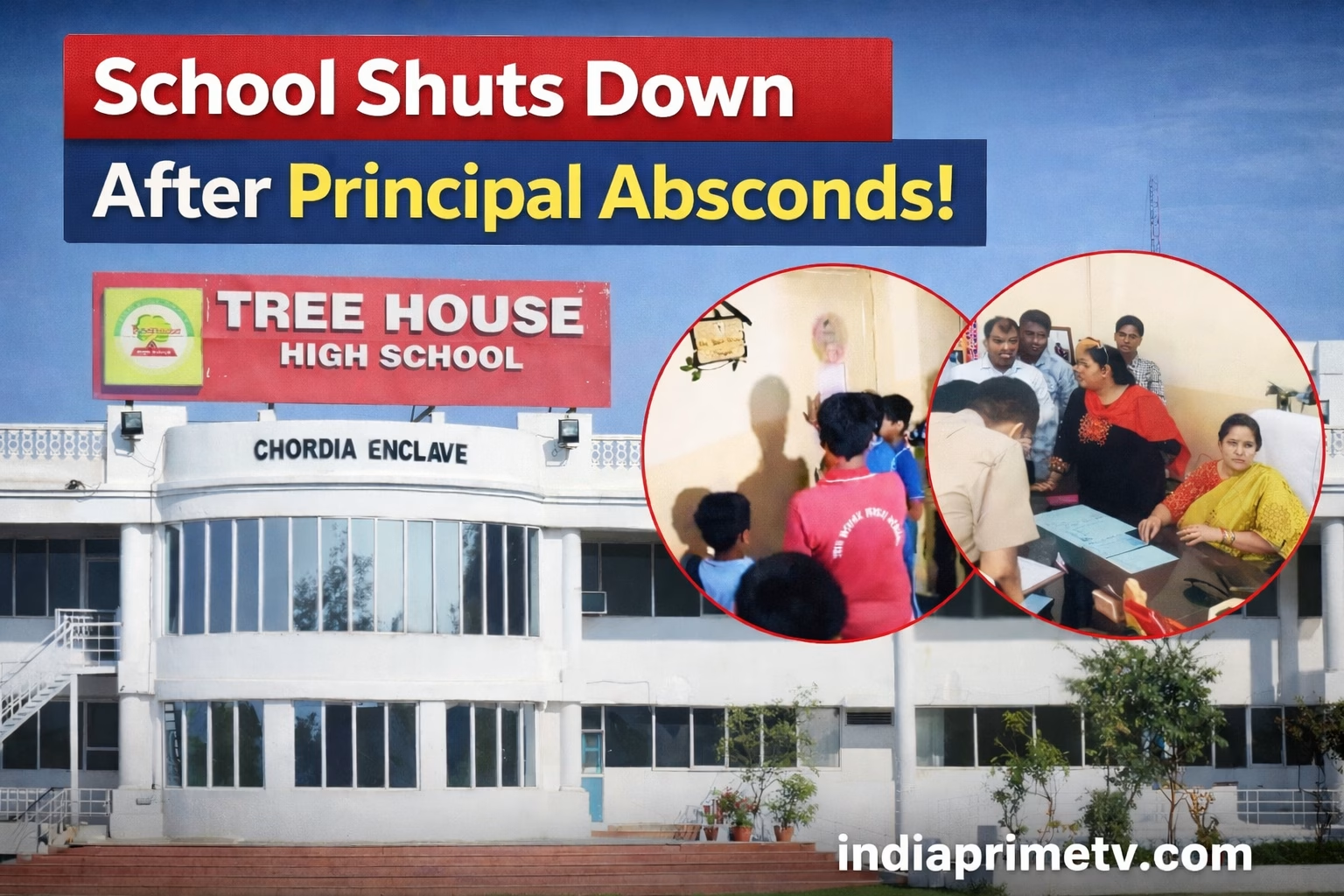
The sudden closure of Tree House High School in Shyam Nagar, Jaipur is not just an isolated incident, but a serious reflection of the weak regulatory framework governing private schools in India. Shutting down a school without prior notice directly violates both the Right to Education of children and consumer protection norms, leaving nearly 180–200 students and hundreds of parents in distress.
Key Developments (April 2026)
According to parents, they were invited to a meeting through the school’s WhatsApp group. However, when they arrived at the campus the next morning, they found the school gates locked. Shocked by the situation, parents immediately began protesting outside the premises.
The school management allegedly pasted a closure notice overnight and disappeared without any formal communication. Parents have accused the administration of collecting full-year fees and selling books and study material worth thousands of rupees before abruptly shutting down operations.
As the news spread, a large number of parents gathered at the school and raised allegations of fraud and mismanagement against the authorities.
Current Situation and Administrative Action
Following strong protests by parents, the district administration and education department intervened by forming an official committee. The authorities have initiated steps to:
- Ensure refund of fees
- Issue Transfer Certificates (TCs) to students
- Facilitate admission in nearby schools
- Address concerns of teachers, including three months’ salary compensation
However, the incident has raised a critical question — should strict legal action be taken against such school managements who treat education as a business and shut down institutions overnight?
Reasons Behind the Closure
As per findings by the education department, the school was operating on land owned by Vinay Chordia, while it was being managed by Rajeev Bhatia.
Sources indicate that a long-standing dispute over building rent between the landowner and the operator had escalated into a legal battle. The matter is currently under court consideration, further complicating the situation.
It is also reported that Rajeev Bhatia is already facing multiple legal cases related to property issues. Recently, the school received a legal notice, which is believed to be the immediate trigger behind the sudden shutdown.
Experts suggest that mounting legal pressure and the ongoing rent dispute forced the management to take this abrupt decision, severely impacting students and parents.
A Larger National Pattern
This is not the first such case in India. Several incidents across the country have highlighted similar issues within the private education sector. Institutions like Ryan International School, Delhi Public School, and Amity International School have also faced controversies ranging from safety lapses and fee disputes to management conflicts.
In many states, smaller private schools have shut down suddenly due to loss of recognition, financial instability, or legal disputes. A common pattern emerges across such cases:
- Legal and ownership disputes
- Financial irregularities
- Licensing and compliance failures
- Lack of effective administrative oversight
In all such situations, it is the students and parents who suffer the most.
Prevention and Way Forward
To avoid such crises in the future, stronger accountability mechanisms are essential.
For Parents:
- Verify school affiliation (CBSE/State Board)
- Check the institution’s track record and reputation
- Avoid paying full-year fees in advance
For Government:
- Conduct regular financial audits of private schools
- Introduce mandatory emergency funds or safeguards
- Strengthen monitoring and enforcement mechanisms
Conclusion
The Tree House High School incident highlights a serious gap in India’s private education system. Without stricter regulations and proactive governance, such disruptions will continue to put the future of students at risk.