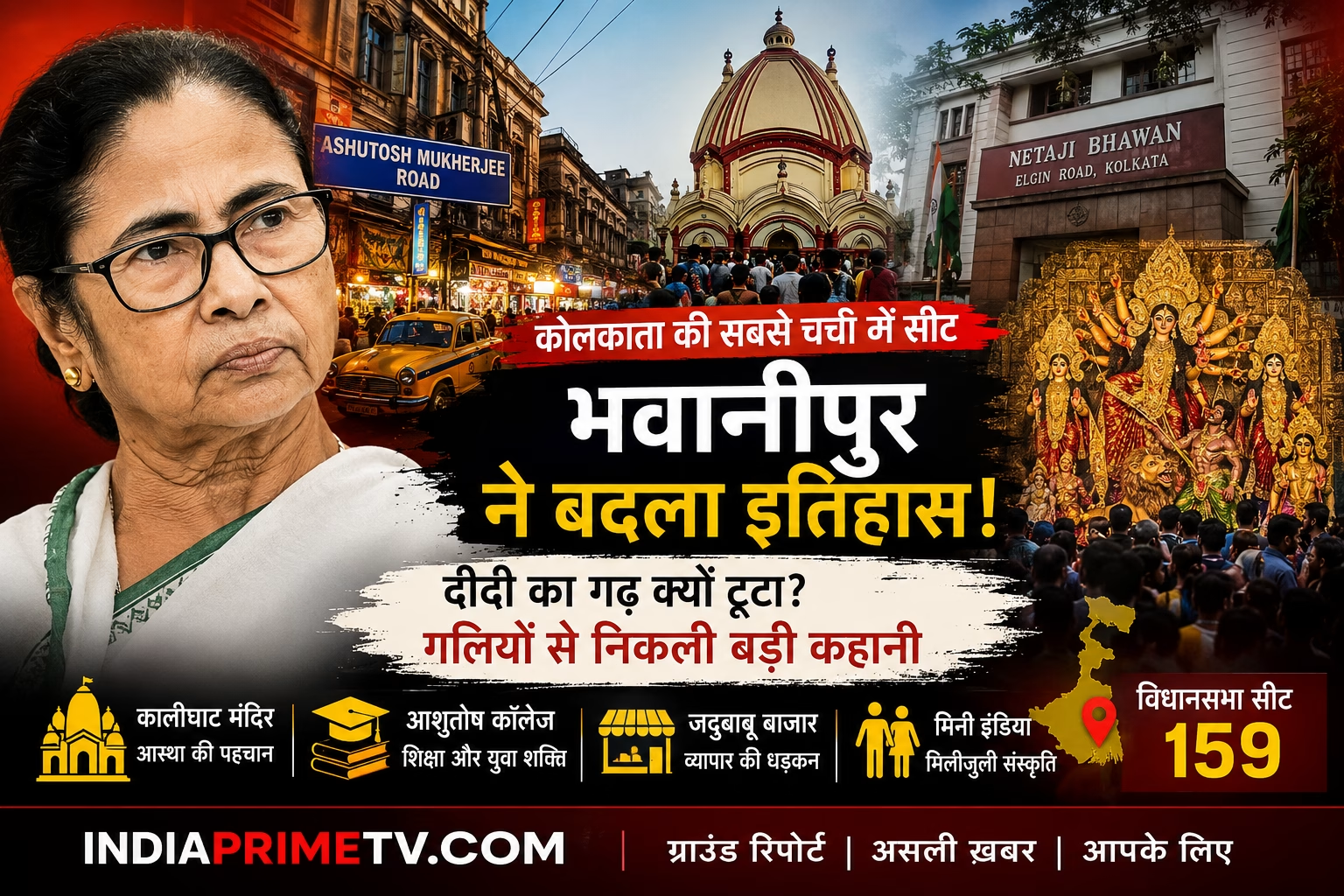
Tejasvi Singh | India Prime Political Desk Kolkata’s Bhabanipur Assembly constituency (Seat No. 159) is once again in the headlines—but this time, the conversation goes far beyond electoral wins and losses. What’s emerging from Bhabanipur is a deeper story about a changing urban mindset that is beginning to shape the direction of Indian politics. Long considered a safe and stable political stronghold, Bhabanipur is now evolving into a kind of political laboratory, where voters are making decisions based less on identity and more on performance, balance, and local issues. This is precisely why the 2026 results have sparked a broader debate not just in Kolkata, but across West Bengal.
Table of Contents
ToggleBhabanipur Is No Ordinary Constituency
The story of Bhabanipur is unlike that of a typical assembly seat. What began in the 18th century as a small village has today transformed into one of Kolkata’s most prestigious, expensive, and influential neighborhoods. Its name is linked to Goddess Bhavani, and the nearby Kalighat Temple reinforces its deep religious and cultural identity.
However, Bhabanipur’s real strength lies in its diversity. Bengalis, Marwaris, Gujaratis, Punjabis, and Muslims have lived here together for decades. This unique demographic mix is why Bhabanipur is often referred to as “Mini India.”
What makes this constituency particularly fascinating is that its politics does not revolve around any single community or class. With around 160,000 voters, linguistic and cultural balance plays a decisive role in shaping electoral outcomes. While Bengali voters often prioritize tradition and cultural identity, non-Bengali communities tend to focus more on business stability and economic policies. This blend turns Bhabanipur into a political arena where each vote represents not just a number, but a broader social message.
A Living, Breathing Urban Ecosystem
Life in Bhabanipur begins early in the morning. The bustling Jadubabu Market sees generations of fish traders at work, while Ashutosh Mukherjee Road remains alive with shops selling clothes and jewelry. Students from institutions like Ashutosh College fill the streets, cafés, and bookstores, contributing to a vibrant intellectual and economic environment.
The area’s “student economy” is a crucial pillar, with thousands of students driving demand for PG accommodations, hostels, cafés, and study resources. This constant flow of youth energy keeps Bhabanipur dynamic and forward-looking.
Why Bhabanipur Is Called ‘Mini India’
Bhabanipur’s historical identity is equally rich. Legendary filmmaker Satyajit Ray spent his early years here, while prominent figures like Syama Prasad Mukherjee and Hemant Kumar were closely associated with the area.
The Netaji Bhawan on Elgin Road stands as a powerful reminder of history—it was from here that Subhas Chandra Bose made his daring escape from British surveillance. Such heritage gives Bhabanipur a status beyond geography—it becomes a cultural and historical symbol.
In the mid-20th century, Bhabanipur was also known as “Cinema Para,” with iconic theaters like Basusree and Purna hosting film premieres. Over time, these cultural hubs evolved into spaces of political discussion. Even today, the tea stalls of Bhabanipur are famous for “adda”—informal conversations where politics, cinema, and society are debated in depth. These everyday discussions contribute to a politically aware and analytical voter base.
Cultural Harmony as Political Strength
Perhaps Bhabanipur’s greatest strength is its cultural harmony. During Durga Puja, the area is filled with elaborate pandals, while Gujarati and Marwari communities organize vibrant garba and dandiya events. During Diwali and Kali Puja, the streets glow with celebration.
This cultural fusion goes far beyond festivals—it is reflected in business partnerships, educational institutions, and everyday social interactions. As a result, voters here are rarely bound by rigid ideological lines.
2026: A Signal of Changing Urban India
The 2026 election results have made one thing clear—Bhabanipur’s voters are now more independent and issue-driven than ever before. This shift is not just a political event; it is a reflection of changing urban India. Voters are increasingly prioritizing performance, development, and balance over tradition and emotional appeal.
Bhabanipur has emerged as one of the clearest examples of this transformation.
A Political Barometer for the Future
Experts believe that Bhabanipur’s electoral trends could serve as an indicator for other urban constituencies in the future. The results here suggest that politics in India’s metropolitan areas is undergoing a rapid transformation—where identity politics is gradually giving way to accountability and governance.
This is why Bhabanipur is no longer just an assembly seat; it is now being viewed as an “urban political barometer.”
Conclusion
Ultimately, Bhabanipur’s story tells us that democracy is not just about casting votes—it is a reflection of a constantly evolving society. Every street, every market, and every tea stall here tells a new story—one that highlights how India’s urban voter is becoming more aware, independent, and decisive than ever before.