
Devender Singh | IndiaprimeTV.com Delhi Police Recruitment Results 2026: What the Numbers Reveal About India’s Youth, Competition and Career Aspirations .The latest Delhi Police recruitment results are more than just a list of successful candidates. They offer valuable insights into the changing aspirations of India’s youth, the growing appeal of government jobs, and the increasing level of competition in public sector recruitment.
The Staff Selection Commission (SSC) has announced the results of the Computer-Based Examination (CBE) for the Delhi Police Constable Recruitment Examination 2025. Candidates who have qualified will now move on to the next stages — the Physical Endurance and Measurement Test (PE&MT) and Document Verification (DV).
The examination was conducted between December 18, 2025, and January 6, 2026, at centres across the country.
Delhi Police Results: Key Numbers at a Glance
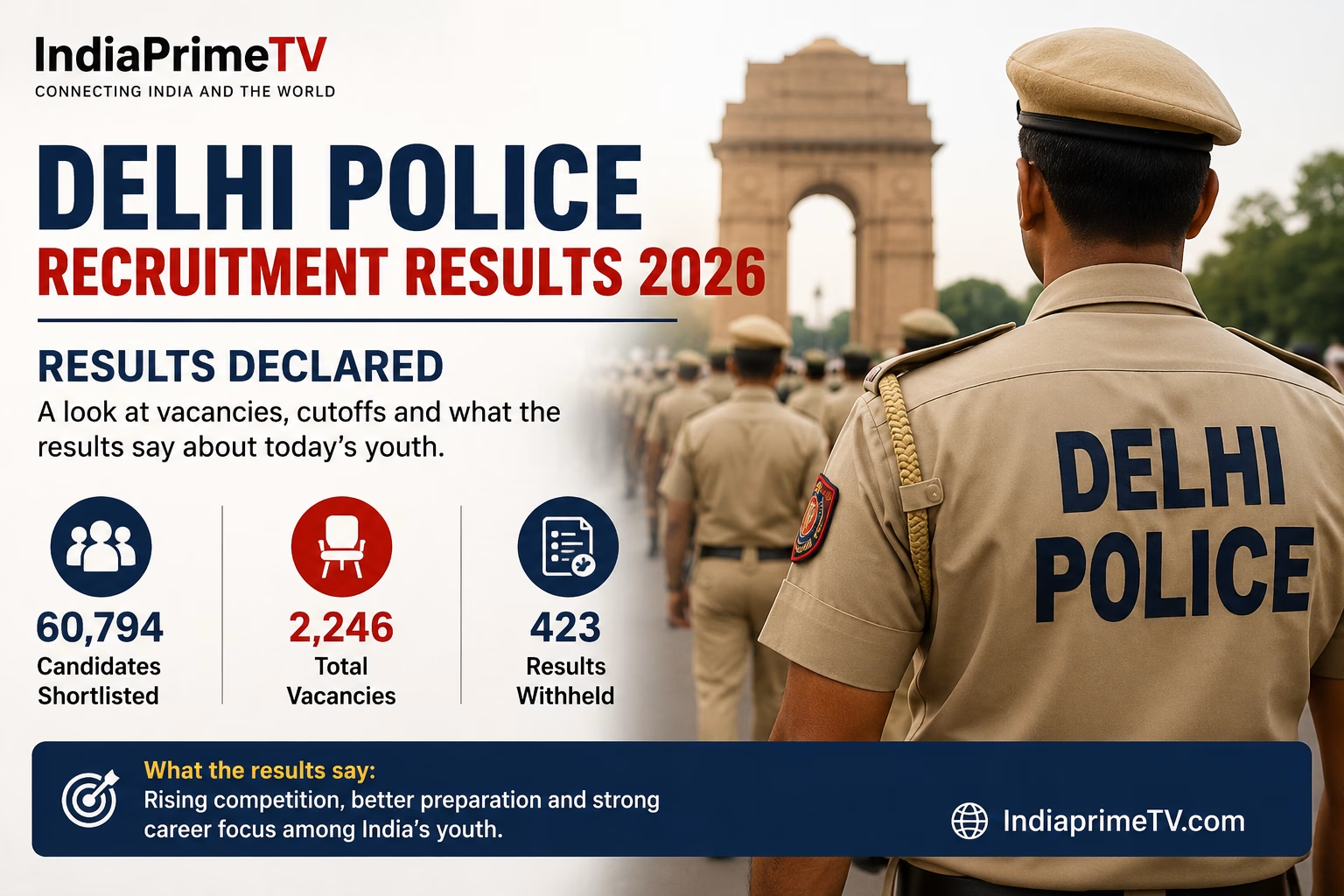
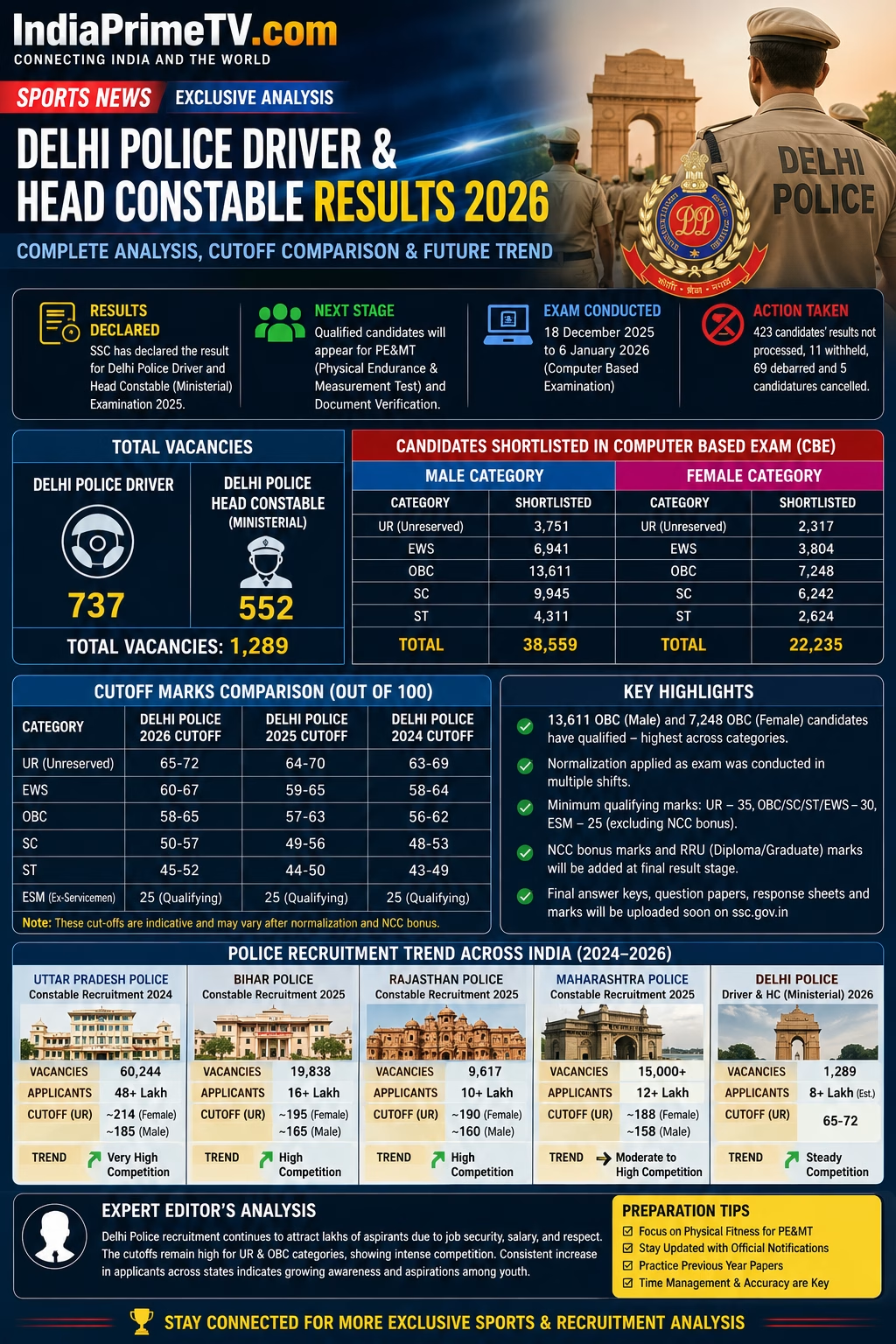
According to the SSC, a total of 60,794 candidates have been shortlisted for the next stage of the recruitment process.
Male Candidates Shortlisted
- OBC: 13,611
- SC: 9,945
- EWS: 6,941
- ST: 4,311
- Unreserved (UR): 3,751
Total: 38,559 candidates
Female Candidates Shortlisted
- OBC: 7,248
- SC: 6,242
- EWS: 3,804
- ST: 2,624
- Unreserved (UR): 2,317
Total: 22,235 candidates
The category-wise data clearly indicates strong participation from reserved categories, reflecting broader access to government employment opportunities.
Delhi Police Driver and Head Constable Vacancies
Recent Delhi Police recruitment drives have attracted millions of applicants.
- Delhi Police Driver Constable: 1,411 vacancies
- Delhi Police Head Constable (Ministerial): 835 vacancies
Total vacancies: 2,246 posts
With a limited number of vacancies and a massive applicant pool, the competition ratio remains extremely high.
Unfair Means Cases Raise Concerns
SSC has taken strict action against candidates involved in unfair practices.
- Results of 423 candidates were not processed.
- Results of 11 candidates were withheld for further scrutiny.
- 69 candidates were debarred from future examinations.
- Five candidatures were cancelled based on recommendations from SSC regional offices.
These figures highlight the growing pressure and intense competition surrounding government recruitment examinations.
Qualifying Marks and Expected Cut-Off Trends
The minimum qualifying marks prescribed by SSC were:
- Unreserved (UR): 35 marks
- SC/ST/OBC/EWS: 30 marks
- Ex-Servicemen (ESM): 25 marks
These qualifying marks do not include NCC bonus marks, which will be added during the final selection process after document verification.
As the examination was conducted in multiple shifts, SSC used score normalisation to ensure fairness.
Estimated Cut-Off Comparison
| Category | 2024 | 2025 | 2026 (Expected) |
|---|---|---|---|
| UR | 66–69 | 68–71 | 70–73 |
| OBC | 63–66 | 65–68 | 67–70 |
| SC | 58–61 | 60–63 | 61–64 |
| ST | 54–57 | 55–58 | 56–59 |
Expected cut-offs are based on previous recruitment trends and may vary after final normalisation and bonus marks.
What Do These Results Say About India’s Youth?
The Delhi Police recruitment data reflects three major trends among young job seekers.
1. Government Jobs Continue to Dominate Career Preferences
Despite the growth of the private sector and the digital economy, government jobs remain highly attractive due to:
- Job security
- Fixed salary and allowances
- Social prestige
- Pension and retirement benefits
- Career stability
Economic uncertainty and changing employment patterns have further strengthened the appeal of public sector jobs.
2. Competition Is Reaching New Levels
The increasing number of applicants for police recruitment across India suggests that young candidates are preparing more strategically than ever before.
Online coaching platforms, mock tests, AI-driven learning tools and data-based preparation strategies have transformed the recruitment landscape.
Success now depends not only on hard work but also on smart preparation and physical fitness.
3. Youth Efficiency and Preparedness Are Improving
The high number of candidates clearing the Computer-Based Examination reflects growing digital literacy and improved access to educational resources.
Today’s candidates are better informed, more disciplined and increasingly focused on long-term career planning.
However, the number of candidates penalised for unfair practices also highlights the need for stronger awareness around ethical competition.
How Delhi Police Compares With Other State Police Recruitments
The rising demand for police jobs is not limited to Delhi.
Uttar Pradesh Police
- Vacancies: 60,244
- Applications: More than 4.8 million
Bihar Police
- Vacancies: 19,838
- Applications: More than 1.6 million
Rajasthan Police
- Vacancies: Approximately 9,600
- Applications: More than 1 million
Maharashtra Police
- Vacancies: More than 15,000
- Applications: Over 1.2 million
These figures show that police recruitment has become one of India’s most competitive employment sectors.
The Bigger Picture
The Delhi Police results highlight a significant shift in India’s employment landscape.
Young people are increasingly seeking careers that offer stability, structure and long-term growth. Police and uniformed services are emerging as preferred career options because they combine financial security with public service and social recognition.
At the same time, rising cut-offs and intense competition indicate that future recruitment cycles will become even more demanding.
What Happens Next?
Candidates shortlisted in the Computer-Based Examination will now appear for the Physical Endurance and Measurement Test (PE&MT) and Document Verification (DV), which will be conducted by Delhi Police.
The detailed schedule will be announced separately on the official Delhi Police website.
Candidates are advised to focus on:
- Physical fitness preparation
- Document readiness
- Regular monitoring of official notifications
IndiaprimeTV Analysis
The Delhi Police Recruitment Results 2026 are not just about who qualified and who did not. They provide a snapshot of India’s evolving workforce.
The data suggests that Indian youth are becoming more competitive, digitally aware and career-focused. Government jobs continue to represent security and aspiration, while the growing number of applicants reflects increasing pressure in the job market.
For policymakers, these results underscore the need to create more quality employment opportunities. For candidates, they serve as a reminder that success in competitive examinations now requires a combination of knowledge, fitness, discipline and ethical preparation.