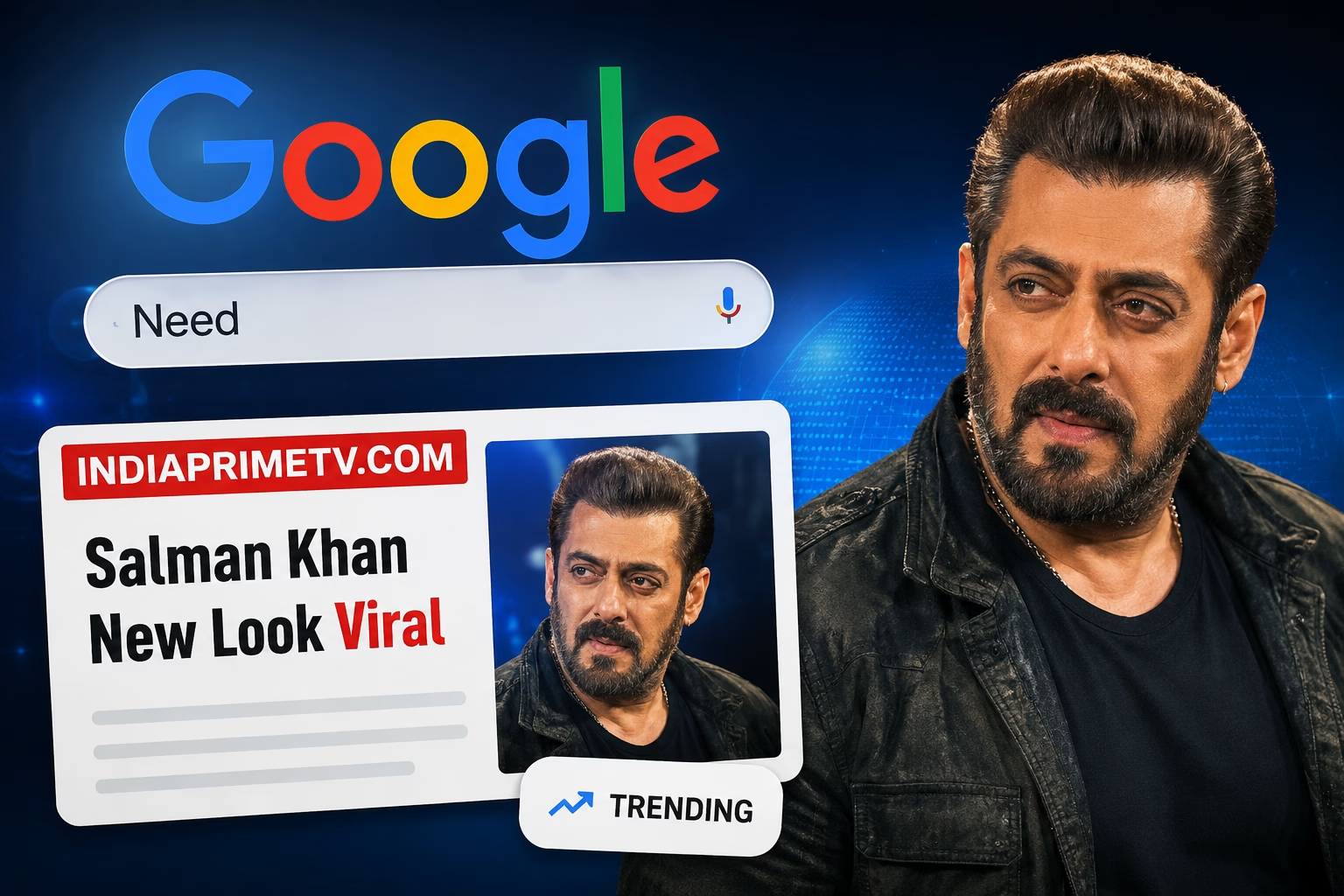
Tejasvi Singh Indiaprimetv Salman Khan’s latest appearance has gone viral, inspiring the trending ‘Job vs Jobless’ meme. Here’s why fans are talking about his new look, Bollywood superstar Salman Khan has once again become the center of social media discussion. However, this time it is not a movie announcement or a box-office record that has captured public attention. Instead, it is his latest appearance that has sparked a wave of reactions, memes, and debates across Instagram, X, and Facebook.
A recent photograph of Salman Khan featuring a rugged hairstyle and a more mature appearance quickly went viral. While many fans were curious about the dramatic transformation, meme creators found an opportunity to turn the image into one of the internet’s biggest trends of the week.
The now-viral “Job vs Jobless” meme has spread across social media platforms, with users comparing two contrasting versions of Salman Khan’s appearance. The meme humorously highlights the difference between a stressed working professional and someone without the pressures of a job. Within hours, thousands of users began sharing their own versions, making it one of the most relatable entertainment trends online.
Why Is the ‘Job vs Jobless’ Meme So Popular?
The success of the meme lies in its relatability.
Today’s generation faces increasing workplace pressure, long working hours, deadlines, and career uncertainty. Social media users immediately connected with the visual contrast shown in the meme format.
Many users joked that one version of Salman Khan represented employees after years of corporate stress, while the other represented a carefree lifestyle. The simplicity of the concept helped it resonate with millions of people.
In the era of viral content, relatability often matters more than celebrity status. This is exactly why the meme gained massive traction.
Is Salman Khan Preparing for a New Film Role?
Although Salman Khan has not officially revealed the reason behind his new appearance, speculation is already growing among fans.
Some believe the look could be linked to an upcoming movie project. Others have compared it to some of his earlier iconic transformations, particularly those that showcased a more rugged and realistic style.
Bollywood stars frequently undergo dramatic makeovers for film roles, and Salman Khan has done so multiple times throughout his career. Whether this transformation is part of a future project or simply a personal style change remains unknown.
Bollywood’s Long History of Unemployed and Struggling Heroes
Interestingly, the “Job vs Jobless” meme has reminded many movie lovers of an era when Bollywood heroes were not billionaires, secret agents, or larger-than-life action stars.
For decades, Indian cinema focused on ordinary young men struggling to find work, earn respect, and support their families.
Amitabh Bachchan: The Angry Young Man Era
During the 1970s and 1980s, Amitabh Bachchan became the voice of frustrated youth through films that reflected unemployment, poverty, and social inequality.
Popular examples include:
- Deewaar
- Trishul
- Kaala Patthar
- Namak Haraam
These films connected deeply with audiences because the characters represented real-life struggles faced by millions of Indians.
Rishi Kapoor and the Middle-Class Dream
Rishi Kapoor often portrayed relatable young men navigating love, career challenges, and family responsibilities.
Films such as:
- Prem Rog
- Chandni
- Saagar
- Bol Radha Bol
presented heroes who felt realistic rather than larger-than-life.
Govinda: The Common Man Superstar
In the 1990s, Govinda built an entire career around playing everyday characters trying to improve their lives.
Movies like:
- Raja Babu
- Coolie No. 1
- Hero No. 1
showcased ordinary individuals facing financial struggles while maintaining humor and optimism.
Why Did Bollywood Move Away From These Characters?
Over the past decade, mainstream Bollywood increasingly focused on wealthy businessmen, elite agents, gangsters, and larger-than-life action heroes.
As production budgets increased, filmmakers often favored glamorous stories over grounded narratives.
However, audience preferences appear to be shifting again.
The popularity of films featuring relatable protagonists suggests viewers still connect with stories that reflect real-life challenges.
Movies starring actors such as Ayushmann Khurrana and Rajkummar Rao have proven that audiences continue to appreciate ordinary characters dealing with everyday problems.
Is the Relatable Hero Making a Comeback?
Entertainment analysts believe that trends in cinema often move in cycles.
The 1970s belonged to the Angry Young Man.
The 1990s celebrated the middle-class romantic hero.
The 2000s introduced multiplex realism.
Now, social media culture favors authenticity and relatability.
The viral success of the “Job vs Jobless” meme demonstrates that audiences still enjoy content reflecting everyday experiences. Whether intentional or accidental, Salman Khan’s latest viral look has reignited a conversation about the kind of heroes viewers want to see on screen.
Final Thoughts
Salman Khan’s viral transformation is more than just another celebrity trend. It highlights how a single image can spark larger discussions about work culture, social pressures, and changing audience preferences.
The “Job vs Jobless” meme may have started as a joke, but it has also reminded Bollywood fans of a time when heroes represented ordinary people and their struggles.If audience reactions are any indication, the era of the relatable Bollywood hero may be preparing for a comeback.