
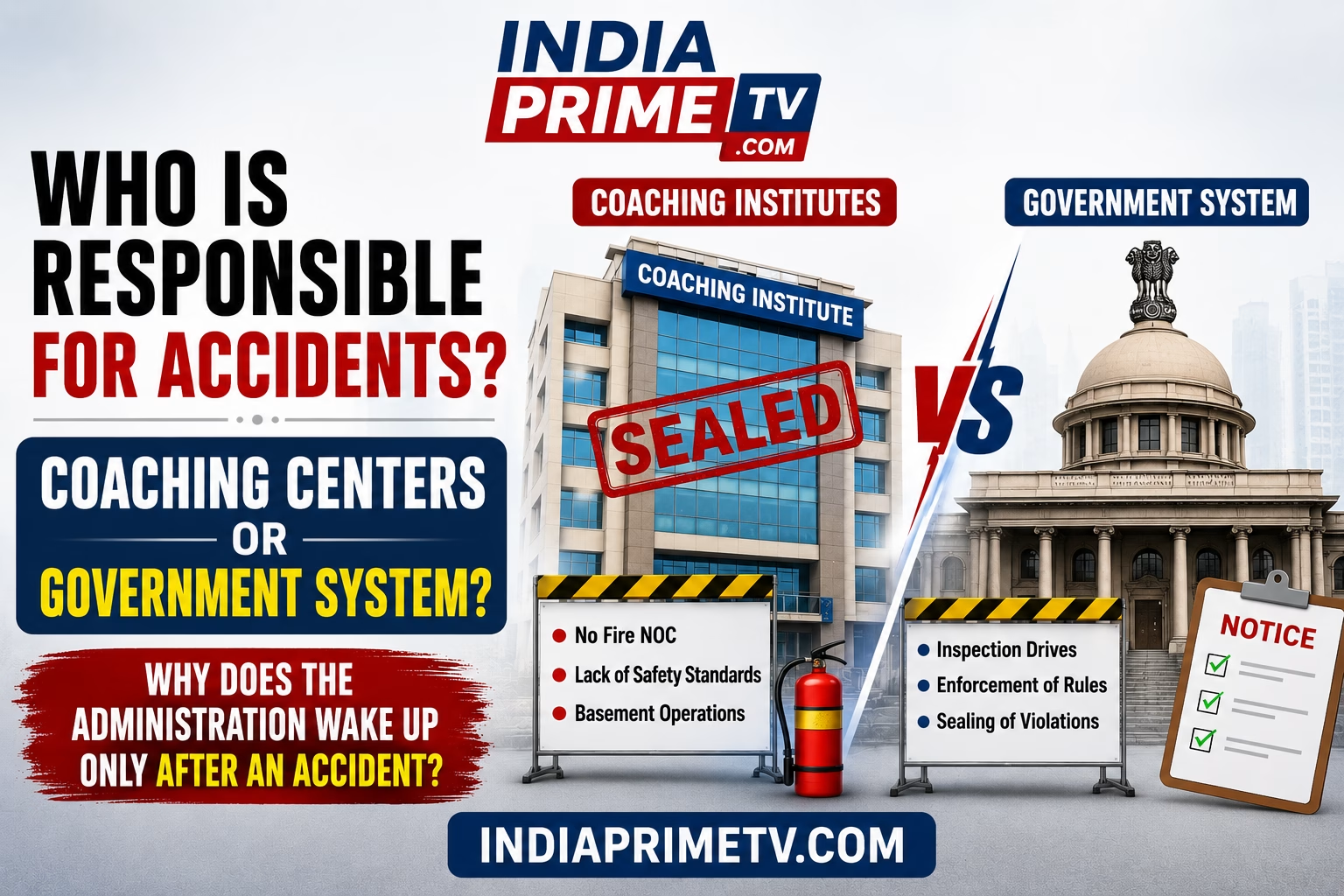
Tejasvi Singh | India Prime | Jaipur Crackdown on Coaching Institutes Following the devastating Lucknow coaching fire tragedy, district administrations across Jaipur, Kota, Jodhpur, and several other cities in Rajasthan, as well as many parts of India, launched extensive fire safety audit drives against private coaching institutions. Under the ongoing nationwide crackdown, more than 250 coaching centres, libraries, and illegal commercial establishments have reportedly been sealed so far.
The action is being jointly carried out by state governments, municipal corporations, and fire departments. The major figures from different states and cities are as follows:
Major Sealing Figures State-Wise and City-Wise
| State/City | Coaching Centres & Institutions Sealed | Main Reasons and Affected Areas |
|---|---|---|
| Uttar Pradesh (Statewide) | More than 100 institutions sealed | Intensive drives in Lucknow, Prayagraj, Gorakhpur, and Meerut on the Chief Minister’s orders |
| Kanpur (UP) | 46 coaching centres sealed | Major branches in the Kakadev coaching hub, including Physics Wallah and Vidyapeeth |
| Ghaziabad (UP) | 56 institutions and clinics sealed | Operations in basements and narrow lanes without fire exits and safety equipment |
| Varanasi (UP) | 19 coaching centres and libraries sealed | Joint raids by the Varanasi Development Authority and Fire Brigade |
| Jaipur (Rajasthan) | 14 coaching centres and libraries sealed | Gopalpura Bypass and Ridhi-Sidhi areas; notices issued to more than 24 institutions |
| Indore (Madhya Pradesh) | 20 coaching centres sealed | Action against 34 illegal commercial buildings lacking fire NOCs |
| Delhi (NCR) | Action underway against hundreds of properties | Massive inspections of illegal basement libraries and coaching centres by the Municipal Corporation of Delhi |
| Mathura (UP) | 6 coaching centres and 4 libraries sealed | Operating without valid DIOS registration |
Main Reasons Behind the Crackdown
Illegal Basement Operations
In most cities, centres functioning in poorly ventilated basements with single entry-exit points were shut down immediately.
Lack of Fire NOC
Initial inspections in Jaipur reportedly found that 45 out of 139 institutions did not possess valid Fire No Objection Certificates (NOCs).
Overcrowding
Rooms designed for 50 students were allegedly accommodating between 150 and 300 students at a time.
Note: Since this campaign is currently active across the country, the number of sealed institutions continues to rise. These figures are based on data available until June 25, 2026.
Why Has Rajasthan Witnessed Such an Uproar?
Immediately after the tragic coaching fire incident in Aliganj, Lucknow, on June 22, the Rajasthan administration shifted into action mode. The campaign gained momentum on June 23 and 24, 2026, focusing particularly on institutions operating without fire NOCs and those functioning in narrow lanes or basements.
June 23, 2026: The First Day of Action
Joint teams from the Jaipur district administration, municipal corporation, and police launched extensive inspections and sealing drives. On the very first day, 14 coaching centres and libraries were sealed, while notices were issued to more than 24 others.
June 24, 2026: Expansion of the Campaign
The drive expanded beyond Jaipur into other districts. In Alwar, five coaching centres and libraries were sealed near Nayabas Circle, while major actions were also undertaken against commercial properties in Baran district.
In Jaipur, joint teams comprising the Greater Municipal Corporation, Heritage Municipal Corporation, police administration, and fire department conducted surprise inspections in major coaching zones such as Gopalpura Bypass, Tonk Phatak, Mansarovar, Durgapura, and Pratap Nagar.
Officials identified several serious deficiencies. Most buildings lacked valid fire NOCs, while many had no emergency exits. In several institutions, firefighting equipment was either non-functional or had not been regularly inspected. Authorities also stated that many buildings originally approved for commercial purposes were being used to accommodate large numbers of coaching students.
“Sudden and Harsh Action”: All Coaching Institute Mahasangh
The All Coaching Institute Mahasangh is a major organization representing coaching operators in Jaipur and Rajasthan, raising issues concerning coaching institutions before the government.
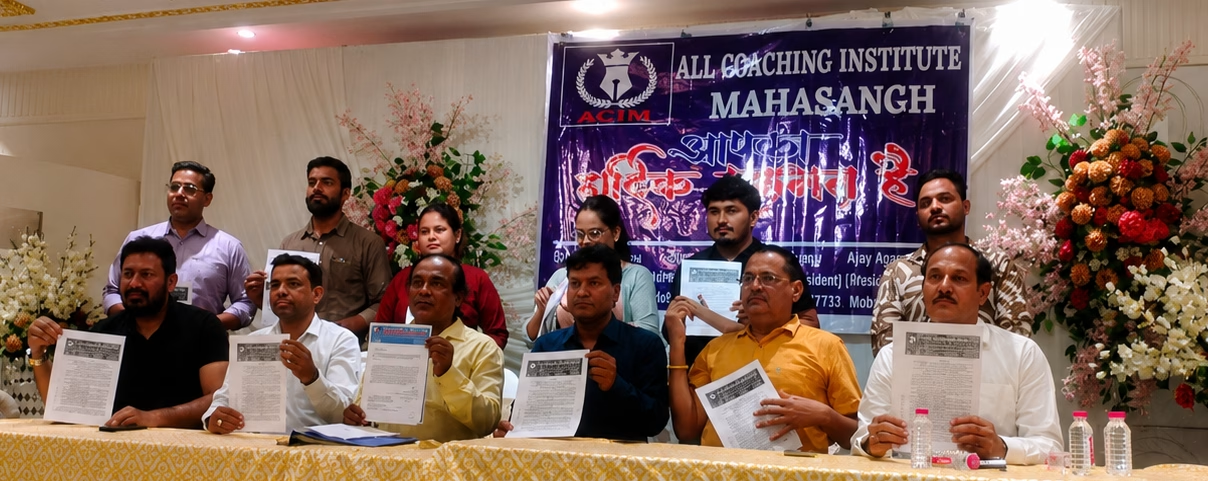
Following the crackdown, the organization held a press conference expressing strong dissatisfaction. National President Dr. CA R.C. Sharma, State President Anish Kumar, Siraz Khan, and Ajay Agarwal sharply criticized the district administration.
The federation’s major concerns and demands include the following:
1. “The Administration Has Betrayed Students”
National President Dr. CA R.C. Sharma stated that locking coaching centres during the peak admission season of June and July, without prior warning, amounts to a betrayal of thousands of students. According to him, the move has adversely affected both academic progress and students’ mental well-being.
2. Allegations of One-Sided and Discriminatory Action
State President Anish Kumar alleged that authorities have been soft toward major brands such as Allen, Physics Wallah, and Chaitanya, while smaller and medium-sized institutes have been specifically targeted for sealing.
Ajay Agarwal, State Secretary of the federation, accused the municipal fire department of acting with corrupt intentions. He argued that while hundreds of government and commercial buildings also lack adequate fire safety arrangements, only coaching institutes and libraries are being singled out.
3. Demand for a Grace Period
Law coaching operator M.K. Singh said the federation does not oppose safety regulations but objects to direct sealing without notice. According to him, authorities should have provided institutions with a grace period of 15 to 30 days to rectify deficiencies.
Warning of Protest
The federation has warned that if practical concerns are not addressed and sealed institutions are not reopened after giving them an opportunity to improve, it may launch a major protest movement along with private school operators and other educational organizations.
Five Major Arguments Raised by Coaching Operators
1. No Prior Notice
Many operators claim that they never received written notices or warnings from municipal corporations or fire departments. They allege that teams arrived with police forces and sealed institutions without providing adequate time to respond.
(However, Jaipur Municipal Corporation maintains that notices had been continuously issued since June 4.)
2. Peak Admission Season
June is considered the most important month for coaching businesses, with admissions and demo classes in full swing. Operators argue that sudden closures during this period severely damage their reputation and business prospects.
3. A Mere “Knee-Jerk Reaction”
Operators accuse authorities of remaining inactive throughout the year and launching symbolic crackdowns only after tragedies in cities such as Lucknow or Delhi. They claim that thousands of other commercial and government buildings also operate without fire NOCs but are not subjected to similar scrutiny.
4. Lack of Time for Infrastructure Changes
Owners argue that constructing emergency exits or widening staircases in old buildings cannot happen overnight. Such structural changes require time, which they claim was not provided.
5. Impact on Students and Fees
According to operators, sudden closures have disrupted the studies of thousands of students, affecting their mental health, syllabus completion, and preparations for competitive examinations.
The ₹228-Crore Pratap Nagar Coaching Hub: Why Did Major Institutions Not Move There?
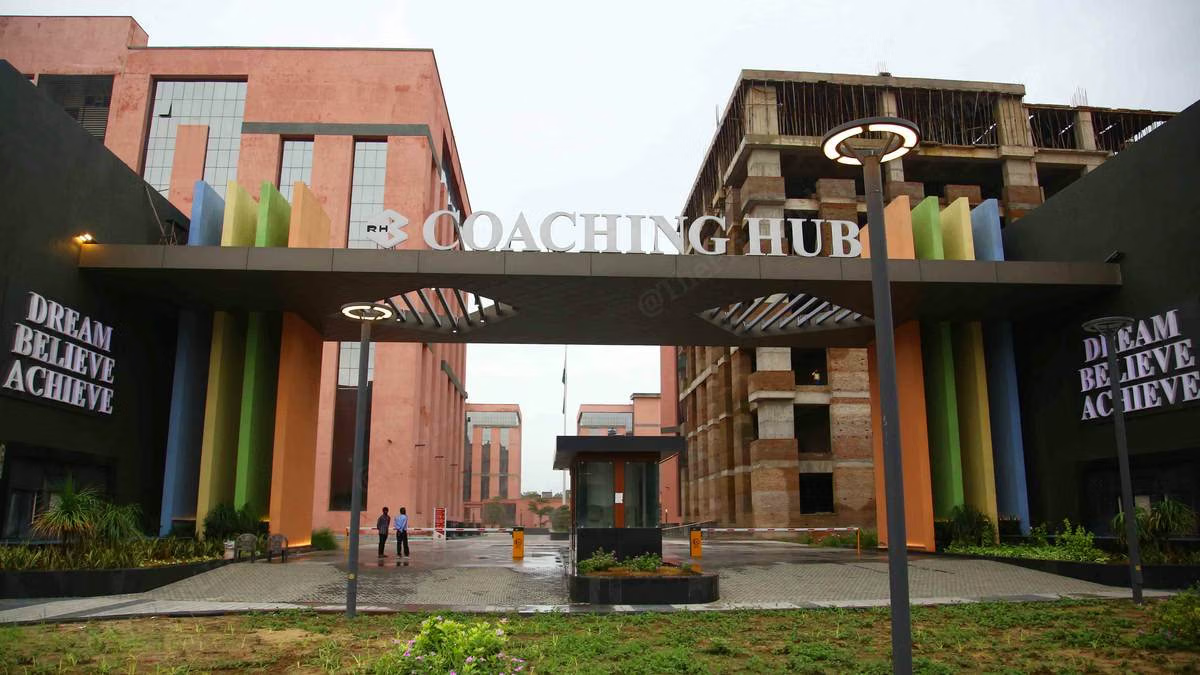
Years ago, the Rajasthan government launched an ambitious project to establish India’s first organized coaching hub in Pratap Nagar, Jaipur. Developed at an estimated cost of ₹228 crore, the project aimed to relocate coaching institutions from congested and unsafe commercial areas to a modern and secure campus.
The hub was equipped with advanced fire safety systems, wider roads, sufficient parking, emergency exits, hostels, and commercial facilities. The government believed that such infrastructure would enhance student safety and reduce urban congestion.
However, most major coaching brands showed little interest in relocating. Experts suggest that economic and business considerations played a significant role. Established institutions were reluctant to abandon long-standing brand recognition in areas such as Gopalpura, Tonk Road, and Mansarovar, fearing a decline in student numbers and revenue.
Urban planners argue that stricter enforcement of safety norms and mandatory relocation policies at an earlier stage could have prevented many of today’s problems.
Students and Parents: Concerns Over Fees, Careers, and Mental Pressure
The biggest impact of the crackdown has fallen on students and parents who have invested significant amounts in competitive examination preparation. Many families spend years of savings to secure admissions into reputed coaching institutes.
Parents argue that clear fee refund mechanisms must exist if institutions are shut down for administrative reasons. At present, refund clauses in private coaching contracts often remain ambiguous, increasing uncertainty.
Students, meanwhile, face growing mental pressure. Already burdened with the stress of preparing for examinations like JEE and NEET, many now worry about interrupted courses, test series, and their academic future. Psychologists emphasize the need for alternative arrangements to ensure continuity in education.
Why Does the System Wake Up Only After Tragedies?
The incidents in Lucknow, Delhi, Surat, and Jaipur have revived a recurring public question: Does the administration act only after major disasters occur?
Many citizens believe that regular inspections and strict monitoring could have prevented such incidents and saved innocent lives.
Social media users have also voiced frustration, arguing that large-scale crackdowns occur only for a few days after major tragedies before things eventually return to normal. According to critics, consistent enforcement of safety standards would eliminate the need for emergency actions.
Many people believe that weak local inspection systems allow institutions to operate for years without necessary permissions or safety measures. They argue that unless accountability is fixed and violations are addressed continuously, post-disaster campaigns cannot provide lasting solutions.
Public Sentiments and Social Media Allegations
Public debates have intensified following recent actions. Several individuals allege that municipal bodies and related departments fail to conduct regular inspections, allowing institutions to ignore regulations.
Corruption allegations have also emerged, with some claiming that economically and politically influential institutions receive preferential treatment, while smaller operators face stricter action. Although such claims require independent verification, they reflect broader concerns regarding transparency and accountability.
Others point toward political patronage, arguing that major educational institutions often enjoy significant influence over local politics and administration. Experts suggest that stronger regulatory independence could address such concerns.
The Way Forward: Expert Recommendations
Experts argue that temporary crackdowns following tragedies cannot provide sustainable solutions. Instead, systematic mechanisms ensuring continuous compliance are required.
They recommend mandatory fire audits at least twice a year, with reports published on public portals.
Public ranking systems for safe and unsafe institutions could also help parents make informed decisions while encouraging institutions to improve standards.
Fee protection laws have likewise been suggested, ensuring refunds if institutes are shut down due to administrative action. Mandatory insurance coverage for students and staff has also been recommended.
Urban planners advocate developing organized and secure coaching clusters like Pratap Nagar, equipped with modern infrastructure and comprehensive safety systems.
Conclusion: Student Safety Must Come Before Business Interests
India’s coaching industry represents the aspirations of millions of young people, the hopes of parents, and a multi-billion-rupee economy. Every year, countless students leave their homes in pursuit of better opportunities through coaching institutions.
However, when institutions operate without valid fire NOCs, lack emergency exits, conduct classes in basements, and accommodate students far beyond their capacities, the issue extends beyond mere regulatory violations. It becomes a matter of public trust and student safety.
The tragedies in Lucknow, Delhi, Surat, and now Jaipur clearly demonstrate that post-disaster action alone is insufficient. Sustainable solutions require regular monitoring, transparency, accountability, and strict regulatory enforcement.
Ultimately, the purpose of education should not revolve solely around financial gain or success statistics. The safety, dignity, and future of students must remain the highest priority.