By Tejashvi Singh | India Prime Research Desk | Jaipur Yamuna Water Project Update The Rajasthan government’s flagship Yamuna Water Project achieved a major administrative and political milestone on June 29, 2026, as the Governments of Rajasthan, Haryana, and the Union Government signed a historic Memorandum of Agreement (MoA) in New Delhi.
The agreement is considered a landmark step toward resolving the 32-year-old drinking water crisis in Rajasthan’s Shekhawati region, which includes Churu, Sikar, and Jhunjhunu districts.
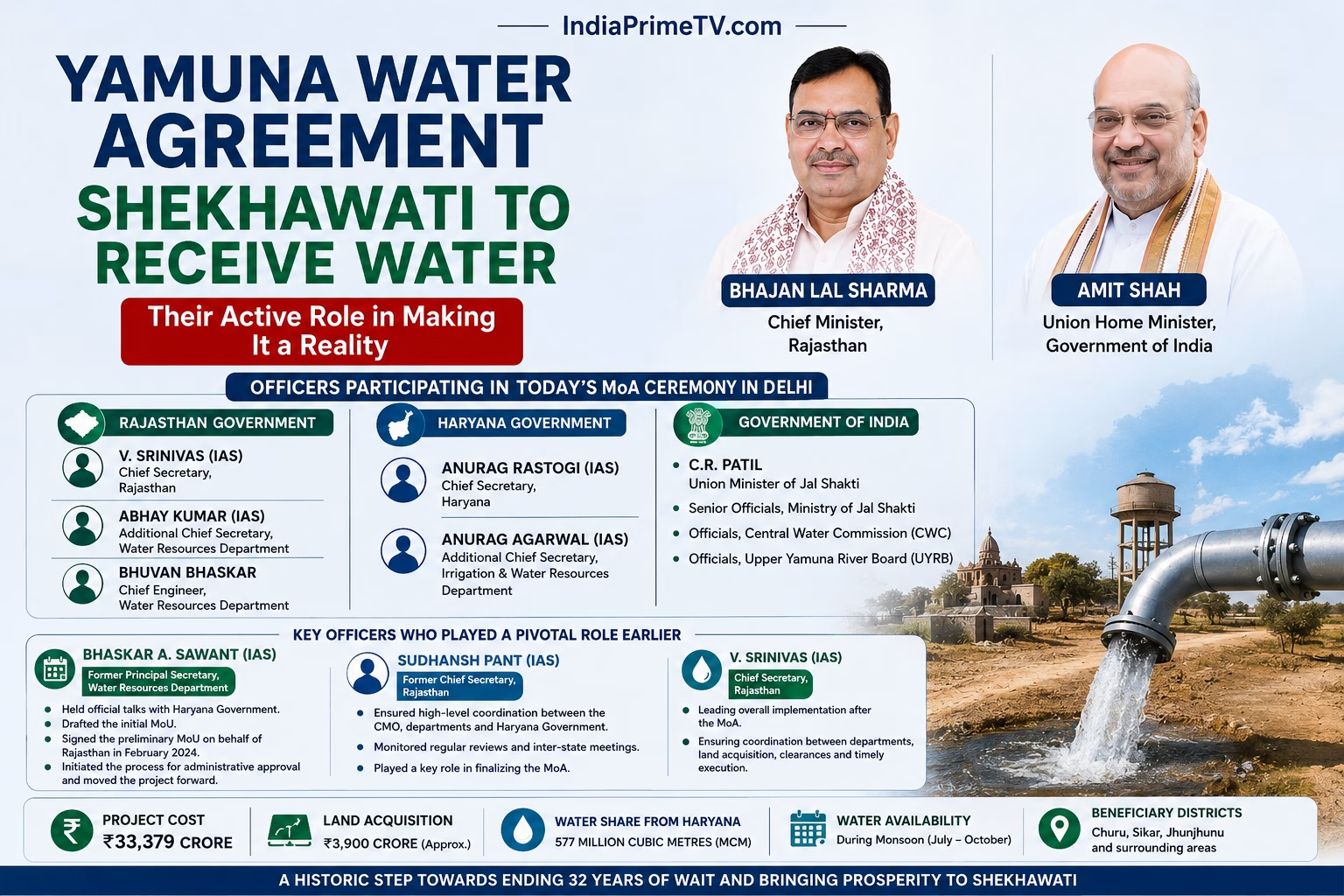
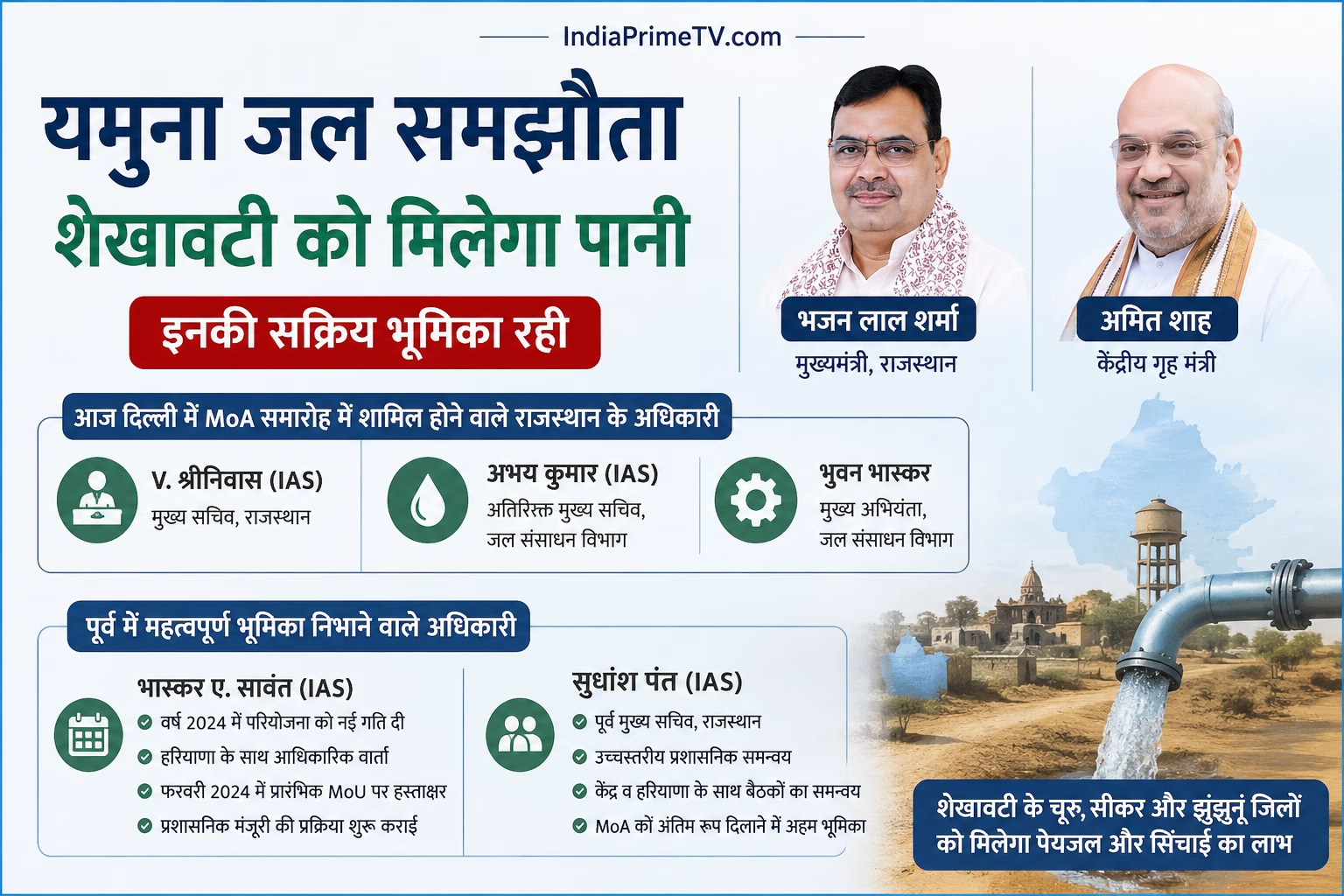
Senior Officials Attending the MoA Ceremony in New Delhi
The MoA signing ceremony is being attended by senior administrative and technical officials from Rajasthan, Haryana, and the Government of India.
Rajasthan Government
- V. Srinivas (IAS) – Chief Secretary, Rajasthan
- Abhay Kumar (IAS) – Additional Chief Secretary (ACS), Water Resources Department
- Bhuvan Bhaskar – Chief Engineer, Water Resources Department
- Senior officials from the Water Resources Department and the Chief Minister’s Office (CMO)
Haryana Government
- Anurag Rastogi (IAS) – Chief Secretary, Haryana
- Anurag Agarwal (IAS) – Additional Chief Secretary, Irrigation & Water Resources Department
- Senior engineers and technical officials from the Irrigation Department
Government of India
- C. R. Patil – Union Minister of Jal Shakti
- Senior officials from the Ministry of Jal Shakti
- Officials from the Central Water Commission (CWC)
- Officials from the Upper Yamuna River Board (UYRB)
IAS Officers Who Played a Key Role in the Yamuna Water Project
V. Srinivas (IAS) – Chief Secretary, Rajasthan
Following the signing of the MoA, the responsibility for implementing the ₹33,379 crore project will be coordinated under the leadership of Chief Secretary V. Srinivas.
Key Responsibilities
- Supervising implementation of the project.
- Coordinating among various state departments.
- Monitoring land acquisition, financial approvals, and project execution.
- Leading future coordination meetings with the Government of India and the Government of Haryana.
Abhay Kumar (IAS) – Additional Chief Secretary, Water Resources Department
As the administrative head of the Water Resources Department, Abhay Kumar is overseeing the departmental execution of the project.
Key Responsibilities
- Administrative leadership of the Water Resources Department.
- Supervision of the Detailed Project Report (DPR).
- Monitoring administrative approvals and construction activities.
- Coordinating with the Central Government and Haryana.
Bhuvan Bhaskar – Chief Engineer
Bhuvan Bhaskar is leading the project’s technical planning.
Key Responsibilities
- Preparing and finalizing the DPR.
- Designing the underground pipeline network.
- Supervising engineering quality and technical execution.
- Monitoring construction standards.
Bhaskar A. Sawant (IAS): The Officer Who Revived the Project in 2024
The Yamuna Water Project gained fresh momentum in 2024 under the administrative leadership of Bhaskar A. Sawant (IAS).
Major Contributions
- Initiated official negotiations with the Haryana Government.
- Helped draft the preliminary Memorandum of Understanding (MoU).
- Signed the preliminary MoU on behalf of Rajasthan in February 2024.
- Coordinated with the Ministry of Jal Shakti, Central Water Commission, and officials of both states.
- Restarted the long-pending administrative process.
Sudhansh Pant (IAS): Former Chief Secretary, Rajasthan
As the project entered its final negotiation phase, former Chief Secretary Sudhansh Pant played a crucial coordinating role.
Major Contributions
- Conducted regular reviews under the guidance of Chief Minister Bhajan Lal Sharma.
- Coordinated among the Chief Minister’s Office, Water Resources Department, and other departments.
- Facilitated high-level meetings with Haryana and the Central Government.
- Played a significant role in finalizing the administrative framework leading to the MoA.
Project Cost
| Component | Estimated Cost |
|---|---|
| Total Project Cost | ₹33,379 Crore |
| Land Acquisition | Approximately ₹3,900 Crore |
| Water Conveyance System | Three parallel underground pipelines (3.6-meter diameter) |
How Much Water Will Rajasthan Receive?
Under the agreement, Rajasthan will receive:
- 577 Million Cubic Metres (MCM) of water.
- Source: Hathnikund Barrage, Haryana.
- Water will be supplied during the monsoon season (July–October).
- The allocation represents Rajasthan’s 10.4% share under the 1994 Yamuna Water Agreement.
When Will Rajasthan Receive Water?
The MoA signed on June 29, 2026 is the beginning of implementation—not the commencement of water supply.
The project will proceed through the following stages:
- Signing of the MoA
- Finalization of the Detailed Project Report (DPR)
- Land acquisition
- Environmental and statutory clearances
- Tendering process
- Construction of approximately 250–300 km of underground pipelines
- Testing and commissioning
- Commencement of water supply
The Rajasthan Government has not yet announced an official date for the first delivery of Yamuna water.
Districts to Benefit
The project will primarily benefit:
- Churu
- Sikar
- Jhunjhunu
In later phases, Nagaur and adjoining areas are also expected to benefit.
Key Highlights
- Total Cost: ₹33,379 Crore
- Land Acquisition: ₹3,900 Crore
- Water Source: Hathnikund Barrage, Haryana
- Rajasthan’s Share: 577 MCM
- Pipeline Network: Three parallel underground pipelines (3.6 metres in diameter)
- Main Water Storage Hub: Hasiyawas, Rajgarh (Churu)
- Primary Beneficiaries: Millions of residents and farmers in the Shekhawati region
Conclusion
The Yamuna Water Project is not merely a drinking water initiative; it is expected to become a transformative infrastructure project for the Shekhawati region, supporting agriculture, industry, and long-term economic growth.
While Abhay Kumar (IAS) is leading the project’s administrative execution and Chief Engineer Bhuvan Bhaskar is heading its technical planning, the implementation will be coordinated at the state level under Chief Secretary V. Srinivas (IAS). Earlier, Bhaskar A. Sawant (IAS) and former Chief Secretary Sudhansh Pant (IAS) played pivotal roles in reviving and advancing the project toward the historic MoA signed on June 29, 2026.