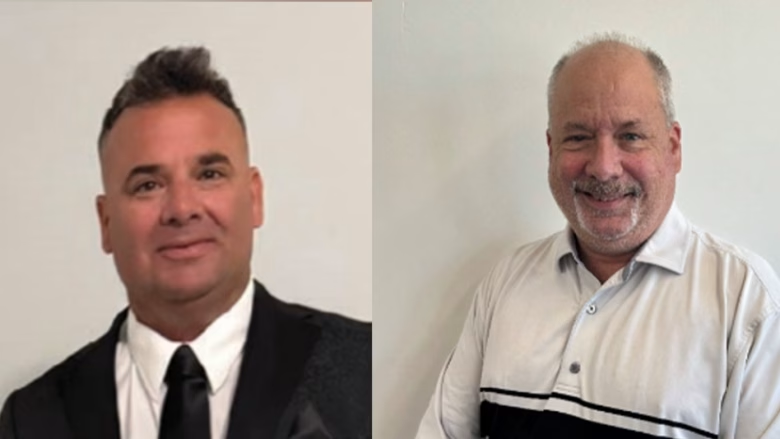

MONTPELIER, Vt. (WCAX) – An AI-generated video depicting Democratic U.S. Rep. Becca Balint and her potential Republican challenger Mark Coester is making the rounds on Vermont social media, raising questions about artificial intelligence in elections and the limits of free speech.
The video features AI-generated depictions of Rep. Balint and Coester, a Republican running in the GOP primary. The AI-generated video shows fabricated statements attributed to the candidates. Coester said he did not make the video or pay for it.
Balint, who called the video “creepy,” described it as a deepfake. “I’m concerned about this not just for me but for anyone in elected office who wants Vermonters to hear directly from them,” Balint said. She said more guardrails are needed on the technology. “Right now, anyone can make an AI-generated clip of them, post it online, and have absolutely no protections really.”
The video was shared by Hank Poitras, a provocative Brattleboro-based social media content creator with a controversial past. He said he has a long history of mocking elected leaders online and believes the video is protected by the First Amendment. “The video is clearly satire,” Poitras said. “This is still America, for now, and we have the freedom of speech in the Bill of Rights, and it’s a strong right that we have.”
The video may be the first test case of a new Vermont law, requiring AI disclosure on ads and videos within 90 days of an election. Other ads, like one in New York targeting Congresswoman Elise Stefanik last summer, also sparked a new law signed by Governor Kathy Hochul this week.
Backers of Vermont’s new law say AI is advancing faster than we can keep up with. “The technology is going to get more and more believable, and that’s why it’s really important Vermonters know what’s real and what isn’t,” said state Rep. Chea Waters Evans, D-Charlotte.
Jared Carter, a professor at Vermont Law and Graduate School, said the video would be subject to the provisions of the new state law if the courts decide that it is political speech and not satire. “Preserving the ability to make jokes at the expense of politicians — that’s as old as politics itself,” Carter said. But Carter said the disclosure law may be a bridge too far. “I think this law potentially has some vulnerabilities even if it’s aimed at what I think we can all acknowledge as a real and legitimate problem.”
The Attorney General’s Office, which enforces the AI law, said it is aware of the video and is still reviewing it.
Balint is the co-sponsor of the No Fakes Act in Congress, seeking to protect Americans’ name, image, and likeness with AI.
Copyright 2026 WCAX. All rights reserved.