
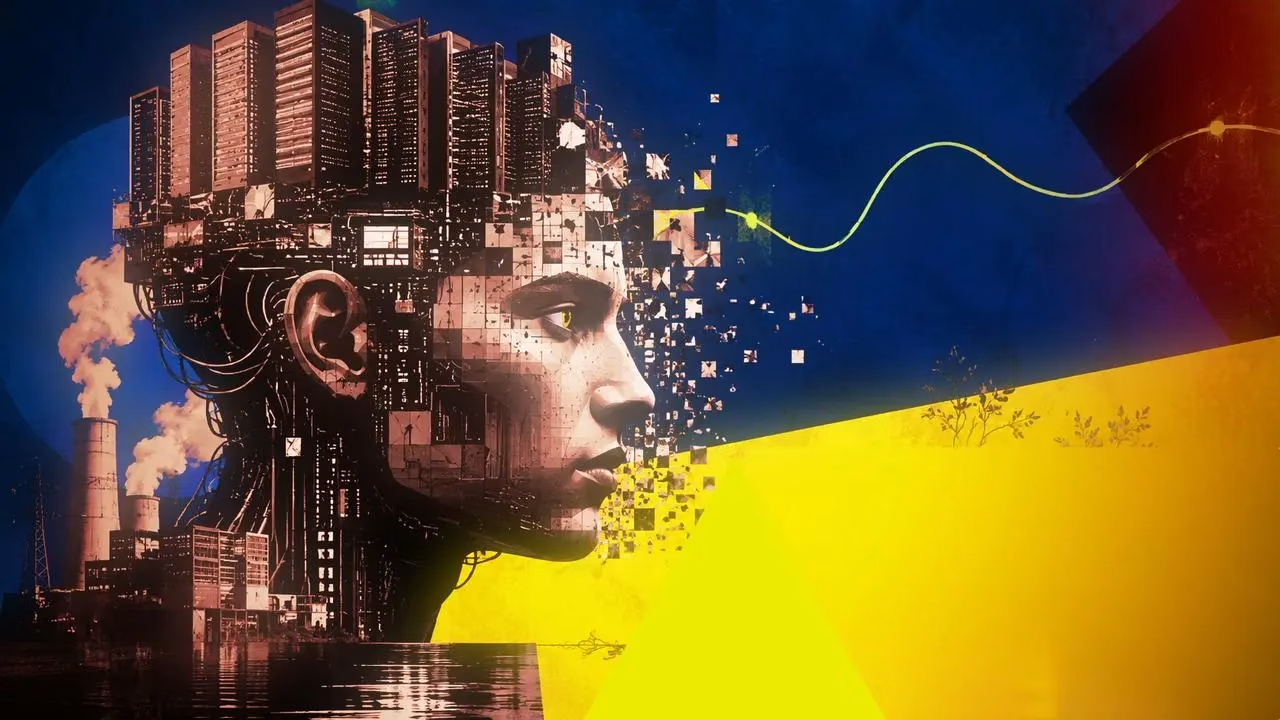
For the vast majority of people, artificial intelligence means generative AI based on deep-learning neural networks. General-purpose AIs like ChatGPT or Claude, and specialized systems like Midjourney or Suno, have basically captured the whole spotlight. Everywhere you look, these systems are the focus. However, what often escapes notice is just how voracious they are: they “consume” staggering amounts of data—as well as energy, water, land, and human labor. Not exactly as invisible as the Cloud wants us to believe!
Major digital companies have thrown their weight behind developing and rolling out this technology at scale. All under the banner of a so-called civilizing mission for a “better world.” But beneath the utopian PR, these companies are spreading a biased, centralized, and highly uniform way of thinking. Most of these AIs are developed with worrying ideologies that show little regard for ecology, human rights, or democracy. As a result, they tend to hollow out institutions and accumulate outsized economic and political power for themselves. Nothing like a little dystopia to wake you up!
A recent report highlights the five major damages caused by AI—the kind that tech giants would rather sweep under the rug.
So if you ever wondered whether all those servers are just quietly humming along somewhere out of sight… well, Mother Nature sure hasn’t missed the memo.
This whole situation brings to mind the warnings from 1980s cyberpunk sci-fi novels—think “Neuromancer” by William Gibson. In a smoky, post-apocalyptic atmosphere, those stories predicted a dystopian future where multinational corporations were more powerful than states, themselves turned totalitarian and serving the mega-businesses. Hope, in these settings, was embodied by solitary “hackers” fighting back against the tech behemoths.
An aesthetic movement grew out of this genre, using technology for artistic works that deliberately subvert commercial uses—art designed to spark social consciousness rather than just line pockets.
But here’s the thing: even as the cyberpunk prophecy seems to be coming true, there’s nothing necessary—or inevitable—about this direction. In the scientific community, there’s no consensus on AI’s destiny. In reality, the field has never been limited to this monolithic, resource-hungry vision. There are a remarkable number of different approaches just waiting to be developed.
Some radical alternatives to these AI giants are doing exactly the opposite: putting communities at the center, celebrating human agency, and respecting the planet. Who said AI had to be all about bigger, faster, and hungrier?





 Market Worth $3,638.08 Billion by 2033 | Report by MarketsandMarkets – 富途牛牛)
