
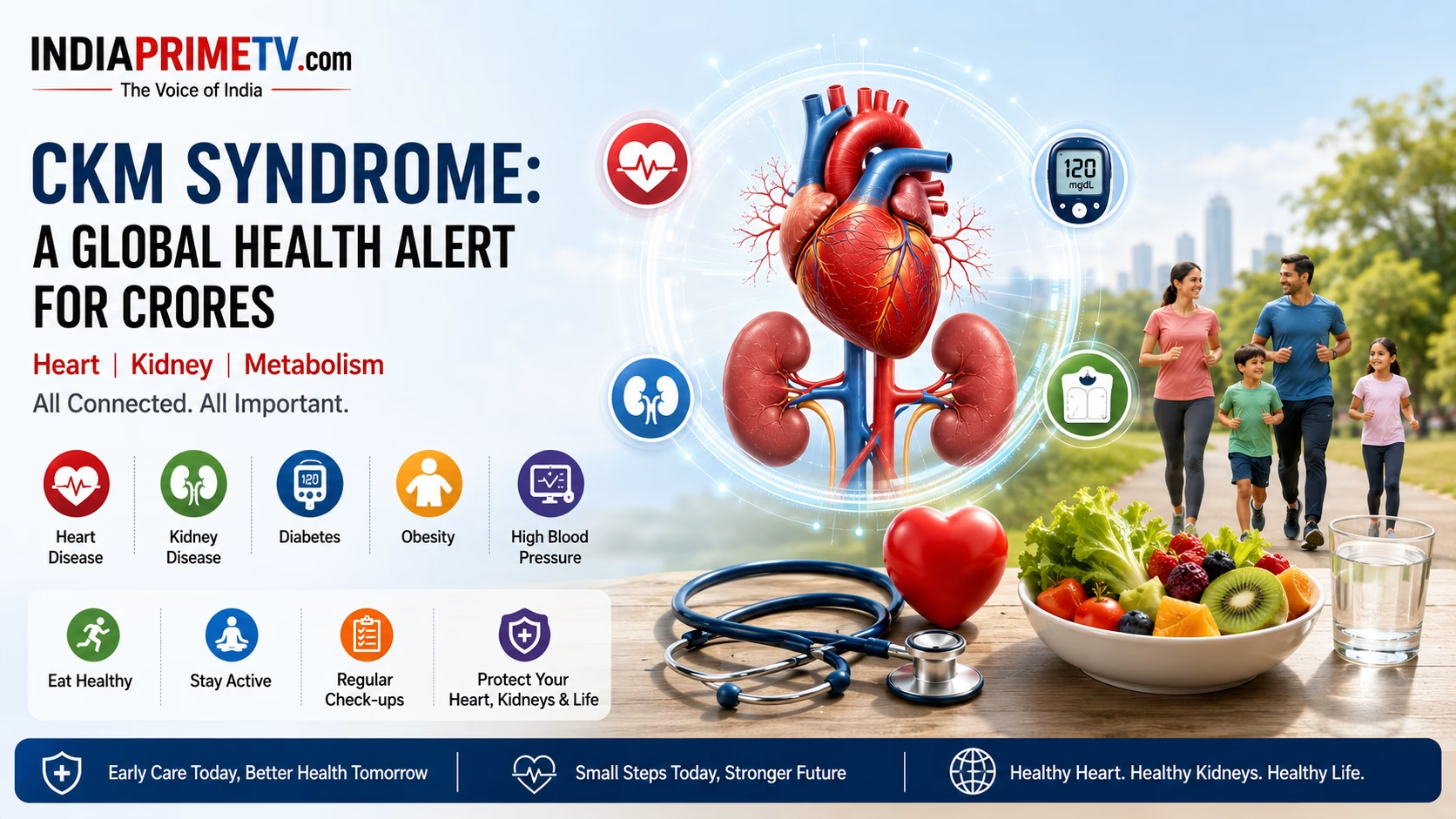
By Devender Singh | IndiaprimeTV.com CKM Syndrome Is This a Warning for 500 Million Indians? The World’s Biggest Health Alert on Heart Disease, Kidney Failure, and Diabetes If you think rising blood sugar is one health problem, high blood pressure is another, high cholesterol is a separate concern, and obesity is simply about excess weight, a groundbreaking new medical guideline from some of the world’s leading heart and kidney experts may change the way you look at your health.
In June 2026, for the first time, leading American cardiovascular organizations released a joint clinical guideline stating that heart disease, kidney disease, obesity, high blood pressure, and Type 2 diabetes are deeply interconnected. This newly recognized condition has been named Cardiovascular-Kidney-Metabolic Syndrome (CKM Syndrome).
This is more than just a new medical definition. Experts believe that millions of people around the world are being treated for separate conditions while, in reality, a single interconnected disease process may be developing silently inside their bodies.
Why Is This Warning Important for India?
India is already among the countries carrying one of the world’s largest burdens of diabetes. Millions of Indians are living with high blood pressure, obesity, cardiovascular disease, and chronic kidney disease. Public health experts have repeatedly warned that lifestyle-related diseases are rising at an alarming pace across the country.
Against this backdrop, the new CKM Syndrome framework could have major implications for India’s healthcare system.
Many specialists believe that when obesity, diabetes, hypertension, poor diet, lack of exercise, and metabolic disorders are viewed together, a significant portion of India’s population may fall within the CKM risk spectrum. That is why several doctors describe it as one of the most important health warnings of the coming decade.
What Exactly Is CKM Syndrome?
According to the joint guideline issued by the American Heart Association and the American College of Cardiology, CKM Syndrome is a condition in which the cardiovascular system, kidneys, and metabolic processes interact and influence one another.
A person who is overweight, pre-diabetic, diabetic, hypertensive, or experiencing early kidney dysfunction may gradually progress toward serious conditions such as heart attack, stroke, heart failure, or kidney failure if these risk factors are not identified and managed early.
Dr. Chiadi Ndumele of Johns Hopkins University, who led the guideline writing committee, emphasized that heart, kidney, and metabolic disorders do not exist in isolation. Instead, they are closely linked and often accelerate each other’s progression.
 Why Are Health Experts Around the World Concerned?
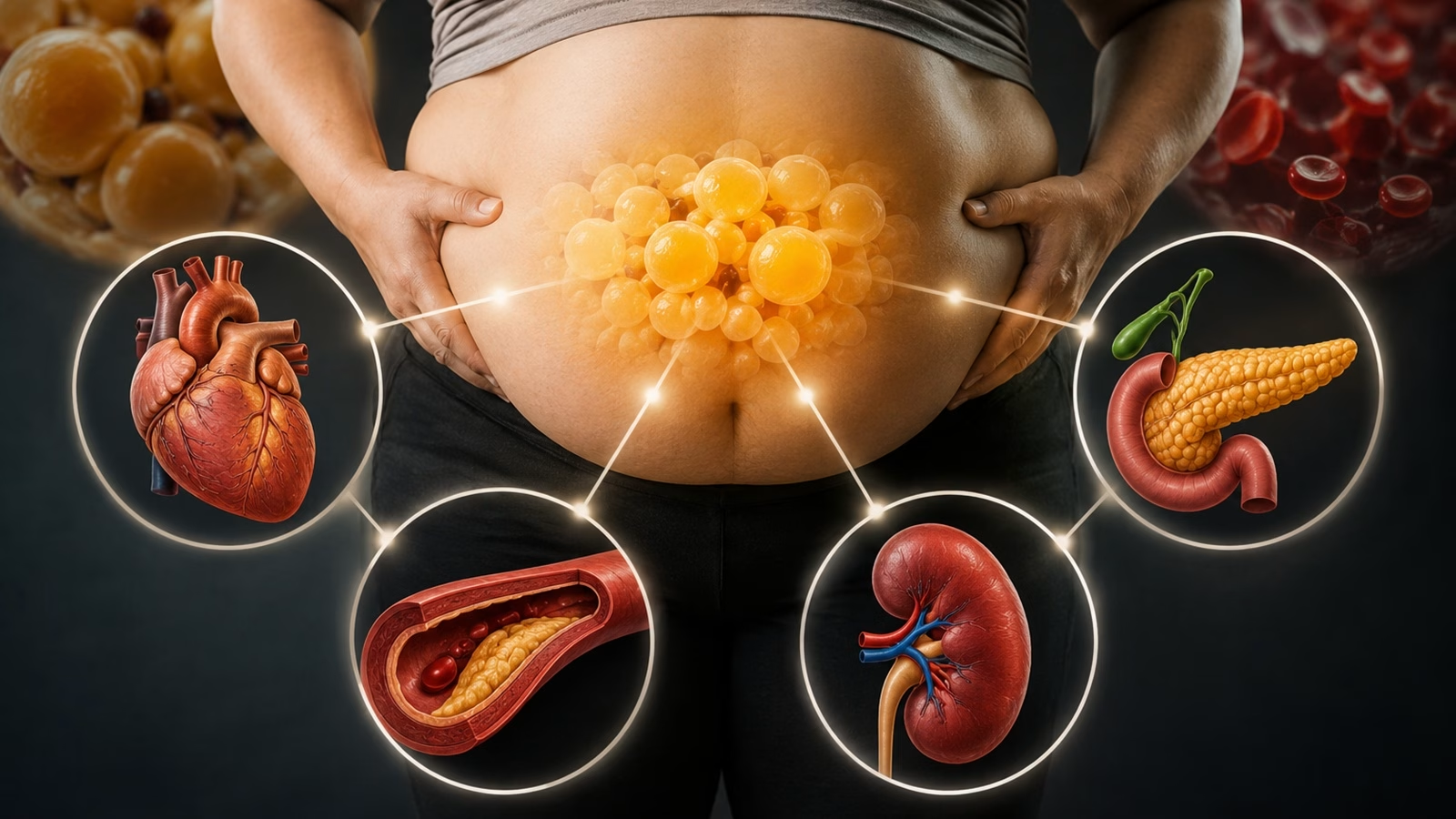
One of the most striking findings highlighted in the new guideline is that nearly 90 percent of American adults have at least one CKM-related risk factor.
These risk factors include:
- Obesity
- High blood pressure
- Abnormal cholesterol
- Elevated blood sugar
- Reduced kidney function
Nearly 40 percent of adults in the United States are affected by obesity, and childhood obesity continues to rise. Similar trends are being observed across Europe, Canada, Australia, and several Gulf countries, where lifestyle diseases are placing increasing pressure on healthcare systems.
Biz Updates: Britain to Export 378
Why Could the Risk Be Even Greater in India?
Indian populations display a unique “thin-fat” phenotype. Many individuals may appear to have a normal body weight while carrying excess abdominal fat and higher metabolic risk.
As a result, Indians often develop diabetes, insulin resistance, and cardiovascular disease at lower Body Mass Index (BMI) levels than Western populations.
Medical experts stress that monitoring waist circumference, blood sugar, cholesterol, and blood pressure is often more important than relying solely on body weight measurements.
The Four Stages of CKM Syndrome
The new guideline categorizes CKM Syndrome into four stages.
Stage 1
Individuals may be overweight, obese, or pre-diabetic. Most people experience no noticeable symptoms at this stage.
Stage 2
Risk factors become more evident, including:
- High blood pressure
- Abnormal cholesterol levels
- Type 2 diabetes
- Early kidney disease
Stage 3
Damage to the heart and blood vessels may begin, even if symptoms remain mild or absent.
Stage 4
This is the most advanced stage and may involve:
- Heart attack
- Stroke
- Heart failure
- Serious cardiovascular complications
What Does the Latest Research Show?
Recent studies published in 2026 suggest that early cardiometabolic risks may be identified through wearable technologies such as smartwatches, fitness trackers, and advanced biomarker testing.
Researchers have found that daily step counts, resting heart rate, sleep quality, and activity patterns may help predict future cardiovascular and metabolic risk long before symptoms appear.
This indicates that preventive healthcare may increasingly focus on early risk detection rather than waiting for disease to develop.
Monsoon 2026: How El Niño Could Shape India’s Rainfall
What Are Doctors Recommending?
Medical experts emphasize that CKM Syndrome develops gradually over many years.
The encouraging news is that the early stages can often be slowed, halted, or even reversed through lifestyle interventions.
Recommended preventive measures include:
- At least 30 minutes of daily physical activity
- Reduction of abdominal fat
- Blood pressure control
- Blood sugar management
- Adequate sleep
- Avoiding tobacco use
- Limiting ultra-processed foods
The latest nutrition recommendations from the American Heart Association also reinforce these strategies.
Conclusion: Could This Be India’s Next Major Health Challenge?
CKM Syndrome is not a new disease but rather a new way of understanding how several major diseases are connected.
Instead of treating heart disease, kidney disease, obesity, and diabetes as separate conditions, experts are now viewing them as parts of a single interconnected health pathway.
In a country like India, where millions already struggle with diabetes, hypertension, obesity, and cardiovascular disease, this new guideline could become one of the most significant public health warnings of the decade.
The question is no longer which disease you have.
The real question is whether several of these risk factors are already developing together inside your body—without you even knowing it.