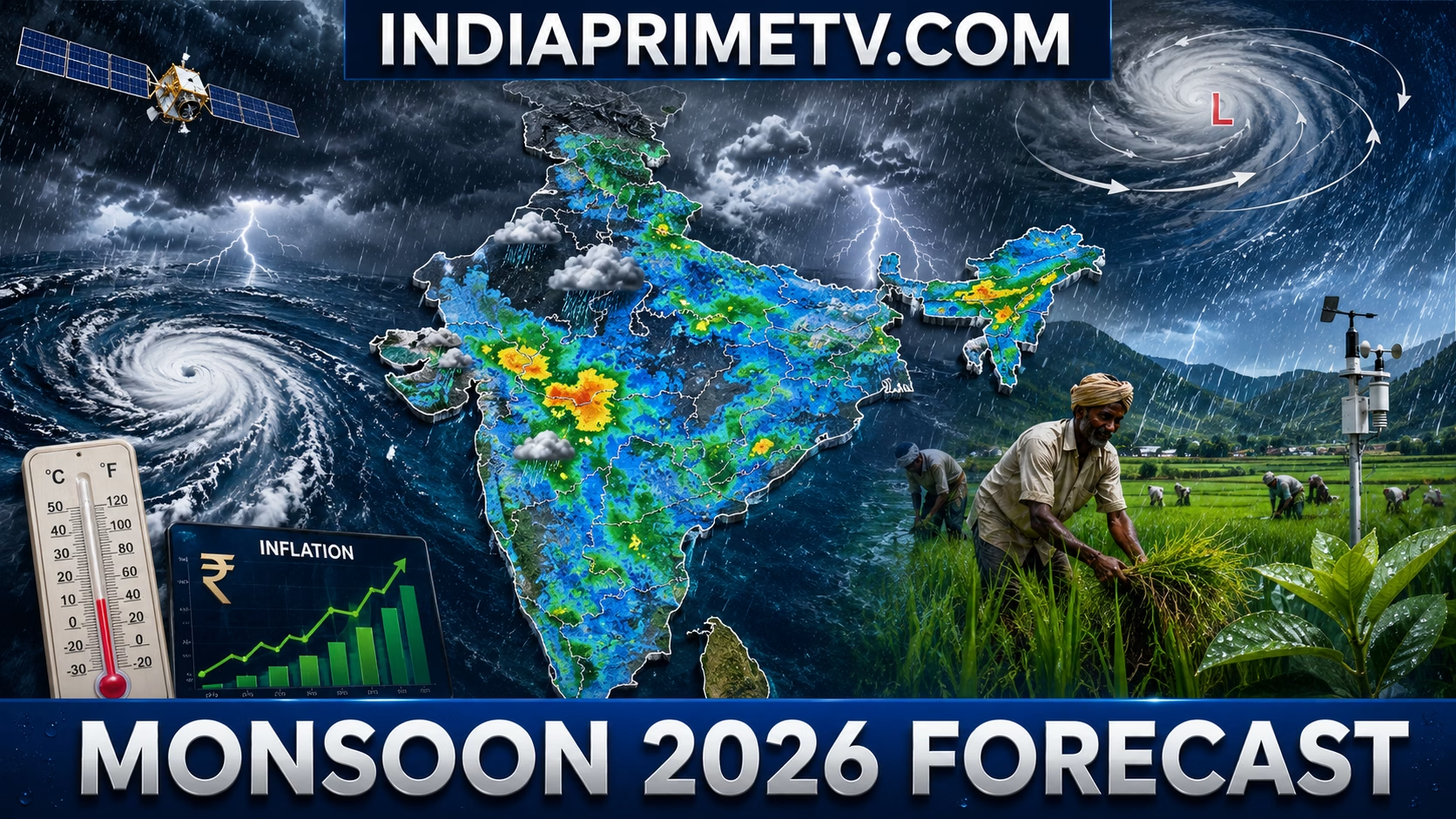
By Tejasvi Singh | IndiaPrimeTV.com Monsoon 2026: How El Niño Could Shape India’s Rainfall, India’s annual monsoon is more than a weather event—it is the backbone of the country’s economy. Nearly half of India’s farmland depends directly on rainfall, making the southwest monsoon crucial for agriculture, food prices, water availability and overall economic growth.
As the 2026 monsoon season unfolds, meteorologists are closely monitoring the possible emergence of El Niño conditions in the Pacific Ocean, which could influence rainfall patterns across the country.
While the India Meteorological Department (IMD) expects the monsoon to remain broadly within the normal range, experts warn that regional disparities and uneven rainfall distribution could create challenges for farmers and policymakers.
Why India’s Monsoon Matters
The southwest monsoon, which typically lasts from June to September, contributes around 70% of India’s annual rainfall. It supports the cultivation of key crops, replenishes reservoirs, sustains hydroelectric power generation and provides drinking water for millions of people.
A strong and well-distributed monsoon generally boosts rural incomes and keeps food inflation under control. Conversely, weak or erratic rainfall can disrupt agricultural production, increase prices and slow economic activity.
What Is El Niño and Why Is It Important?
El Niño is a climate phenomenon characterized by unusually warm sea surface temperatures in the central and eastern Pacific Ocean.
These warmer ocean temperatures can weaken the monsoon winds that carry moisture towards the Indian subcontinent, increasing the risk of below-normal rainfall.
Historically, several years with weak monsoons—including 2002, 2009 and 2015—have coincided with El Niño events.
However, weather experts caution that El Niño is only one of several factors influencing India’s monsoon. Other climate drivers, such as the Indian Ocean Dipole (IOD), sea surface temperatures in the Arabian Sea and weather systems forming over the Bay of Bengal, also play significant roles.
Current Monsoon Pattern: A Slow Start
The 2026 monsoon has made a mixed start across the country. While southern and northeastern regions received early rainfall, several parts of central and northwestern India have recorded below-average precipitation during the initial weeks of June.
Meteorologists note that rainfall distribution, rather than the overall seasonal total, will be critical this year.
A delayed or uneven monsoon could affect sowing activities for major kharif crops and increase pressure on water resources in several states.
Expected Monsoon Progress Across India
Based on current weather models and IMD projections, the monsoon is expected to advance across the country in phases over the coming weeks.
June 20–25
Monsoon conditions are likely to strengthen across:
- Eastern Uttar Pradesh
- Bihar
- Jharkhand
- Northern parts of West Bengal
- Eastern Madhya Pradesh
June 25–30
Rainfall is expected to reach:
- Delhi-NCR
- Haryana
- Punjab
- Western Uttar Pradesh
- Eastern Rajasthan
By Early July
The monsoon is likely to cover:
- Western Rajasthan
- Jammu and Kashmir plains
- Himachal Pradesh
- Uttarakhand
Meteorologists say the pace of monsoon advancement will depend on the formation of low-pressure systems over the Bay of Bengal.
Which States Could Face Rainfall Deficits?
Weather agencies suggest that some regions may experience below-normal rainfall during the season.
These include:
- Interior Maharashtra
- Gujarat
- Parts of Madhya Pradesh
- Telangana
- Interior Karnataka
- Andhra Pradesh
- Rajasthan
- Northwestern India
Several northeastern states may also receive less rainfall than usual.
Impact on Agriculture
Agriculture remains one of the sectors most vulnerable to monsoon fluctuations.
Around 52% of India’s net sown area relies on rainfall, making timely and adequate monsoon showers essential for the kharif season.
Crops Most at Risk
- Rice
- Pulses
- Oilseeds
- Maize
- Cotton
- Sugarcane
Insufficient rainfall during June and July could delay sowing operations and reduce crop yields in rain-fed regions.
States such as Maharashtra, Madhya Pradesh, Chhattisgarh, Rajasthan and Karnataka may face increased risks if rainfall remains below average.
However, areas with robust irrigation infrastructure are expected to be less affected.
How Could the Monsoon Affect Inflation?
The monsoon has a direct influence on food prices and overall inflation in India.
Lower agricultural output can lead to higher prices for essential commodities, including:
- Pulses
- Edible oils
- Vegetables
- Fruits
- Sugar
- Dairy products
Reduced rainfall may also increase fodder costs, pushing up milk prices.
In addition, lower reservoir levels can raise irrigation and electricity costs, adding further pressure on household budgets.
Economists warn that prolonged rainfall deficits could complicate efforts to keep inflation under control.
Water Availability and Urban Challenges
The impact of a weak monsoon extends beyond agriculture.
Many Indian cities depend heavily on monsoon rainfall to replenish reservoirs and groundwater reserves.
If rainfall remains below average during the peak monsoon months, urban centres could face water shortages, especially in regions already experiencing declining reservoir levels.
Water conservation and efficient management will be critical in the coming months.
Can Other Climate Factors Offset El Niño?
Experts point out that El Niño does not always guarantee a weak monsoon.
The Indian Ocean Dipole (IOD), another major climate phenomenon, can sometimes offset the adverse effects of El Niño.
A positive IOD phase typically enhances rainfall over India by increasing moisture flow from the Indian Ocean.
For this reason, meteorologists advise against drawing conclusions based solely on El Niño forecasts.
July and August—the peak monsoon months—will provide a clearer picture of the season’s overall performance.
What Should Farmers and Policymakers Do?
Agricultural experts recommend several precautionary measures:
- Promote drought-resistant and short-duration crop varieties.
- Encourage micro-irrigation and drip irrigation systems.
- Improve water conservation and groundwater recharge.
- Ensure timely availability of seeds and fertilizers.
- Strengthen weather advisory services for farmers.
State governments are also being encouraged to prepare contingency plans for rainfall deficits.
Outlook: The Next 45 Days Will Be Crucial
The coming weeks will be critical for India’s agriculture, food inflation and water security.
While early forecasts indicate the possibility of uneven rainfall due to El Niño, weather patterns can change rapidly.
For now, farmers, policymakers and consumers alike will be watching the skies closely.
The success of India’s monsoon season will play a decisive role in shaping rural incomes, economic growth and household budgets in the months ahead.