
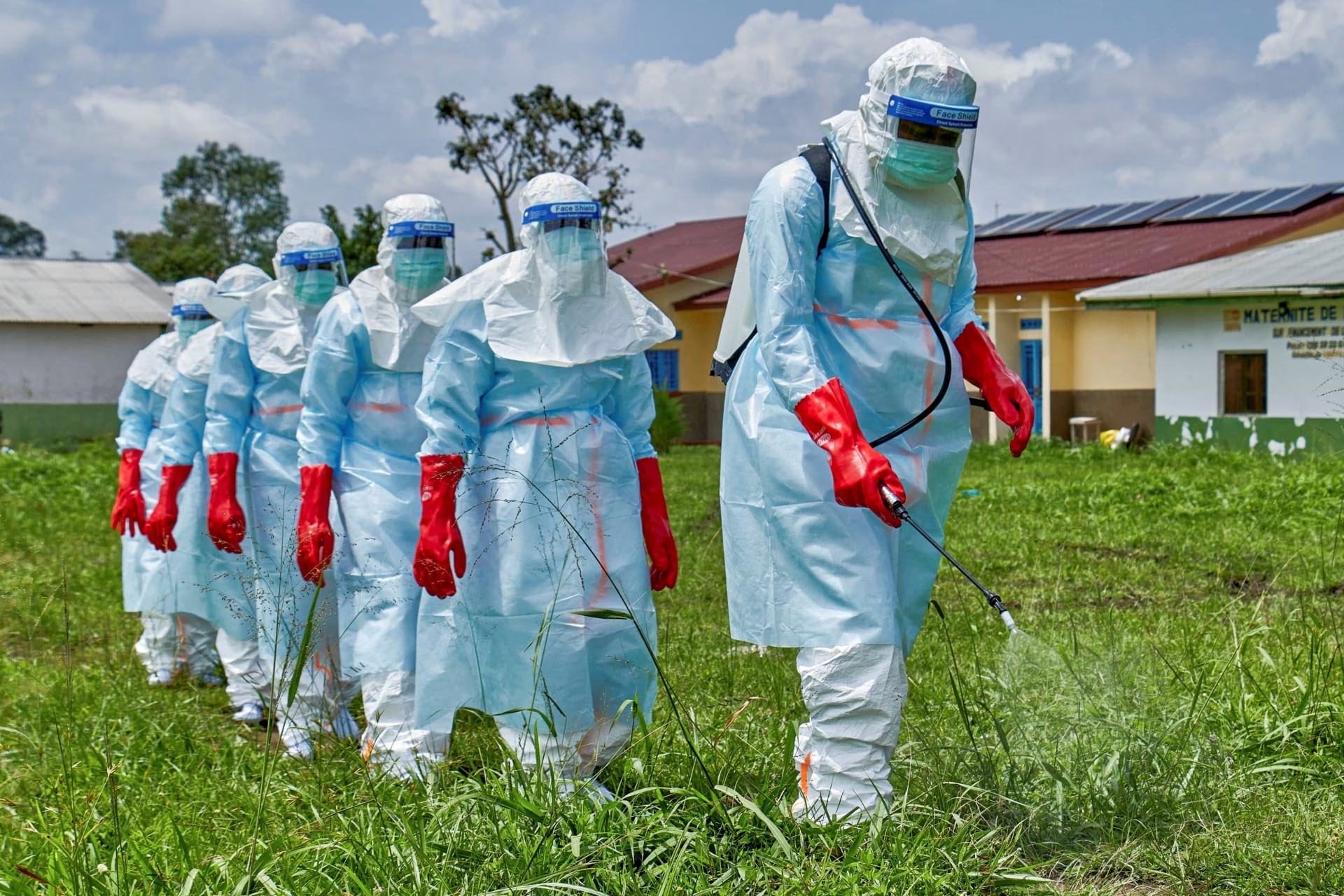
India Prime International Desk |Ebola Outbreak in Congo The number of deaths from the Ebola virus in the Democratic Republic of the Congo (DRC) has officially crossed 2,000, reaching 2,011, making this the fastest-spreading Ebola outbreak in history.
According to the latest figures from Congo’s public health authorities, the total number of confirmed cases has risen to 4,381, spread across five provinces—Ituri, North Kivu, South Kivu, Haut-Uele and Tshuapa.
Unlike previous outbreaks, which were largely caused by the well-known Zaire strain, this 17th Ebola outbreak is reportedly being caused by the rare Bundibugyo strain.
There is currently no approved vaccine or targeted treatment specifically available for this strain, rendering the standard emergency vaccine stock ineffective. This has contributed to an extremely high fatality rate, with the number of deaths reportedly rising from 1,000 to more than 2,000 in less than a month.
Challenges on the Ground
The crisis has been further aggravated by major challenges at the community level. An estimated 60% to 70% of deaths are reportedly occurring in local communities and homes, before patients can reach isolation or treatment centres.
The ongoing armed conflict in eastern Congo, poor road infrastructure, strikes by healthcare workers and distrust among local communities have severely disrupted contact tracing. Emergency response teams are reportedly able to track only around 30% of active cases.
In view of the severity of the situation, the World Health Organization (WHO) has officially declared the outbreak a Public Health Emergency of International Concern (PHEIC).
To prevent the virus from spreading into densely populated urban areas, authorities have tightened screening at river ports and other major transit points leading towards the capital, Kinshasa.
Ebola Virus Update: Current Situation in Neighbouring Countries
Uganda
Because of its border with the DRC, Uganda initially reported 20 confirmed cases and 2 deaths in Kampala and other areas. However, Uganda successfully brought the outbreak under control and declared itself Ebola-free at the local level on 28 July 2026.
Despite this achievement, Uganda remains at risk of new cases because of the continuing outbreak in the DRC.
South Sudan
No Ebola cases have been reported in South Sudan so far. However, the country is considered to be at high risk of transmission because of porous borders and movement of people between the two countries.
Central African Republic and Other Neighbours
As the virus has spread into Congo’s Tshuapa and Haut-Uele provinces, the outbreak has moved closer to the borders of the Central African Republic (CAR), prompting heightened alert levels in the region.
Precautionary and Containment Measures
1. Border Screening:
Thermal screening and fever checks are being conducted at official border crossings, checkpoints and river ports along the affected areas.
2. Cross-Border Surveillance:
With support from the WHO, neighbouring countries have deployed health teams in border regions to identify suspected cases and immediately isolate patients where necessary.
3. International Travel Measures:
Several countries, including the United States, have strengthened screening measures for travellers arriving from the DRC, Uganda and South Sudan. Some locations have reportedly introduced additional monitoring or restrictions for travellers arriving from Ebola-affected regions.
4. Community Awareness:
People in villages and commercial centres near border areas are being educated in local languages about avoiding unnecessary cross-border movement and immediately reporting symptoms such as fever, severe weakness or unexplained bleeding to health authorities.