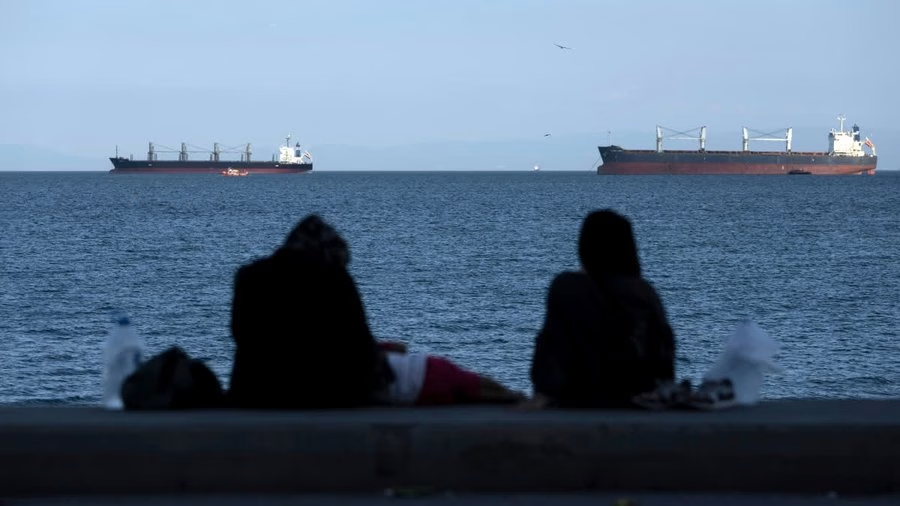
India Prime Tv International Desk Ten Turkish seafarers remain missing and are feared dead after their general cargo ship, the Tugberk Imamoglu, sank rapidly following a pre-dawn collision with an oil tanker in the Sea of Marmara off the coast of Istanbul. The commercial vessel completely disappeared from radar screens and submerged within a critical 11-minute window.
The Incident Mechanics Time and Geographic Location
The collision took place at approximately 3:00 a.m. local time on Wednesday, September 2, 2026. The impact occurred roughly 18 to 20 nautical miles (32 to 35 kilometres) south of the Silivri district, a coastal suburb situated on the western outskirts of the Istanbul province.
Vessels Involved and Cargo Specifications
The tragedy involved two Turkish-flagged vessels navigating the busy maritime corridor:
- The Tugberk Imamoglu: A 90-metre (295-foot) general cargo vessel. According to the Istanbul Governor’s Office, it was transporting 4,200 tonnes of rolled sheet metal, steel coils, and construction steel. It was traveling from the southern Mediterranean port of İskenderun toward Karadenizereğli on the Black Sea coast.
- The Alsu: A 91-metre (298-foot) oil and chemical tanker. It was sailing completely empty from Kocaeli, east of Istanbul, toward Aliaga on the Aegean coast. The tanker sustained structural damage but remained afloat with no initial reports of casualties among its crew.
The Rapid Sinking Lifecycle
Turkish Transport Minister Abdulkadir Uraloglu stated that maritime units received an automated emergency distress signal at 3:26 a.m.. By calculating the gap from the estimated 3:15 a.m. impact, authorities verified that the heavy cargo weight caused the vessel to fill with water and sink in just 11 minutes.
Search and Rescue Efforts
Following the distress signal, the Turkish Directorate General of Maritime Affairs coordinated an immediate response. The active deployment consists of two rescue helicopters and 12 specialized search-and-rescue vessels scouring the sector. The first physical rescue craft arrived at the coordinate grid at 4:10 a.m..
Discovered Artifacts and Crew Status
The 10 missing crew members—consisting of the captain and nine seafarers—are all Turkish nationals. Emergency teams successfully located scattered debris, life buoys, and a primary lifeboat belonging to the Tugberk Imamoglu. However, the General Directorate of Maritime Affairs confirmed that the recovered lifeboat was entirely empty. All radio calls to the ship went unanswered, and localized attempts to call the crew members’ personal mobile phones have failed. No survivors have been found alive.
Conflict of Liability and Investigation
A dispute over the cause of the collision emerged immediately following the incident. The ship-owning company, Imamoglu Denizcilik, issued a public statement clarifying that their captain explicitly contacted the Alsu via radio before the impact. The company claims the captain formally warned the tanker that it was entering the designated shipping lane of the cargo vessel. Imamoglu Denizcilik alleges that the collision occurred as a direct result of the Alsu‘s subsequent navigational maneuvers. The owners of the Alsu have not yet responded to these allegations.
Regional Traffic Strain
The Turkish Straits, which encompass the Bosphorus, the Dardanelles, and the Sea of Marmara, rank among the most congested shipping lanes worldwide. Hundreds of thousands of industrial vessels pass through this bottleneck annually. The incident has placed extra strain on local emergency units, who are simultaneously assisting in a search operation for the passenger ferry Filo Jet which capsized off the coast of Cyprus, leaving eight dead and 20 missing