
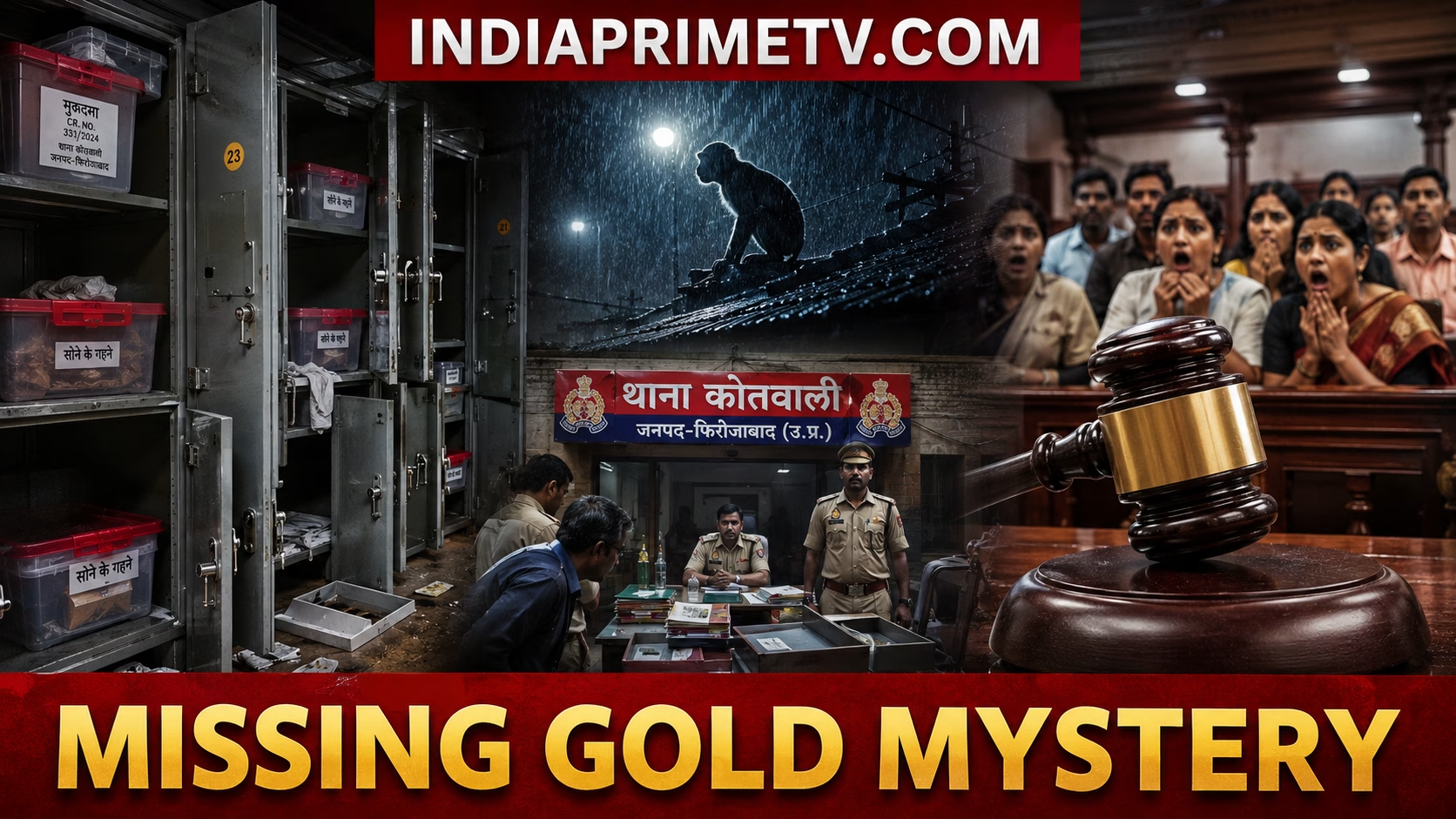
By Devender Singh | IndiaPrimeTV.com Rain Melted the Gold, A bizarre explanation given by police in Uttar Pradesh’s Lakhimpur Kheri has triggered outrage and raised serious questions about the security of seized property stored in police custody.
In court, police officials claimed that gold jewellery worth nearly ₹1 crore kept in the station’s evidence room was damaged by rainwater, and that the remaining ornaments were carried away by monkeys.
The court rejected the explanation outright, calling it unbelievable and ordering strict action against the officials responsible.
What is the case about?
The incident dates back to 2007, when a woman from the Kapoorthala locality in Lakhimpur Kheri died by suicide. During the investigation, police seized several gold ornaments, including a chain, pendant, ring and 10 gold bangles, and stored them in the police station’s evidence room, known as the malkhana.
After a lengthy legal process, the woman’s husband, Mudit Agrawal, was acquitted by the court. Following the acquittal, he sought the return of the jewellery through legal channels.
However, when the court directed police to hand over the seized ornaments, officials submitted an unusual report.
Police claim: Rain damaged the gold, monkeys took the rest
According to the police report, the sealed packet containing the jewellery became wet due to rainwater entering the evidence storage room.
Officials claimed the packet was later placed on the roof to dry. They further alleged that most of the gold was destroyed by water, while the remaining jewellery was taken away by monkeys.
The explanation stunned the court and quickly drew widespread public attention.
Court rejects police version
District Judge Laxmikant Shukla dismissed the police account as completely implausible.
The court observed that gold does not dissolve or deteriorate when exposed to rainwater. The judge expressed concern that the jewellery may have been misappropriated while in police custody and that false records could have been created to conceal the loss.
The court directed authorities to:
- Identify officials responsible for managing the evidence room.
- Register an FIR against those found negligent.
- Recover compensation from the responsible personnel.
- Ensure that the victim’s family receives full restitution.
Family still waiting for justice
Despite the court’s order in 2025, the family claims they have not received compensation or the missing jewellery.
According to the victim’s family, repeated appeals to local authorities have yielded no results, and they are now preparing to approach the Allahabad High Court.
Why this case matters
The Lakhimpur Kheri case has sparked a larger debate about the management of evidence rooms across India.
Police malkhanas store valuable items seized during investigations, including cash, jewellery, vehicles, narcotics, weapons and critical evidence. Experts argue that poor record-keeping, inadequate monitoring and lack of digitisation have made these facilities vulnerable to theft, corruption and negligence.
Similar incidents across India
This is not the first time that missing property from police custody has made headlines.
Bihar’s “rats drank the liquor” controversy
After the implementation of prohibition in Bihar, police claimed that rats had consumed large quantities of seized liquor stored in evidence rooms. The explanation drew national attention and criticism from courts.
Missing jewellery cases in Tamil Nadu
Several police stations in Tamil Nadu have faced allegations of missing gold ornaments kept in custody, leading to departmental inquiries and disciplinary action.
Questions over seized vehicles and evidence
Courts across India have repeatedly expressed concern over the poor condition of seized vehicles and evidence kept in police compounds for years without proper disposal or monitoring.
Calls for reform
Legal experts and former police officials say India urgently needs a modern, technology-driven evidence management system.
Suggested reforms include:
- Digitised inventory records
- Barcode and QR-code tracking
- CCTV surveillance in evidence rooms
- Regular independent audits
- Online integration with court records
The case has once again highlighted the need for accountability and transparency in the handling of seized property.
For many observers, the key question remains unanswered: if valuable evidence cannot be protected while in police custody, how can citizens maintain trust in the justice system?