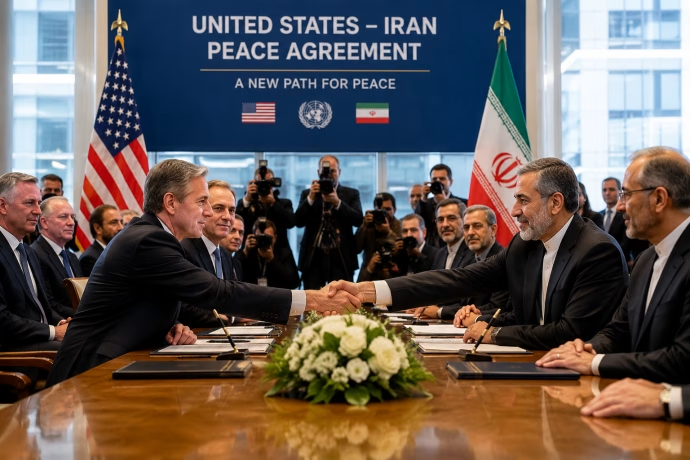
By Devender singh IndiaprimeTV.com | Updated: June 19, 2026“The recent US-Iran peace deal impact on oil prices has become a primary focus for global markets. This breakthrough 14-point memorandum of understanding, signed by US President Donald Trump and Iranian President Masoud Pezeshkian, aims to ease Middle East tensions, reopen the Strait of Hormuz, and restore Iranian oil exports. As Brent crude prices respond to this stability, the deal promises significant relief for fuel costs, inflation, and economic growth across India, the United States, and Europe.”
Why Are Oil Prices Falling?
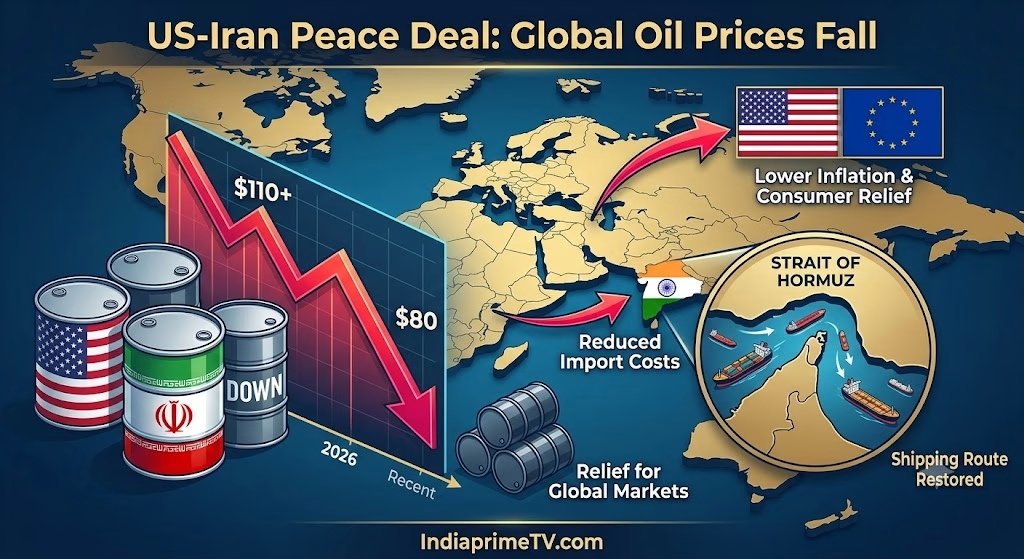
Global oil prices surged earlier this year after tensions in the Middle East disrupted shipping routes and raised concerns about energy supply shortages. At the height of the conflict, Brent crude briefly climbed above $110 per barrel.
However, markets reacted positively after the US-Iran agreement signaled the reopening of the Strait of Hormuz, one of the world’s most important energy corridors. Roughly one-fifth of global oil and liquefied natural gas supplies pass through the strait.
Brent crude has now fallen below $80 per barrel, reaching its lowest level in nearly three months as traders anticipate improved supply conditions and the return of Iranian oil exports.
Why the Strait of Hormuz Matters
The Strait of Hormuz connects the Persian Gulf with global shipping lanes and is a critical route for energy exports from the Middle East.
Any disruption in the waterway directly affects:
- Global crude oil prices
- Shipping and insurance costs
- Fuel prices for consumers
- Inflation and food prices
- Manufacturing and transport sectors
The agreement includes a phased lifting of naval restrictions and a commitment to restore commercial shipping through the strait. However, analysts caution that full normalization could take weeks or even months.
What Does This Mean for India?
India is the world’s third-largest oil importer and relies on overseas markets for approximately 85% of its crude oil requirements.
Lower crude oil prices could bring several benefits to the Indian economy:
Reduced Import Bill
A decline in oil prices lowers India’s overall import costs, helping reduce pressure on the current account deficit.
Lower Inflation
Cheaper energy costs can ease inflation by reducing transportation, manufacturing, and logistics expenses.
Potential Fuel Price Relief
While retail petrol and diesel prices in India depend on multiple factors, including taxes and currency movements, sustained lower crude prices could create room for future price reductions.
Stronger Economic Growth
Lower energy costs improve business margins and consumer spending, supporting economic expansion.
Impact on the United States
American consumers are already seeing some relief at the pump. Average gasoline prices in the US have fallen below $4 per gallon for the first time since March 2026 following the agreement.
Lower fuel costs could help:
- Reduce inflationary pressure
- Improve consumer confidence
- Support retail spending
- Lower transportation expenses
However, analysts warn that prices remain significantly higher than pre-conflict levels due to supply chain disruptions and low inventories.
How Europe Could Benefit
European economies have struggled with energy volatility in recent years due to geopolitical tensions and supply disruptions.
Lower oil prices could help Europe by:
- Reducing industrial energy costs
- Improving manufacturing competitiveness
- Supporting economic recovery
- Easing inflation pressures
The agreement may also reduce shipping costs and improve supply chain reliability for European businesses that depend heavily on Middle Eastern energy supplies.
Will Fuel Prices Fall Immediately?
Not necessarily.
Retail fuel prices often lag behind changes in global crude markets because they depend on several factors:
- Government taxes
- Refining costs
- Currency exchange rates
- Distribution expenses
- Existing inventory levels
While lower crude prices create favorable conditions, consumers may not see immediate reductions at fuel stations.
What Are the Risks?
Despite market optimism, uncertainty remains.
Key risks include:
- Delays in implementing the agreement
- Future disagreements over compliance
- Slow restoration of shipping operations
- Continued geopolitical tensions
The IMF has warned that oil prices are likely to ease gradually rather than collapse sharply.
Investors are also closely monitoring whether Iran continues to meet the agreement’s conditions during the initial 60-day implementation period.
The Bottom Line
The US-Iran peace deal represents one of the most significant geopolitical developments of 2026.
By reducing tensions in the Middle East and reopening the Strait of Hormuz, the agreement has already helped push oil prices lower and improved confidence in global markets.
For India, lower crude prices could ease inflation and strengthen economic growth. For the United States and Europe, the deal offers a chance to stabilize energy costs and reduce pressure on consumers.
However, the long-term impact will depend on whether both sides successfully implement the agreement and maintain stability in one of the world’s most strategically important regions.
FAQs
Why are oil prices falling?
Oil prices are falling because markets expect increased supply after the US-Iran agreement reopened the Strait of Hormuz and eased restrictions on Iranian oil exports.
How much oil does India import?
India imports around 85% of its crude oil requirements.
Will petrol and diesel prices decrease in India?
Lower crude prices may eventually reduce fuel costs, but taxes, refining costs, and currency movements also influence retail prices.
Why is the Strait of Hormuz important?
About 20% of global oil and LNG supplies pass through the Strait of Hormuz, making it one of the world’s most critical energy routes.