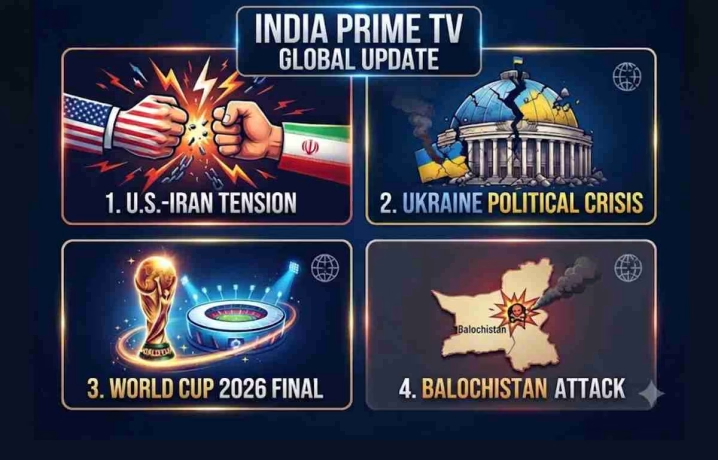

India prime International Desk World News Today | July 18, 2026 .The ongoing escalation between Iran and the United States has triggered a series of major diplomatic and military shifts involving Pakistan and its regional allies.Here is a comprehensive, consolidated overview in English detailing Iran’s decision, the breakdown of the Islamabad MoU, and Pakistan’s subsequent strategic actions:
1. Iran Suspends the Islamabad MoU
- The Catalyst: The decision follows a declaration by US President Donald Trump during a NATO meeting that the agreement was “over,” alongside a wave of US airstrikes hitting Iranian military and infrastructure targets (including a major water plant in Jask).
- Tehran’s Stance: Iranian Deputy Foreign Minister Kazem Gharibabadi stated that because Washington has systematically violated every clause of the ceasefire, Iran is no longer bound by its terms.
2. Pakistan’s Immediate Diplomatic Response
- “Wait-and-Watch” Approach: Recognizing the volatility of the situation, Pakistani diplomatic sources indicate the country is adopting a temporary pause, waiting for the intense kinetic phase of the conflict to cool down before trying to reactivate the Islamabad peace framework.
- Appeals for Restraint: Pakistan’s Foreign Ministry Spokesperson, Tahir Andrabi, urged both Washington and Tehran to exercise maximum restraint, stop all hostilities, and return to technical-level talks.
3. Pakistan’s Emerging Regional Alliances and Security Pacts
- The Pakistan-Saudi-Turkey Trilateral Defence Pact: Pakistan, Saudi Arabia, and Turkey are actively drafting a new trilateral defense alliance. Gulf states are increasingly looking to combine Pakistan’s military manpower and missile capabilities with Turkey’s advanced drone and defense technology to create an independent security umbrella, reducing reliance on the US. [1, 2]
- The Saudi Red Line: Amidst threats to neighboring nations, Islamabad has issued a stern, unequivocal warning to Tehran, stating that any direct aggression or attack on Saudi Arabian territory would be treated as an attack on Pakistan itself. [1, 2]
- Expanded Kuwait Defence Deal: Following drone and missile strikes impacting Kuwait, Pakistan is in discussions to rapidly expand its defense pact with Kuwait. This agreement could see the deployment of thousands of Pakistani troops, air defense units, and aerial assets to protect Kuwait’s borders and infrastructure.
earthquake in Mexico
A series of major global developments unfolded overnight, ranging from a powerful earthquake in Mexico to renewed military action in the Middle East and continued fighting in Ukraine.
7.3-Magnitude Earthquake Triggers Tsunami Alert in Mexico
A powerful 7.3-magnitude earthquake struck off the coast of Puerto Madero in Mexico’s Chiapas state, prompting tsunami warnings for parts of the Pacific coast.
According to the U.S. Geological Survey (USGS), the earthquake occurred at a shallow depth of around 10–15 kilometres, causing strong tremors across southern Mexico, Guatemala and El Salvador. Authorities issued a tsunami advisory for coastal areas within a 300-kilometre radius, while emergency teams continue to assess the situation. No major casualties have been officially confirmed so far. (Google News)
US-Iran Conflict Escalates Further
The conflict between the United States and Iran intensified overnight as fresh strikes were reported near Qeshm Island and other strategic locations linked to Iran’s military infrastructure.
Iran accused the United States of carrying out attacks near civilian facilities and responded with missile and drone operations targeting U.S.-allied positions in the Gulf region. Rising tensions have increased concerns over shipping security in the Strait of Hormuz, a vital global energy route. (The Guardian)
Russia Continues Attacks on Ukraine
Russia launched fresh attacks targeting parts of Ukraine, including infrastructure linked to Black Sea operations. Ukrainian officials reported continued damage while military operations remain active across several regions.
The developments come amid political changes in Kyiv and ongoing efforts to strengthen Ukraine’s defence capabilities. Fighting continues despite renewed international calls for de-escalation. (Reuters)
Middle East Remains on Edge
The humanitarian situation in Gaza and broader regional security remain under close international watch. Diplomatic efforts continue alongside military operations, with tensions extending across several neighbouring countries.
Global leaders are monitoring developments amid growing concerns about regional stability and humanitarian conditions. (Reuters)
Oil Markets React to Rising Geopolitical Risks
Escalating tensions in the Middle East have kept global energy markets on alert. Concerns over disruptions to shipping through the Strait of Hormuz have supported higher oil prices, while investors remain cautious about the broader economic impact of the conflict.
What to Watch Today
Global attention is expected to remain focused on:
- Updates from the Mexico earthquake and tsunami warning.
- Further developments in the US-Iran conflict.
- Russia-Ukraine battlefield and political updates.
- Israel-Gaza humanitarian and diplomatic developments.
- Global financial markets and oil price movements in response to geopolitical tensions.
Mexico earthquake,US-Iran conflict,Russia-Ukraine ,Israel-Gaza,Global financial markets ,oil price movements