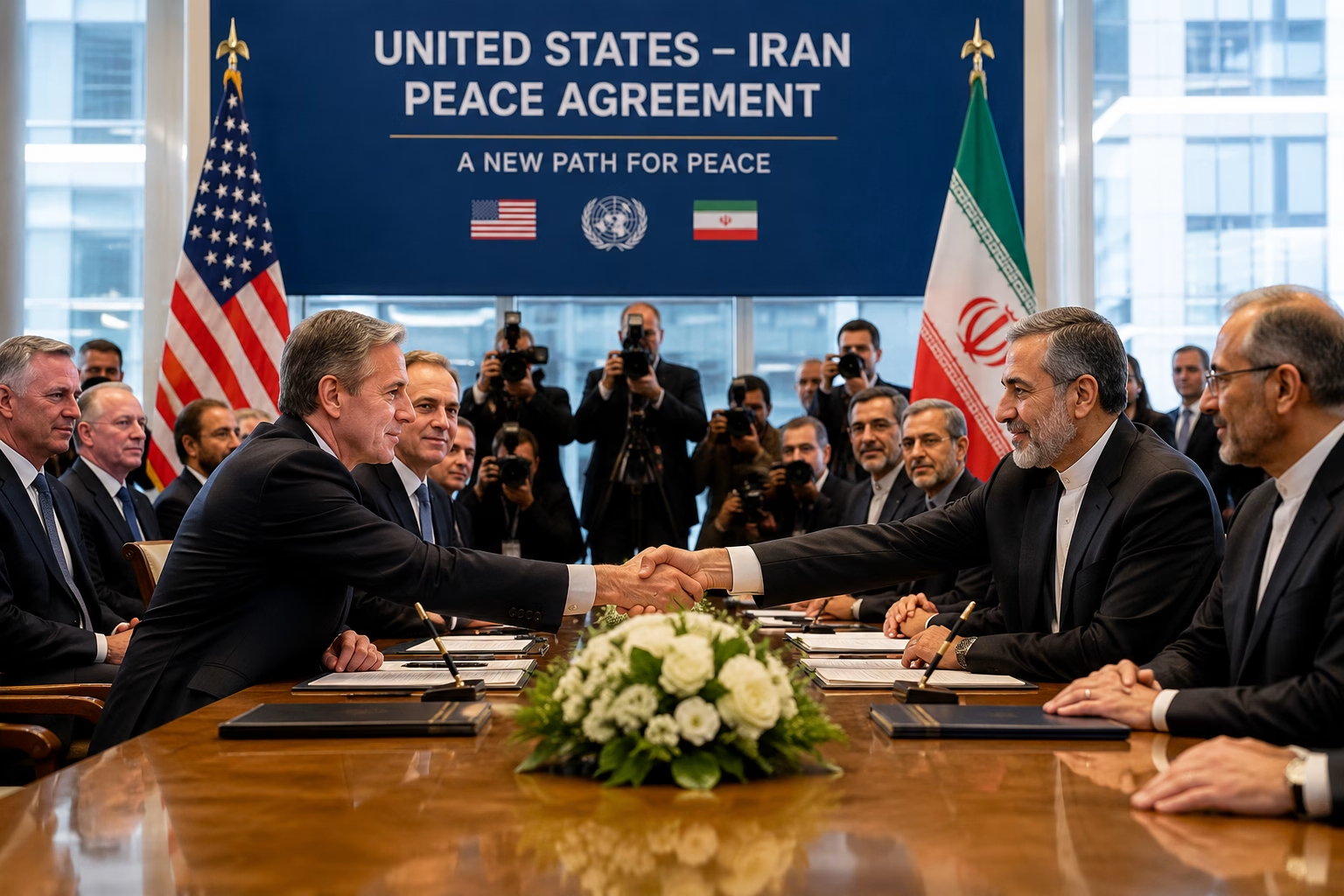
Indiaprimetv International Desk US and Iran sign initial agreement The United States has officially released the details of a 14-point draft agreement with Iran, marking a significant step toward ending one of the most disruptive conflicts in the Middle East in recent years. The agreement, formally titled the “Memorandum of Understanding Between the United States of America and the Islamic Republic of Iran,” is widely referred to as theUS and Iran sign initial agreement
The framework was announced by US President Donald Trump and is expected to be formally signed in Switzerland this week. Following the signing, both countries will have a 60-day negotiation period to finalize a comprehensive agreement, with the possibility of extending talks through mutual consent. Iran has not yet issued a detailed official response to the final draft.
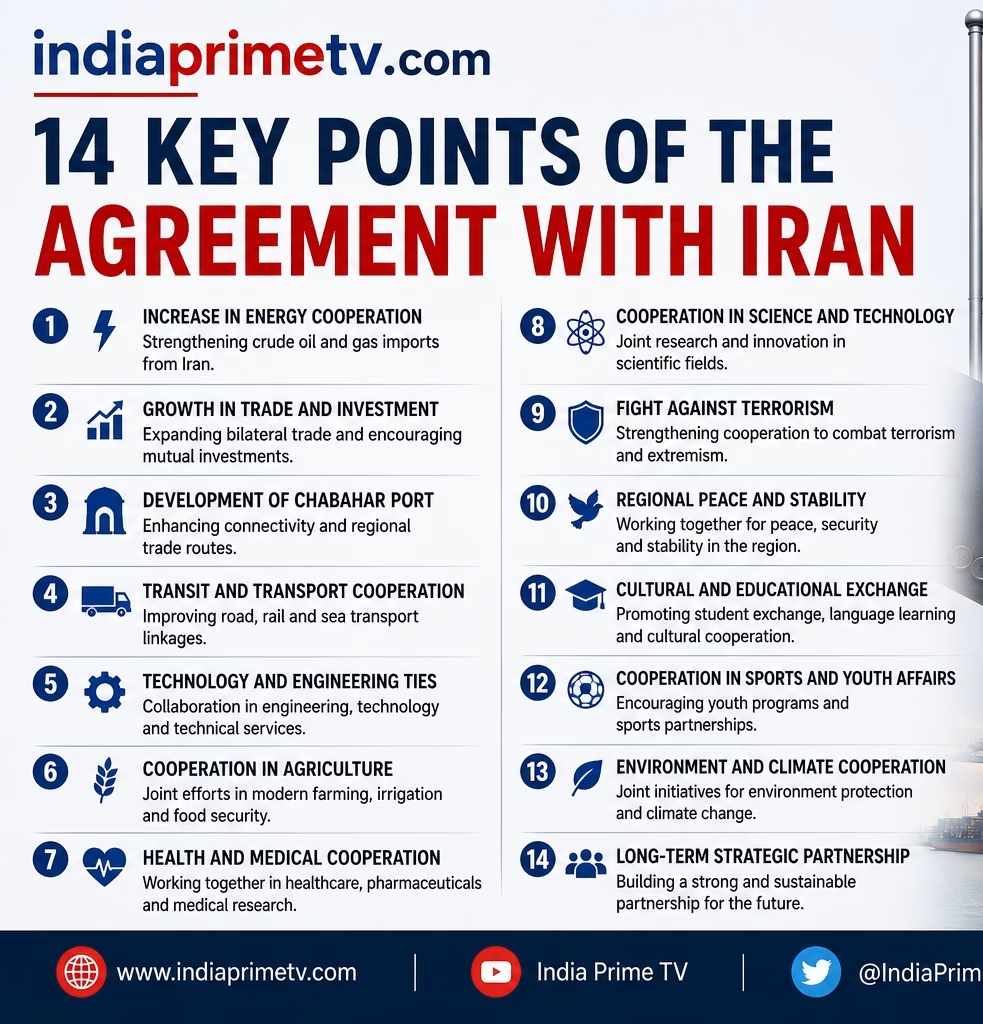
The 14 Key Points of the US-Iran Agreement
1. Immediate and Permanent Ceasefire
The United States, Iran and their regional allies agree to immediately end military operations across all fronts, including Lebanon. Both sides commit to refraining from future military action or threats of force against each other.
2. Respect for Sovereignty
Both countries agree to respect each other’s territorial integrity, sovereignty and political independence.
3. Final Agreement Within 60 Days
Washington and Tehran commit to negotiating a comprehensive peace agreement within 60 days, with the option to extend the timeline by mutual consent.
4. End of US Naval Restrictions
The United States will begin removing its naval blockade and other restrictions on Iran immediately after signing the memorandum and aims to fully restore maritime access within 30 days.
5. Reopening the Strait of Hormuz
Iran commits to ensuring the safe and unrestricted passage of commercial vessels through the Strait of Hormuz and the Gulf of Oman. It will also remove technical and military barriers, including sea mines, within 30 days.
6. Regional Maritime Cooperation
Iran will work with Oman and other Gulf states to establish a long-term framework for maritime management and navigation services in accordance with international law.
7. $300 Billion Reconstruction Plan
The United States and its regional partners will develop a reconstruction and economic development package worth at least $300 billion for Iran.
8. Lifting of Sanctions
Washington has pledged to remove US and international sanctions on Iran in phases, including primary and secondary sanctions, subject to the terms of the final agreement.
9. Nuclear Commitments
Iran reiterates that it will neither acquire nor develop nuclear weapons.
10. IAEA Oversight
Iran’s enriched nuclear material stockpiles will be managed under the supervision of the International Atomic Energy Agency (IAEA).
11. Freeze on Escalation
Until the final agreement is concluded, Iran will maintain its current nuclear programme levels, while the United States will refrain from imposing new sanctions or increasing military deployments in the region.
12. Oil Export Waivers
The US Treasury Department will issue waivers allowing Iran to export crude oil, petroleum products and related services, including banking, shipping and insurance.
13. Release of Frozen Assets
The United States will facilitate the release of Iran’s frozen funds and assets, enabling Tehran to access international financial systems again.
14. Joint Monitoring Mechanism
A joint implementation body will oversee compliance with the agreement, while the final deal is expected to receive formal approval through a binding resolution of the United Nations Security Council.
Which Countries Stand to Benefit?
Iran
- Sanctions relief could revive oil exports and economic growth.
- Access to frozen assets may improve liquidity and foreign investment.
- The proposed $300 billion reconstruction package could support infrastructure development.
United States
- Reduced military commitments in the Middle East.
- Lower pressure on energy prices and inflation.
- Improved regional stability and reduced security risks.
China
China, one of Iran’s largest energy buyers, could benefit from more stable oil supplies and lower energy costs.
India, Japan and South Korea
These major Asian energy importers rely heavily on oil shipments passing through the Strait of Hormuz. The reopening of the route could help stabilize fuel prices and reduce inflationary pressures.
Gulf Countries
Saudi Arabia, the UAE, Oman and Qatar may benefit from lower geopolitical risks, more stable trade routes and increased regional investment.
Which Countries Could Face Challenges?
Russia
A decline in global oil prices could reduce export revenues for major energy exporters such as Russia.
Major Defence Contractors
A reduction in military operations could slow defence procurement growth linked to Middle East tensions.
Oil-Exporting Economies
Countries that benefited from higher oil prices during the conflict may experience lower revenues if energy prices continue to decline.
How Much Has the Conflict Cost the Global Economy?
While official government estimates are still evolving, economists believe the conflict has imposed substantial costs on the global economy.
Energy Market Disruption
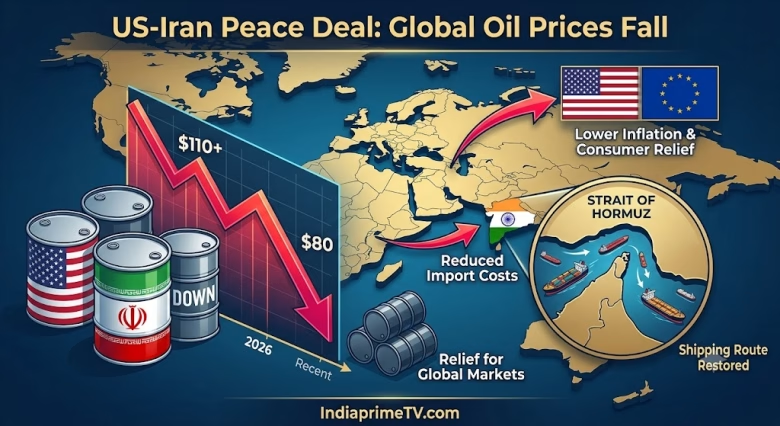
Nearly 20% of the world’s oil supply and a significant share of liquefied natural gas (LNG) trade normally pass through the Strait of Hormuz. Disruptions created major volatility in global energy markets.
Oil Price Shock
During peak tensions, crude oil prices surged above $100 per barrel, increasing transportation, manufacturing and household costs worldwide. Prices have fallen sharply following the announcement of the agreement.
Global Trade Impact
According to market analysts, prolonged disruptions could have reduced global oil and LNG exports by as much as 8% to 9%, with crude prices potentially reaching $150 per barrel in a worst-case scenario.
Inflation and Economic Growth
Higher energy costs contributed to rising inflation and slower economic growth across Europe and Asia. Central banks have warned that energy-related inflation risks remain elevated despite the ceasefire announcement.
Estimated Economic Losses
Although no official consolidated figures have been released, economists estimate:
- The global economy may have lost tens of billions of dollars through higher energy prices, increased shipping costs and trade disruptions.
- The United States incurred additional costs through military deployments, naval operations and regional security commitments.
- Airlines, shipping companies and energy-intensive industries faced significant increases in operating costs.
- Import-dependent countries such as India, Japan and South Korea experienced higher fuel import bills and inflationary pressure.
Why the Strait of Hormuz Matters
The Strait of Hormuz is one of the world’s most critical maritime chokepoints, connecting the Persian Gulf to international markets.
Every day, millions of barrels of crude oil and LNG pass through the waterway. Any disruption immediately affects global energy prices, shipping costs and financial markets. The agreement’s commitment to restoring safe navigation is therefore considered one of its most significant provisions.
Conclusion
The 14-point Islamabad Memorandum represents the most significant diplomatic breakthrough between Washington and Tehran in years.
If successfully implemented, the agreement could reduce regional tensions, restore energy market stability and revive Iran’s economy. However, major challenges remain, including final negotiations on Iran’s nuclear programme, sanctions removal timelines and long-term security guarantees.
The next 60 days of negotiations will determine whether this memorandum evolves into a lasting peace agreement or remains a temporary ceasefire framework.