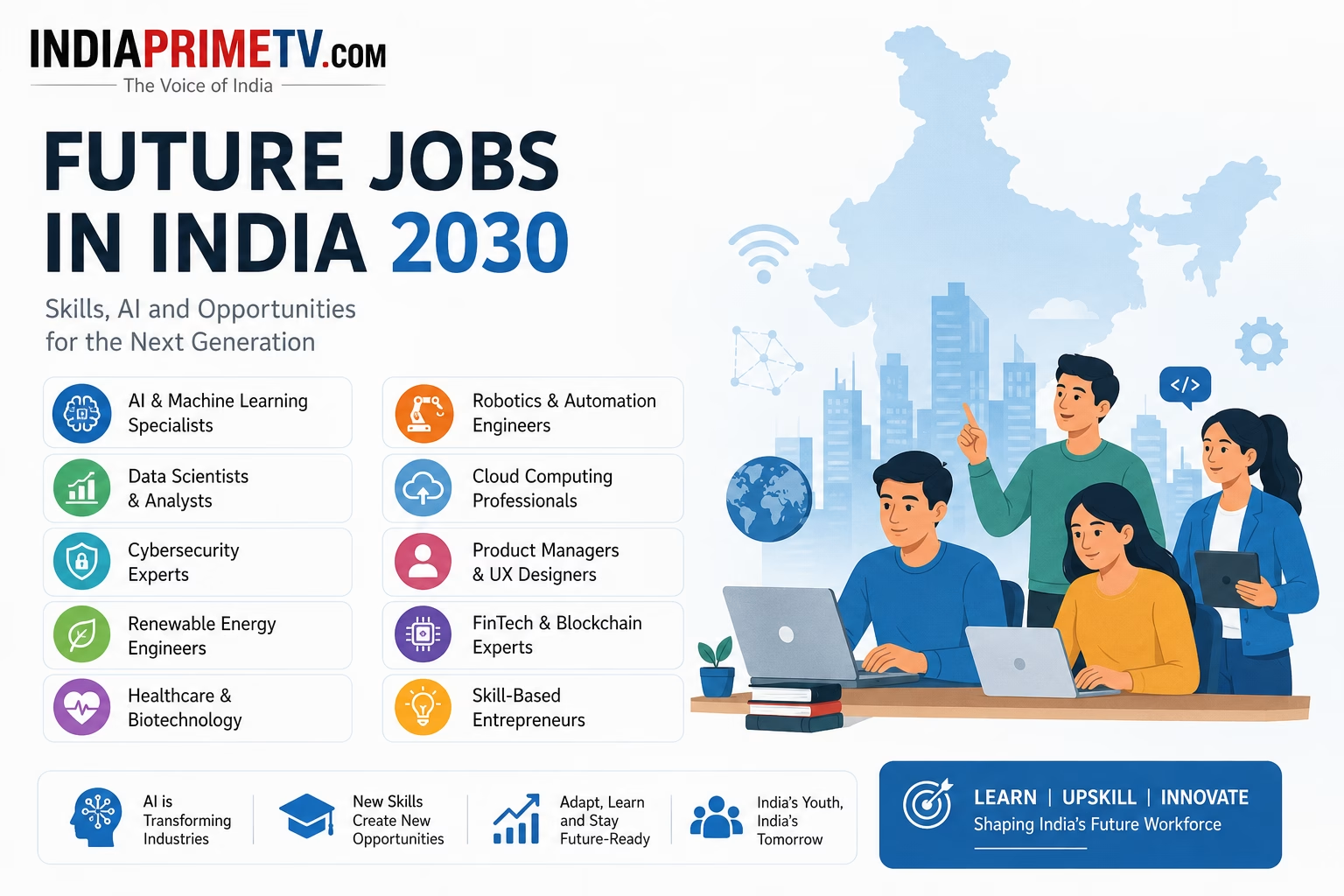
By Devender Singh | IndiaprimeTV.com I Jobs Survive in India by 2030? Is the Importance of JEE Rank Declining? Which Jobs Will Survive in India by 2030? Millions of students in India prepare every year for competitive examinations such as JEE, NEET, CLAT, CAT, and several other entrance tests. For decades, a good rank was considered the key to securing admission into a prestigious institution, obtaining a high-paying job, and building a successful future.However, in 2026, a major question is being debated across India’s education and employment sectors: Is the importance of JEE Rank declining?
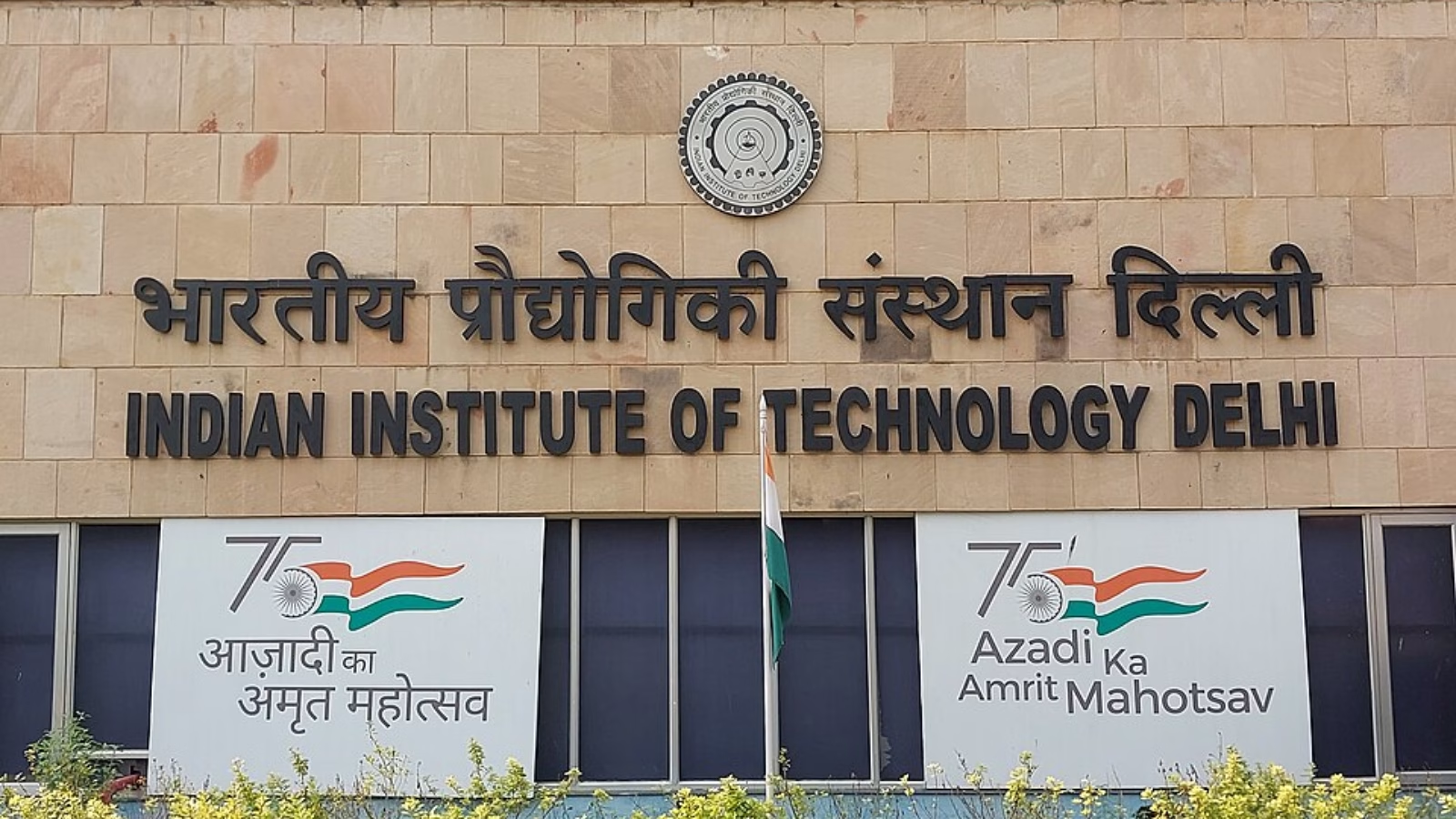
The discussion gained momentum after the All IITs Placement Committee (AIPC) advised students to remove JEE ranks, percentiles, and GATE scores from their placement resumes. The rationale behind the decision was that employers should evaluate candidates based on their performance during college, projects, internships, research work, and practical skills rather than entrance examination scores achieved years earlier.
What Are IIT Placements Indicating?
Over the past five years, IIT placement patterns have undergone significant changes.
Previously, companies often placed considerable importance on the reputation of the institution and entrance examination rankings. Today, employers increasingly prioritize skills in Artificial Intelligence, Data Science, Machine Learning, Semiconductor Design, Cybersecurity, and Robotics.
Demand for students specializing in AI, Machine Learning, Data Science, and Computational Engineering continues to rise. Across several IITs, students from these emerging technology disciplines are receiving stronger interest from recruiters compared to many traditional engineering streams.
Experts believe that in the coming years, where you studied may become less important than what you are capable of doing.
What Has Changed Over the Last Five Years?
IIT Placements: From the Tech Boom to the AI Era
The evolution of IIT placements over the last five years can be broadly divided into several phases.
2021-22: The Technology Boom
- Global technology companies recruited aggressively.
- Several IIT graduates received international packages exceeding ₹1 crore annually.
- Software Development and Product Management roles dominated recruitment.
2022-23: A Year of Stability
- Recruitment remained strong.
- Demand for Artificial Intelligence and Data Science professionals increased significantly.
- Semiconductor and chip design sectors began expanding hiring efforts.
2023-24: Impact of the Global Tech Slowdown
- Global layoffs affected campus hiring.
- Placement percentages came under pressure at several institutions.
- Startup hiring slowed considerably.
2024-25: Early Recovery
- Demand for AI, Cybersecurity, and Data Engineering professionals strengthened.
- Several IITs reported improved placement outcomes and compensation packages.
2025-26: Rising Demand for AI Graduates
- Students specializing in AI, Machine Learning, Data Science, and Robotics gained a clear advantage.
- Recruiters increasingly focused on project portfolios and practical skills rather than JEE ranks.
What Does the IIM Trend Suggest?
India’s leading management institutions continue to report strong placement outcomes.
According to publicly reported placement figures:
- Indian Institute of Management Ahmedabad attracted approximately 178 recruiters for its 2025 graduating batch, with average compensation approaching ₹35 lakh per annum.
- Indian Institute of Management Calcutta reported 100% placements in 2026, with average compensation close to ₹36 lakh annually.
The Biggest Change
Earlier, recruiters focused heavily on:
- CAT Scores
Today, companies increasingly evaluate:
- Leadership Ability
- Analytical Thinking
- AI Tool Proficiency
- Business Intelligence
- Digital Strategy Skills
What Is Changing in Law Schools?
Top National Law Universities (NLUs) continue to attract strong recruiter interest.
Institutions such as:
- National Law School of India University (NLSIU)
- NALSAR University of Law
- National Law University Delhi
continue to report competitive placement outcomes.
However, demand is shifting toward specialized legal domains such as:
- AI-Assisted Legal Research
- Cyber Law
- Data Privacy
- International Arbitration
These emerging areas are becoming increasingly important for future legal professionals.
The Bigger Concern: What About Ordinary Graduates?
Every year, millions of students graduate with degrees such as:
- Bachelor of Arts (BA)
- Bachelor of Commerce (BCom)
- Bachelor of Science (BSc)
This group may face the greatest employment challenges.
Why?
- The number of degree holders continues to increase.
- Entry-level jobs are increasingly being influenced by automation and AI.
- Employers are shifting toward skill-based hiring models.
 What Should BA, BCom, and BSc Graduates Do?

1. Develop AI Literacy
Students should learn to use modern AI tools such as:
- ChatGPT
- Microsoft Copilot
- Google Gemini
- Claude
2. Add a Technical Skill
Recommended options include:
- Data Analytics
- Digital Marketing
- Cybersecurity
- UI/UX Design
- Cloud Computing
3. Pursue Internships
Practical industry experience is becoming essential.
4. Build a Professional LinkedIn Profile
Employers increasingly evaluate candidates online.
5. Create a Portfolio
Demonstrating real work and projects is becoming more valuable than simply listing qualifications.
How Is AI Transforming the Job Market?
Artificial Intelligence is no longer just another technology. It is rapidly becoming one of the most influential forces shaping employment worldwide.
AI is already affecting:
- Data Entry
- Basic Coding Tasks
- Customer Support
- Routine Content Writing
- Repetitive Back-Office Operations
At the same time, it is creating entirely new career paths:
- AI Engineer
- Prompt Engineer
- Machine Learning Specialist
- Data Scientist
- Cybersecurity Analyst
- Robotics Engineer
- AI Product Manager
Which Careers Are Most Likely to Survive Until 2030?
Experts believe that careers combining human judgment, creativity, technical expertise, and real-world problem-solving will remain highly valuable.
Potentially Future-Proof Careers
Engineering and Technology
- Artificial Intelligence Engineer
- Robotics Engineer
- Semiconductor Design Engineer
- Cybersecurity Specialist
- Renewable Energy Engineer
- Industrial Automation Engineer
Healthcare and Research
- Healthcare Technology Expert
- Biotechnology Researcher
Aerospace and Defence
- Aerospace Engineer
- Defence Technology Specialist
- Drone Systems Specialist
- Space Systems Engineer
Skilled Trades
- Electrician
- Industrial Welder
- CNC Specialist
- Solar Technician
Additional growing sectors include:
- Electric Vehicle Technology
- Advanced Manufacturing
- Renewable Energy
- Drone Operations
Are Trade Skills Better Than Engineering?
This question is increasingly common.
The answer is that both serve different purposes.
Demand for skilled electricians, welders, CNC operators, and industrial technicians is rising globally. However, this does not mean engineering has become less relevant.
The future belongs to professionals who combine engineering knowledge with practical hands-on skills.
Is America’s AI Story a Warning for India?
China’s Model: AI Education Begins in School
China has made Artificial Intelligence a national strategic priority.
Schools increasingly teach:
- Coding
- Robotics
- AI Fundamentals
- Manufacturing Technologies
from an early stage.
China’s goal is not simply to use AI but to become a global leader in developing it.
Germany’s Model: Study and Work Together
Germany’s Dual Vocational Training System is widely regarded as one of the world’s most successful workforce development models.
Students typically divide their time between:
- Classroom Learning
- Industry Training
A common structure involves:
- Three days working with companies
- Two days in educational institutions
This system ensures graduates enter the workforce with both qualifications and practical experience.
Why Is It Difficult to Implement These Models in India?
India faces several structural challenges:
Massive Scale
India’s student population is far larger than that of Germany.
Industry-Academia Gap
Educational curricula often lag behind industry requirements.
Shortage of Skilled Trainers
There is limited availability of instructors qualified to teach AI, Robotics, Semiconductor Technologies, and Advanced Manufacturing.
Social Perception
Many families still view vocational education as less prestigious than traditional engineering or academic degrees.
Conclusion
India’s education system is entering a period of profound transformation.
The winner of 2030 will not necessarily be the student with the highest entrance examination rank.
JEE ranks, CAT scores, and academic credentials will continue to matter, but they will no longer guarantee success on their own.
The future job market will reward individuals who:
- Know how to work alongside AI.
- Continuously acquire new skills.
- Combine technical knowledge with practical experience.
- Demonstrate strong problem-solving abilities.
The most valuable qualification of the future may not be a degree itself, but the ability to keep learning throughout one’s career.