
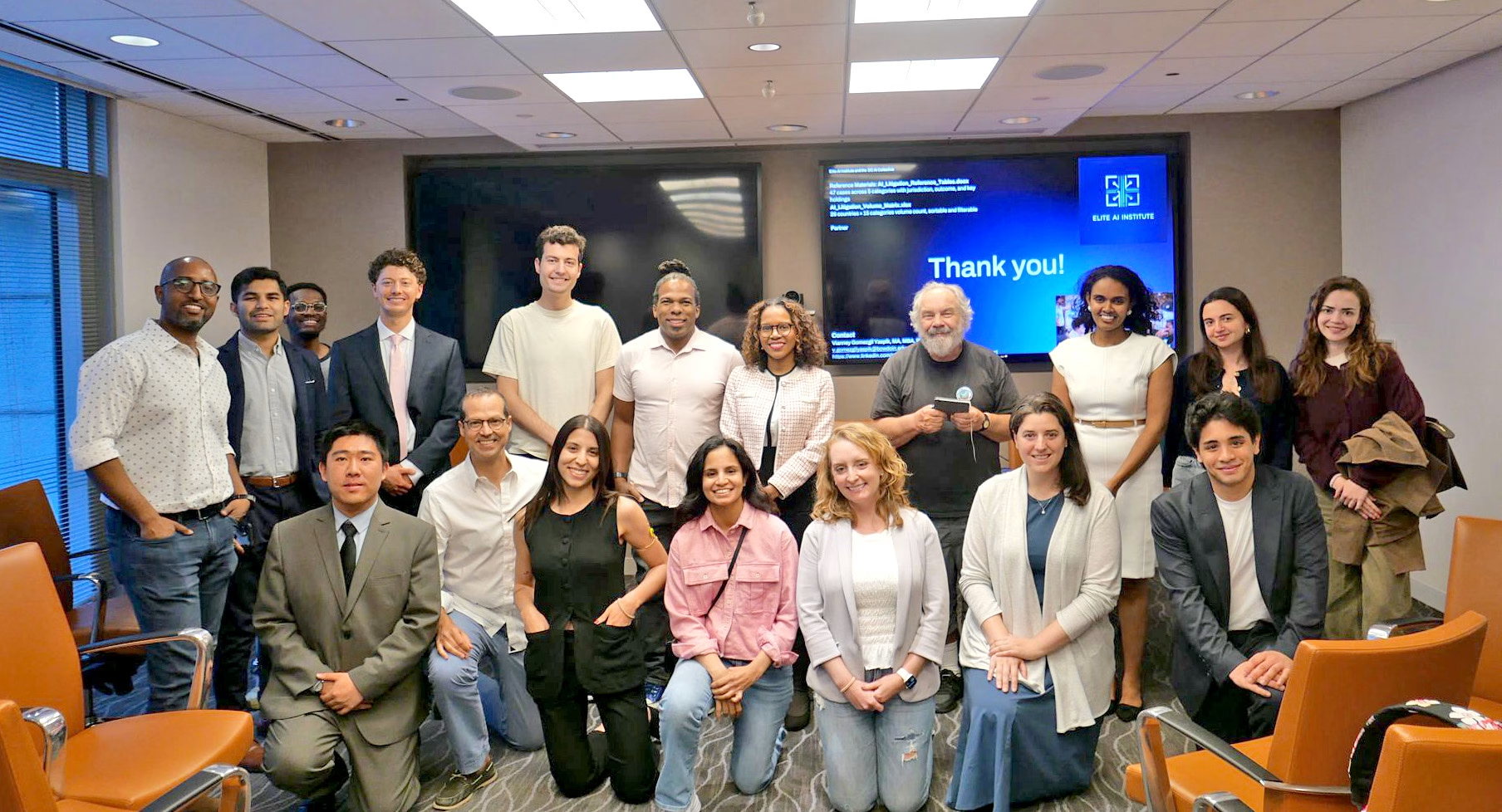
Professor Vianney Gomezgil Yaspik, of the Digital and Computational Studies program, recently traveled to Washington, D.C., to lead two evenings of programming on artificial intelligence in financial and legal practice, convening practitioners from JP Morgan, Morgan Stanley, the World Bank, IFC, Wilson Sonsini Goodrich & Rosati, Georgetown University, and The AI Collective (the world’s largest AI community)
The visit began with consultations at the World Bank, where Yaspik met with teams designing internal AI systems to discuss workflow integration, risk frameworks, and the operational realities of deploying generative tools inside a multilateral institution. The conversations drew directly on her ongoing research at Bowdoin into trustworthy AI systems and the role of default effects in shaping how professionals interact with automated tools in cultural environments and in multiple languages. This research will be continued by Professor Yaspik and the Data Science Fellows during her Summer Data Science Lab.
The first of the two evening events, AI Meets Finance, brought together over 50 senior practitioners for a ninety-minute session on operational AI inside major financial institutions. Professor Yaspik joined Adeleke Omitowoju, Executive Director of Startup Banking at JP Morgan, Elif Nisa Polat, Director of the AI Collective, and James Reed, Principal Special Operations Officer in the IFC’s Department of Risk, for a panel discussion on workflow, risk, and opportunity. She then led the workshop portion of the evening, a 45 minute solo session, drawing on her research into trustworthy AI systems and default effects.
The following evening, AI Meets Law gathered around 40 legal professionals working at the frontier of AI adoption, from private practice to public interest to multilateral institutions.
The panel featured:
The conversation was moderated by Marshall Maina, Project Finance and AI Legal Counsel at the World Bank.
In the second half of the evening, Yaspik mapped the global legal AI landscape. The session offered attendees a working understanding of what happens inside these tools beyond the marketing language, it pushed attendees to use Bowdoin’s critical thinking skills to think about the ethics and ramifications of the rapid deployment of these tools.
Both events were hosted by The AI Collective, a non-profit community of more than 150,000 founders, researchers, operators, and investors whose stated mission is to steer AI toward trust, openness, and human flourishing. The visit closed a loop that began on Bowdoin’s campus, when AI Collective leader Dr. Elif Nisa Polat traveled to Brunswick to deliver a talk on the importance of humanities degrees in the age of AI. This talk was co-hosted by the DCS, Economics, and Government departments. This and similar conversations have continued to shape the College’s thinking about the place of liberal-arts inquiry in technical fields.
The Washington programming exemplifies Bowdoin’s commitment to bringing the rigor and ethical sensibility of a liberal-arts education directly into the rooms where AI is being adopted at scale. Through engagements like these, and through institutional initiatives like the Hastings Initiative for AI and Humanity, Bowdoin continues to position itself at the forefront of AI and humanities research, connecting the College’s classroom inquiry with the world’s most pressing technological questions.