
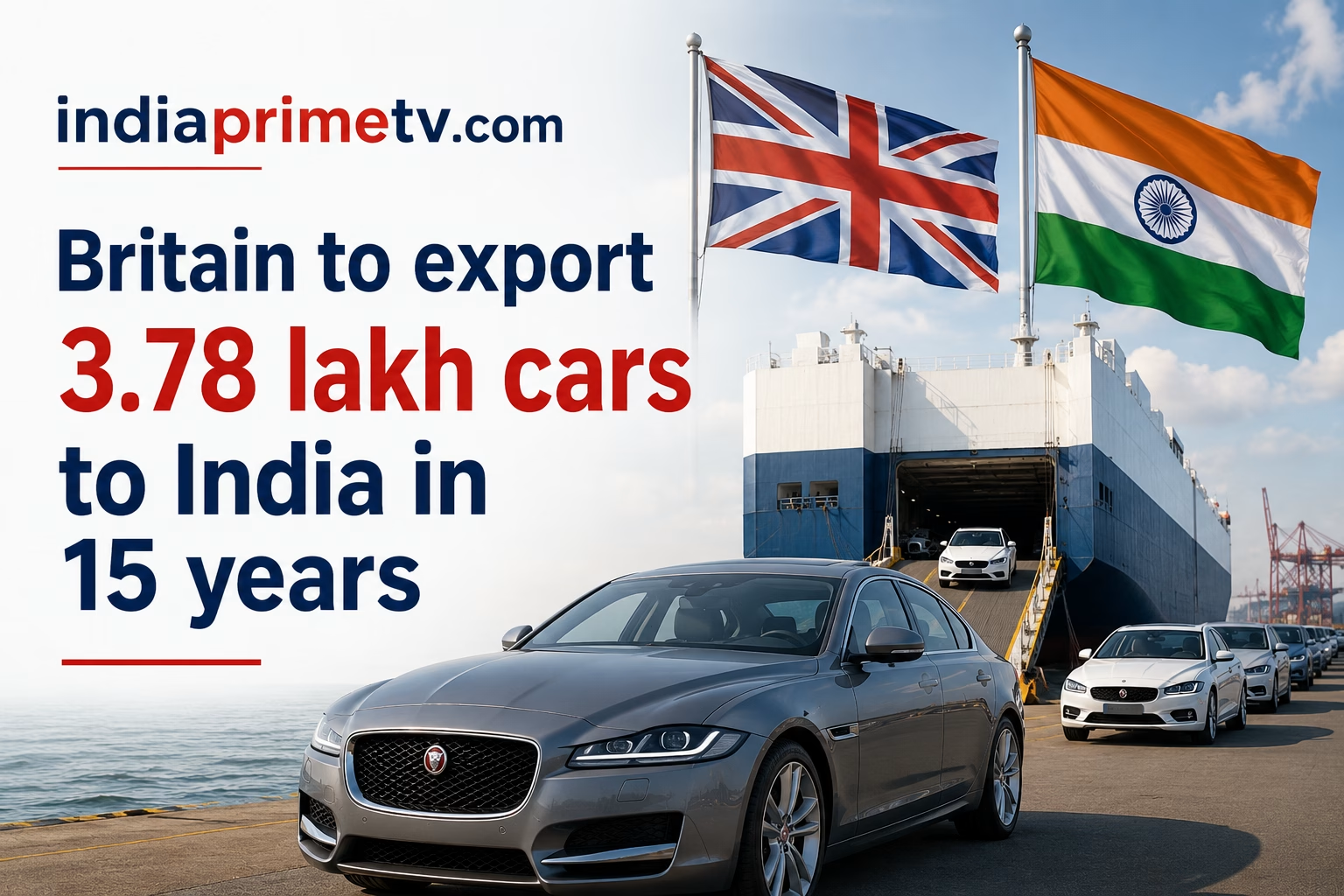
Author: Devender Singh | indiaprimetv.com Biz Updates: Britain to Export 378,000 Cars to India Over 15 Years as Import Duties Fall Under India-UK Trade Deal
India-UK Trade Agreement Set to Transform India’s Auto Market
The recently signed India-UK Comprehensive Economic and Trade Agreement (CETA) is expected to bring significant changes to India’s automobile sector. Under the agreement, Britain will be allowed to export up to 378,000 UK-manufactured vehicles to India over the next 15 years at concessional import duty rates.
As part of the deal, import tariffs on selected categories of vehicles will be reduced in phases from the current levels of 100–110% to as low as 10%.
However, the reduced tariff regime will not apply to all imported vehicles. To protect domestic manufacturers, India has introduced a quota-based system, under which concessional duties will only be available for a fixed number of vehicles each year. Imports beyond the agreed quota will continue to attract regular import duties.
Which British Car Brands Will Benefit?
The biggest beneficiaries of the agreement are expected to be premium and luxury car manufacturers with production facilities in the United Kingdom.
Key brands likely to gain include:
- Jaguar Land Rover (JLR)
- Rolls-Royce Motor Cars
- Bentley Motors
- Aston Martin
- McLaren Automotive
- MINI
These brands have traditionally faced high import duties in India, resulting in significantly higher retail prices. Industry experts believe the new agreement could reduce prices of several luxury models by tens of lakhs of rupees.
Some premium models have already witnessed price reductions of up to ₹75 lakh, reflecting the expected impact of lower import duties.
How Will Import Duties Change?
Currently, fully imported luxury vehicles entering India attract customs duties ranging between 100% and 110%.
Under the India-UK trade pact, these tariffs will be reduced gradually to 10% over a phased period.
Key Numbers:
- Approximately 20,000 vehicles will be eligible for concessional duties in the first year.
- The annual quota could rise to 37,000 vehicles by the fifth year.
- A total of 378,000 vehicles will benefit from reduced duties over 15 years.
Impact on Indian Automobile Companies
India’s automobile industry has long benefited from high import duties that protected domestic manufacturers from foreign competition.
The new agreement is expected to increase competition, particularly in the premium and luxury vehicle segments.
Potential Impact:
- Domestic manufacturers may need to invest more in technology and innovation.
- Pricing pressure could increase in the luxury car segment.
- Competition in the premium electric vehicle (EV) market may intensify.
- Consumers will gain access to a wider range of products.
However, the overall impact on the broader Indian car market is expected to remain limited, as most vehicle sales in India fall within the ₹10 lakh to ₹25 lakh price range, while British imports largely belong to the premium and luxury segments.
Indian Companies Likely to Face Increased Competition:
- Tata Motors (especially in premium EVs and SUVs)
- Mahindra & Mahindra
- Maruti Suzuki (limited impact in premium segments)
Interestingly, Tata Motors owns Jaguar Land Rover, meaning the company could benefit from the agreement through its UK subsidiary.
What Does India Gain in Return?
The reduction in automobile tariffs is only one aspect of the broader trade agreement.
In exchange, India has secured significantly improved access to the UK market, with nearly 99% of Indian exports expected to enjoy zero or reduced tariffs.
Sectors Expected to Benefit:
- Textiles and apparel
- Pharmaceuticals
- Engineering goods
- Auto components
- Gems and jewellery
- Leather and footwear
- Marine products
- Spices, tea, and coffee
The Indian apparel industry, in particular, is expected to become more competitive in the UK market against exporters from Bangladesh and Cambodia.
Which Other Industries Will Benefit or Face Competition?
Industries Likely to Benefit:
- Auto components
- Information technology and professional services
- Pharmaceuticals
- Textiles
- Engineering products
Industries Facing Greater Competition:
- Luxury automobiles
- Premium alcoholic beverages
- Medical devices
- Cosmetics and premium consumer goods
Import duties on British whisky and gin are also expected to decline gradually under the agreement.
Impact on India’s Exports and Imports
The India-UK trade deal is expected to significantly boost bilateral trade over the coming years.
Experts estimate that the agreement could add billions of dollars to trade volumes between the two countries.
Key Trade Figures:
- 378,000 British cars to be imported over 15 years
- Import duties on eligible vehicles reduced from 110% to 10%
- Nearly 99% of Indian exports to receive tariff benefits in the UK
- Around 85% of India’s steel exports to the UK to receive protection from future trade restrictions
Will Indian Consumers Benefit?
Indian consumers are expected to be among the biggest beneficiaries of the agreement.
Key Consumer Benefits:
- Lower prices for luxury vehicles
- Greater product choice
- Faster access to advanced technologies and safety features
- Increased competition in the premium EV market
However, entry-level hatchbacks and mass-market vehicles are unlikely to see any direct impact, as they do not fall under the scope of the agreement.
Conclusion
The India-UK Comprehensive Economic and Trade Agreement is far more than a deal to make luxury cars cheaper.
It represents a strategic shift in India’s global trade policy by balancing domestic industry protection with expanded market access for exporters.
Through a combination of import quotas, phased tariff reductions, and broader export opportunities, the agreement aims to strengthen India’s position in global trade while making its automotive sector more competitive.
Over the next decade, the deal is expected to boost exports, increase consumer choices, encourage innovation, and deepen economic ties between India and the United Kingdom.