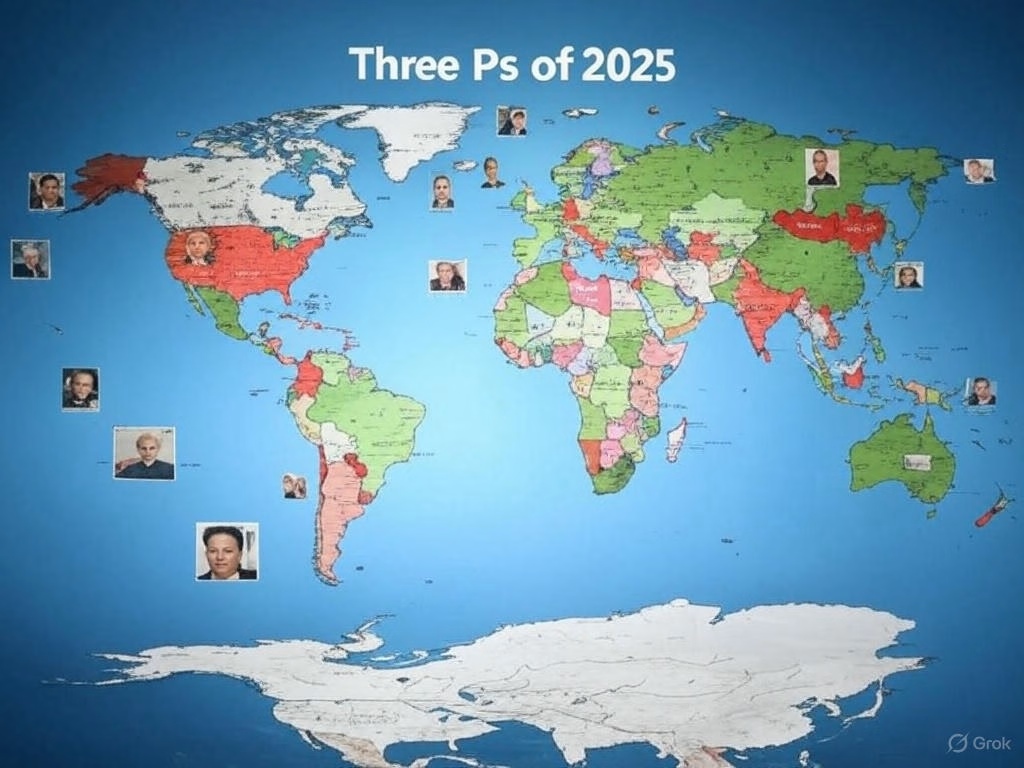
IPTV Desk The year 2025 has brought significant shifts in the global political landscape, driven by three key trends: personalism in leadership, economic protectionism, and ideological polarization. These forces are reshaping international relations, economic policies, and social structures. Surveys, data, and online search trends reveal the world’s growing concern about these developments, with frequent online searches like “Personalism in politics 2025”, “Impact of personalism on global leadership”, “Trade protectionism policies 2025”, and “Political polarization statistics 2025” reflecting heightened public interest.
Global Political Landscape in 2025
1. Personalism in Leadership
Personalism refers to the concentration of political power in the hands of individual leaders rather than institutions. In 2025, this trend has been evident in the return of Donald Trump to the U.S. presidency, alongside similar tendencies in various countries, including India.
India’s Context:
- India has seen the rise of strong, charismatic leaders who maintain significant public support, often shaping policy directly rather than through institutional mechanisms.
- The growing centralization of power has sparked debates on democratic institutions and the role of the opposition.
- Online searches such as “Leadership personalism examples” and “Authoritarian leadership trends” suggest increased public awareness and concern about this phenomenon.
Historical Context:
- Historical Example: During the 1930s and 1940s, leaders like Adolf Hitler in Germany and Joseph Stalin in the Soviet Union exemplified personalist leadership. Both consolidated power, bypassing institutional checks, resulting in widespread repression and global conflict.
- Outcome: While personalist regimes may bring short-term stability, they often lead to weakened institutions and autocratic rule.
Survey Data:
- According to the Edelman Trust Barometer 2025, conducted across 28 countries, 60% of respondents believe that institutions are failing to meet public expectations.
- 48% expressed concerns that personalist leaders bypass democratic norms, undermining the rule of law.
2. Economic Protectionism
Economic protectionism has gained momentum, with governments imposing tariffs and trade restrictions to safeguard domestic industries. This trend has been particularly evident in the ongoing trade disputes between the U.S. and China, as well as India’s efforts to promote self-reliance through initiatives like “Make in India.”
India’s Context:
- India has implemented tariff increases and restrictions on certain imports to protect domestic manufacturing.
- Policies promoting indigenous production are also part of broader protectionist efforts.
- Queries like “Impact of tariffs on global trade”, “US-China trade war updates”, and “Economic nationalism trends” highlight global concern about the economic impact of protectionist measures.
Historical Context:
- Historical Example: The Smoot-Hawley Tariff Act of 1930 in the U.S. introduced high tariffs on imported goods, leading to retaliatory measures from other countries and exacerbating the Great Depression.
- Outcome: Protectionist policies often lead to trade wars, reduced economic growth, and higher consumer prices.
Survey Data:
- The World Trade Organization reported a 20% increase in global tariffs in 2025, leading to slower economic growth.
- The World Economic Forum’s Global Risks Report revealed that 52% of respondents foresee further economic volatility due to protectionist policies.
3. Ideological Polarization
Polarization is deepening globally, fueled by social media and disinformation. Societies are increasingly divided along ideological lines, impacting governance and social cohesion. India has also witnessed rising ideological polarization, often amplified through online platforms.
India’s Context:
- Political discourse has become highly polarized, with ideological divisions between different political and social groups.
- The spread of misinformation on platforms like WhatsApp and Facebook has intensified political and communal tensions.
- Popular searches such as “Political polarization statistics 2025”, “Effects of ideological divides on society”, and “Social media’s role in ideological polarization” indicate growing public concern about polarization.
Historical Context:
- Historical Example: The Cold War era (1947-1991) was characterized by ideological polarization between the United States and the Soviet Union, leading to proxy wars and global instability.
- Outcome: Such divisions hinder international cooperation and can lead to conflict and stagnation.
Survey Data:
- The Edelman Trust Barometer found that 63% of respondents believe misinformation and disinformation are the top threats to societal stability.
- In the Global Risks Report, experts highlighted ideological polarization as a primary concern for political instability in the coming years.
Conclusion
The convergence of personalism, protectionism, and polarization is reshaping the global landscape. Leaders and policymakers face mounting challenges as they navigate these complex issues. Historical parallels show that unchecked personalism, protectionism, and ideological divides often lead to economic downturns, conflicts, and weakened democratic institutions.
In India, these challenges are particularly evident, with the increasing centralization of power, protective trade policies, and rising ideological divides.
With public concern growing, evidenced by trending online queries and survey data, the need for transparent governance, international cooperation, and fact-based dialogue has never been more crucial.
Monitoring these trends will be essential to understanding and addressing the challenges of the future. As 2025 progresses, continued analysis and public discourse will help foster resilience and global stability.
“Global Trends 2025: Personalism, Protectionism, and Polarization Reshape Politics”
“The Three Ps of 2025: How Leaders, Trade Wars, and Division Define the World”
“India and the World Face Growing Challenges of Leadership, Trade, and Division”
“Personalist Leaders, Trade Barriers, and Polarized Societies: A 2025 Overview”
“From Trump to Trade Wars: The Forces Shaping Global Politics in 2025”