
IPTV Health Desk Devender Singh Intelligence is one of the core predictors of a nation’s success. But what truly shapes a country’s average IQ? Which Country Has the Highest IQ? What do the global IQ rankings reveal about how different nations raise and educate their youngest citizens? And why do some countries consistently fall behind in these rankings?
Childhood is a critical period for brain development, with lasting effects on intelligence, learning, and emotional health. From the prenatal stage to early school years, a child’s environment—nutrition, education, and healthcare—plays a pivotal role in shaping their IQ levels. Countries that prioritize childhood well-being through strategic investments often see higher national IQ averages and better long-term outcomes. IQ is not an isolated measure; it reflects the collective input of society on its youngest minds.
This article explores child IQ levels across the globe, the impact of government spending on children and mothers, and how early conditions like food, education, and healthcare contribute to intellectual development. We’ll also answer some of the most searched internet questions—like “What is the IQ of Elon Musk?”, “Which country has the lowest IQ?”, and “Which country has the highest IQ?”—and break down how IQ is actually measured.
Which country has the lowest IQ?
🌎 Understanding Global IQ Rankings:
The world is curious about intelligence: who’s the smartest, which countries rank highest, and how personal IQ compares globally. Let’s start by answering the internet’s most searched questions:
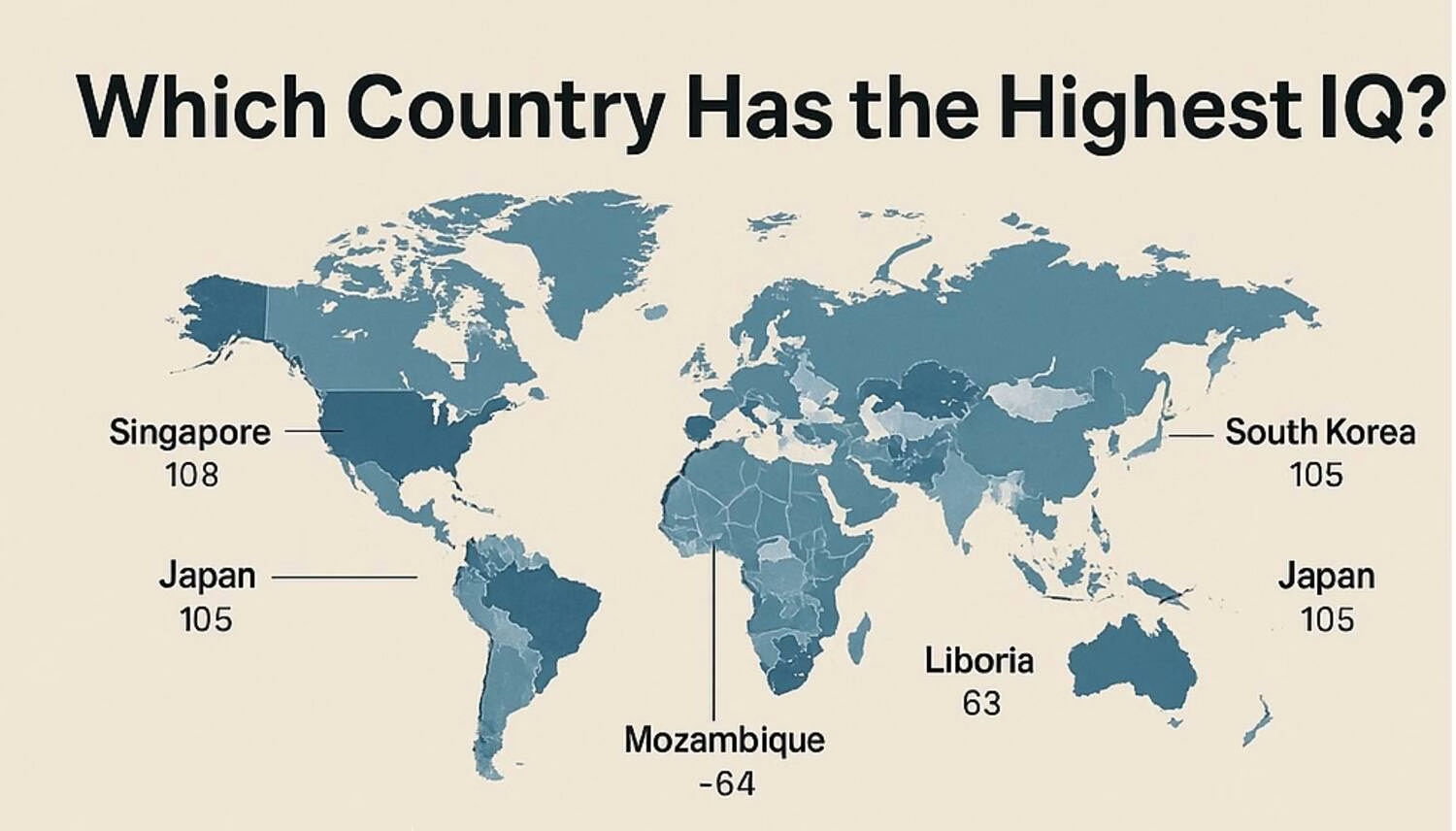
- Which country has the highest IQ in the world? — Singapore leads the global IQ rankings with an average IQ of 108. The country’s strong education system, rigorous early learning programs, and widespread literacy are key contributors to this high score.
- Which country has the lowest IQ? — Some of the lowest-scoring countries include Mozambique and Sierra Leone, with national averages around 60–70. These countries often face major challenges including political instability, underfunded education systems, and widespread poverty.
- Lowest IQ countries in Asia, Europe, and Africa:
- Asia: Nepal, Pakistan, Laos
- Europe: Kosovo, Albania
- Africa: Niger, Somalia, Mozambique
- What is Mr. Bean’s IQ? — Rowan Atkinson, who plays Mr. Bean, reportedly has an IQ of 178.
- What is the IQ of Elon Musk? — Estimates suggest 155–160.
- What is Nikola Tesla’s IQ? — Historically believed to be in the 160–300 range.
These questions reflect the deep curiosity people have about intelligence as a global trait, as well as how individuals stack up against national averages.
🧠 What Is IQ and How Is It Measured?
IQ (Intelligence Quotient) is a numerical measure derived from standardized psychological tests designed to assess a person’s cognitive abilities compared to the general population.
📏 Standard Methods to Measure IQ:
- Wechsler Intelligence Scales – Commonly used in schools and clinical environments. Assesses verbal comprehension, working memory, processing speed, and visual-spatial reasoning.
- Stanford-Binet Intelligence Scales – Measures five major components including fluid reasoning and quantitative reasoning. It’s widely used for identifying giftedness.
- Raven’s Progressive Matrices – A non-verbal test based on visual patterns and logic. It is ideal for international comparisons due to low language dependence.
- Cattell Culture Fair Test – Designed to be culturally neutral, often used for testing individuals from diverse or underserved communities.
The average global IQ is 100, with most people scoring between 85 and 115. These methods help create a standardized framework that contributes to annual global IQ rankings.
🌍 Why Do IQ Levels Differ Between Countries?
Many factors shape the intellectual development of a population:
- Nutrition and Malnutrition – Poor nutrition during pregnancy and early childhood can delay brain development, leading to lower IQ scores.
- Education Access – Countries with strong early education and long compulsory schooling tend to have higher IQ averages.
- Healthcare Services – Immunizations, prenatal care, and early screenings improve cognitive outcomes.
- Environmental Conditions – Exposure to toxins, chronic stress, and unstable governments can hinder learning capacity.
The combination of these elements determines how well a child’s brain can grow and perform in later life.
📊 Global IQ Rankings and Child Investment Comparison
Here is a snapshot of countries across the IQ spectrum and their investments in children and mothers:
| Country | Average IQ | Avg. Schooling Years | Child & Maternal Spending (USD/year) |
|---|---|---|---|
| Singapore | 108 | 11.5 | $9,000+ |
| South Korea | 106 | 12.0 | $8,500 |
| Japan | 105 | 11.6 | $10,000 |
| Switzerland | 102 | 12.3 | $11,000 |
| Norway | 100 | 12.6 | $16,000+ |
| India | ~78 | 6.7 | ~$400 |
| Nigeria | ~70 | 6.1 | ~$200 |
| Mozambique | ~65 | 4.9 | <$150 |
This chart underscores a crucial correlation: countries that spend more on child development, maternal health, and education tend to score higher in the global IQ rankings.
Suggested Graphic: Add a world map heatmap showing IQ levels by country, along with a bar chart comparing child spending versus IQ.
💵 World Average Spending on Children and Mothers
Globally, spending on children and mothers remains unequal:
- $1,200–$1,500 per child annually is the global average investment
- $80–$150 per capita is spent on maternal health
High-income countries like Norway, Germany, and Sweden spend over $10,000 per child, while low-income nations like Mozambique and Haiti spend less than $200.
This global budget disparity highlights how essential equitable investment is. Nations that dedicate a larger portion of GDP to maternal and child development not only foster higher IQ outcomes but also experience better long-term health and economic results.
💡 Why Investment Matters
Investment in early life pays massive dividends. According to UNICEF and WHO, a single dollar spent on early childhood care can yield up to $13 in returns over a lifetime. These returns come in the form of better school performance, lower dropout rates, higher wages, and improved national productivity.
Countries with proactive public health systems, free or subsidized education, and comprehensive child nutrition programs not only rank higher in IQ charts but also enjoy longer-term economic growth.
🧾 Final Thoughts: Closing the IQ Gap Globally
IQ is not fixed—it’s shaped by early-life investments, healthcare, and access to quality education. Countries with lower IQ rankings today have the potential to improve dramatically with focused policies and targeted reforms. The global IQ gap can be narrowed by leveling the playing field: better schools, better food, better healthcare.
To build a smarter, more equitable world, the solution is clear: Invest in children. The smarter the start, the stronger the future.



5 thoughts on “Which Country Has the Highest IQ? Exploring Global IQ Rankings and Childhood Development”